Egypt is set to add 1,000 megawatts (MW) of renewable energy capacity and 600 megawatt-hours (MWh) of battery storage to the national electricity grid in the coming months, as part of its ongoing transition toward clean energy and efforts to reduce reliance on fossil fuels.
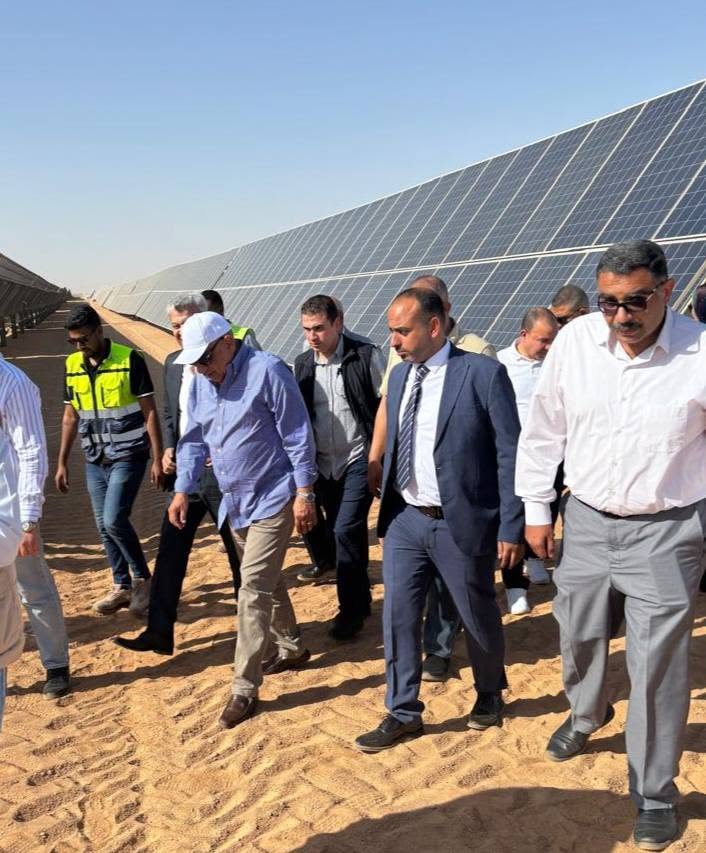
The announcement was made during a field visit by Minister of Electricity and Renewable Energy Mahmoud Esmat to the Benban Solar Park, the Benban Control Center, several transformer substations within the complex, and the Abydos 2 solar power project in Aswan Governorate.
The visit forms part of the ministry’s efforts to maximize returns from existing renewable energy assets, accelerate project implementation, and ensure timely grid connection in line with Egypt’s National Energy Strategy and broader plans to expand renewable energy generation.
During the tour, Esmat inaugurated an upgraded digital electricity platform for the Benban Solar Park, designed to digitize and manage the park’s power stations through a unified system. The platform provides real-time visibility into plant performance, electricity generation levels, asset availability, and accounting systems, while enhancing operational efficiency, transparency, and decision-making.
The project was developed through the Egyptian-German Joint Committee for Renewable Energy, Energy Efficiency and Environmental Protection (JCEE) in cooperation with consulting firm Nexus Analytica.
The minister also witnessed the signing of a contract between the Egyptian Electricity Transmission Company (EETC) and Nexus Analytica to establish a Digital Power Purchase Agreement (PPA) Management Center for Egypt’s national electricity grid.
The center will provide integrated monitoring and management of solar power plants, wind farms, and battery energy storage systems (BESS), while offering advanced forecasting, performance analytics, asset optimization tools, and data-driven support for future investment and expansion decisions. The initiative forms part of Egypt’s broader shift from conventional utility management toward proactive, AI-enabled energy management.
Esmat reviewed progress on the 1,000 MW Abydos 2 solar project, including preparations for energizing its transformer station and connecting the facility to the national grid. The project’s associated battery storage system will add 600 MWh of storage capacity, enhancing grid flexibility and supporting the integration of renewable energy sources.
The minister also inspected ongoing work to add 270 MW of generating capacity to the Benban Solar Park, increasing the complex’s total capacity from 1,465 MW to 1,735 MW. Benban currently comprises 32 renewable energy projects and is widely regarded as one of the region’s flagship clean energy developments.
Speaking during the visit, Esmat said reducing dependence on fossil fuels and increasing the share of renewable and clean energy in Egypt’s power mix remains a key directive from President Abdel Fattah Al-Sisi. He noted that the electricity sector is working closely with government institutions and private-sector partners to implement projects aligned with the National Energy Strategy.
The minister reiterated Egypt’s target of increasing renewable energy’s contribution to the national energy mix to 45% within the next two years, emphasizing that advanced technologies and digitalization are essential to improving efficiency, service quality, and operational performance across the electricity sector.
He added that the transition from conventional grids to smart grids represents a major step forward for the future of electricity transmission and distribution, enabling greater utilization of renewable energy resources and more efficient power management across the national network.