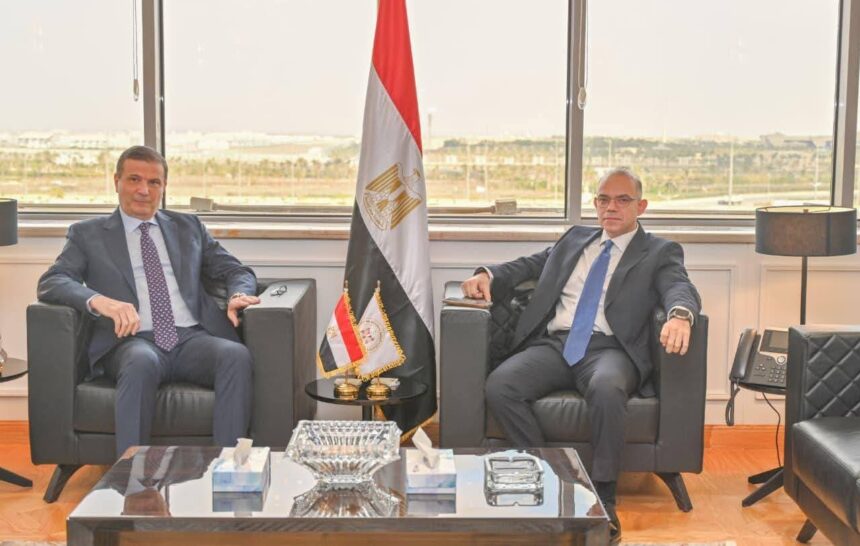
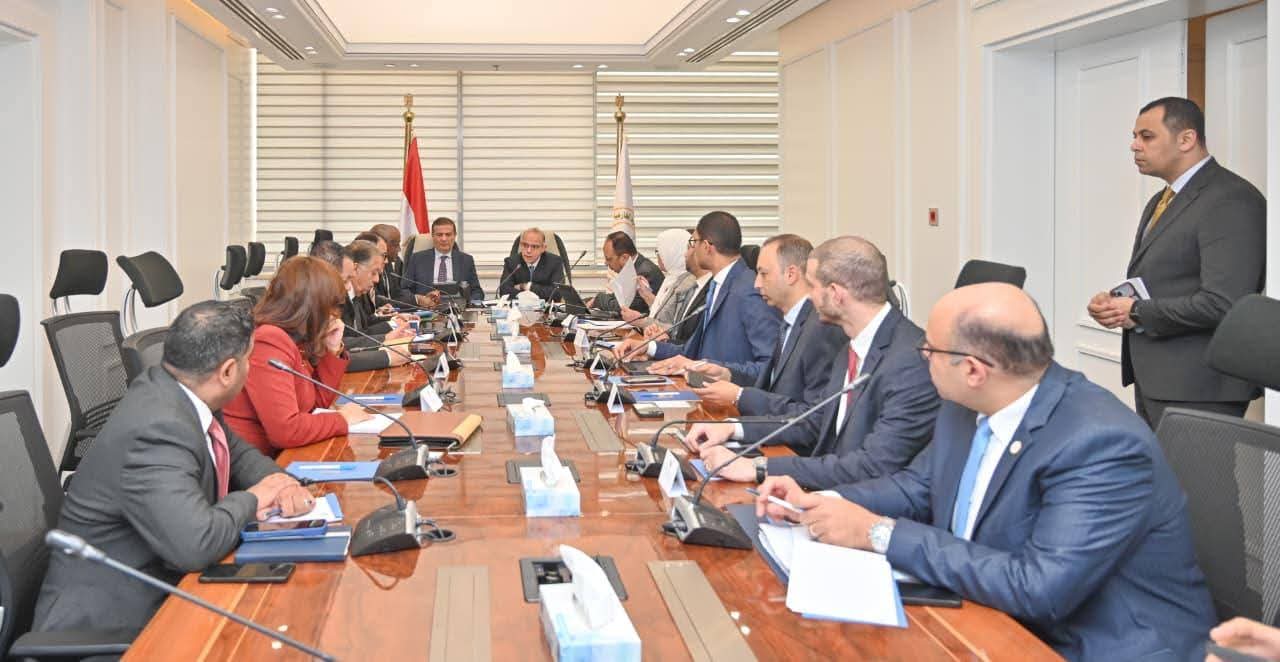
Minister of Investment and Foreign Trade Mohamed Farid Saleh and Minister of Agriculture and Land Reclamation Alaa Farouk held a high-level coordination meeting with representatives from sovereign, economic and diplomatic bodies as part of the state’s strategy to strengthen Egypt’s investment and trade presence across Africa.
The meeting reviewed mechanisms to expand Egypt’s economic engagement on the continent in a way that aligns with national development priorities, meets the needs of the domestic market and supports the ambitions of the Egyptian private sector.
Discussions also addressed the feasibility of establishing a specialised investment entity dedicated to the African market. The proposed entity would provide support to Egyptian investors across a range of sectors, helping expand business activity in strategic areas related to food security as well as other productive sectors.
The meeting was attended by Mohamed Aba Zeid, legal adviser to the chairperson of the Sovereign Fund of Egypt; Mohamed Aboubakr, Deputy Foreign Minister; Mohamed Karim Sherif, Assistant Foreign Minister; Sherif El Gebaly, head of the House of Representatives’ African Affairs Committee; Mohamed Ayyad, adviser to the Minister of Investment; and Abed Mehran, assistant to the minister.
During the meeting, Farid stressed that expanding trade and investment in African markets reflects the Egyptian government’s development priorities and aligns with the political leadership’s directives to deepen continental economic integration.
He noted that sectors linked to food security and agricultural development present promising investment opportunities capable of generating tangible added value for both African economies and Egyptian investors.
Farid revealed that a feasibility study is currently under way to establish a specialised investment entity focused on Africa, aimed at providing various forms of support and assistance to Egyptian companies seeking to invest across the continent.
He added that the initiative would adopt a sector-by-sector approach in partnership with the Egyptian private sector, which has developed substantial experience in African markets and the ability to build business models that strengthen Egypt’s productive capacities in priority sectors.
The envisaged support would include simplifying procedures and coordinating government efforts at both technical and financial levels, Farid said, noting that the government would act as a facilitator and supporter for all partners involved in the proposed entity.
For his part, Farouk said the strategic direction represents a key pillar in supporting agricultural production and strengthening food security across Africa, highlighting Egypt’s accumulated expertise in project planning and the technical management of large-scale agricultural initiatives.
He added that cooperation between government entities, investment funds and financial institutions could help lay the foundations for major regional projects, accelerating agricultural development across the continent while reinforcing Egypt’s position as a regional hub for innovation and industries linked to agriculture and food production.
Farouk also emphasised that directing Egyptian investment towards African markets would help secure sustainable supply chains for strategic crops and essential commodities, reduce the import bill and strengthen African countries’ resilience to global crises.
He noted that investment in agriculture remains a primary driver of comprehensive development due to its strong capacity to generate employment and support the development of rural communities across the continent.