

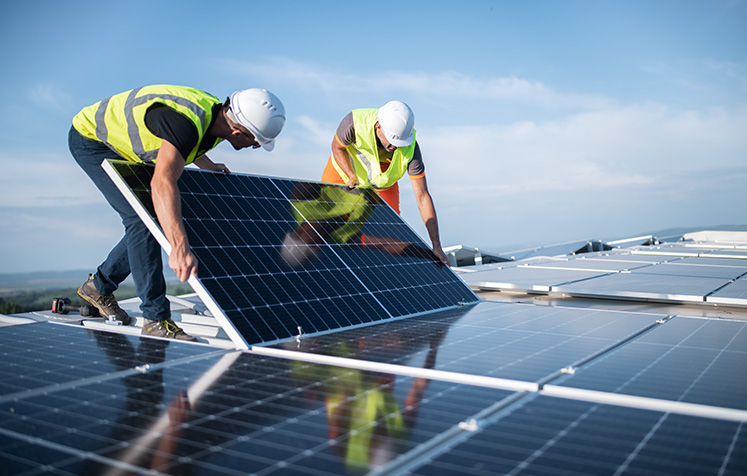
Egypt’s real estate developers have highlighted energy efficiency as no longer an optional feature but a fundamental component of successful real estate projects. They noted that rising utility costs and evolving buyer preferences are driving the market towards developments that offer lower operating expenses and stronger long-term returns.
During Invest-Gate’s 28th roundtable, titled “Powering Real Estate: The New Value Equation,” developers emphasized that sustainability measures, while increasing construction costs by an estimated 5-10%, can significantly enhance a project’s competitiveness.
They pointed out that such investments often translate into stronger sales performance, with energy-efficient developments becoming increasingly attractive to buyers and investors due to lower lifetime costs and better value retention.
Participants also stressed the need for clearer and more structured government incentive schemes, noting that well-defined incentives—such as those implemented in the New Administrative Capital—have proven effective in encouraging the adoption of sustainable building practices.
Developers added that incentives introduced during the early stages of land allocation tend to be more effective than those offered later in the development cycle.
Among the government representatives, Khaled Sedeik, Chairperson of the Urban Development Fund and Deputy Minister of Housing, Utilities and Urban Communities, stressed that energy efficiency has become a core requirement in urban planning. He highlighted the importance of integrating natural design elements, including ventilation and daylight, alongside broader government efforts to embed sustainability into infrastructure and urban development.
Member of Parliament Abdelkhalek Ibrahim called for clearer legislation, phased implementation mechanisms, and incentive-based systems to ensure compliance with energy-efficiency standards across residential and commercial buildings.
Representing the academic and research community, Hend Farouh, Director of the Architecture and Housing Research Institute at the Housing & Building National Research Center and Head of the Central Unit for Sustainable Cities and Climate Change, underscored the need to move from voluntary guidelines to mandatory enforcement. She also referred to Egypt’s updated Green Pyramid Rating System, noting that green buildings can achieve up to 30% higher market value due to lower operating costs.
On the developer side, Waleed Mokhtar, CEO of Iwan Developments and Secretary-General of the Egyptian Real Estate Council, said rising utility costs are prompting buyers to prioritise energy efficiency, while also calling for clearer regulatory frameworks at the land-allocation stage.
Tamer Nasser, CEO of City Edge Developments, noted that the main challenge lies in balancing sustainability requirements with project feasibility, while raising market awareness of the long-term savings generated by energy-efficient design.
Ahmed Amin Massoud, Chairperson of Menassat Developments, said incentives—rather than enforcement alone—are key to driving adoption. He pointed out that modest incentives offered in the New Administrative Capital successfully encouraged developers to embrace green building standards.
Samy Abdel Kader, Managing Director of TAQA Power, highlighted that energy has become a core component of real estate valuation. He also emphasised the growing role of Energy as a Service (EaaS) models and the integration of renewable energy solutions in reducing lifecycle costs.
From the financial sector, Mai Ismail, Associate Director for Manufacturing and Services (SEMED) at the European Bank for Reconstruction and Development (EBRD), stated that sustainability has become essential for securing competitive financing, with green projects benefiting from improved lending terms and early-stage technical support.
Speakers collectively agreed that energy efficiency now directly influences asset valuation through the widening gap between the “green premium” and the “brown discount,” while environmental, social and governance (ESG) standards are increasingly shaping investment flows and access to financing.


