

Oil prices fell toward $88 per barrel and global liquefied natural gas exports sank to a six-month low on Monday after US President Donald Trump said Washington was engaged in productive talks with Iran and had ordered a five-day delay to any military strikes on Iranian power stations and energy infrastructure.
Brent crude fell nearly 11% to around $88.57 per barrel, while futures contracts dropped 14% following Trump’s remarks. Writing on his Truth Social account, Trump said that based on the “substance and tenor” of talks that would continue throughout the week, he had directed the Department of War to postpone any planned strikes. He noted that the decision was contingent on the ongoing meetings proving successful.
Brent, the global benchmark, had surged more than 50% since US and Israeli strikes on Iran in late February, with the conflict showing no signs of abating.
The International Energy Agency’s executive director, Fatih Birol, warned on Monday that more than 40 energy assets across nine Middle Eastern countries had suffered “severe or very severe” damage as a result of the war, and that the scale of destruction meant oil fields, refineries and pipelines would need considerable time to return to operation — potentially prolonging disruptions to global supply chains well beyond the end of the conflict.
Speaking at the National Press Club in Canberra, Birol said the impact of the current disruptions was equivalent to the two major oil crises of the 1970s and the 2022 natural gas crisis following Russia’s invasion of Ukraine, “combined.” He added: “It is not only oil and gas, but some vital arteries of the global economy, such as petrochemicals, fertilisers, sulphur and helium have seen their trade completely disrupted, and this will have serious consequences for the global economy.”
Birol noted that Asia was at the forefront of the crisis, given its heavy dependence on crude from the region. Asked about China’s decision to cut fuel exports, he said the whole world needed to confront the energy crisis collectively, adding that imposing major export restrictions without justification “may not be something that is appreciated by the international community.”
More than three weeks of conflict have caused a near-complete blockage of the Strait of Hormuz, triggering sharp rises in crude oil, natural gas and fuel prices. The Paris-based agency announced in early March that it would release a record 400m barrels from its emergency oil reserves to help ease supply shocks and contain price rises. Last week, it proposed measures to help energy-importing nations reduce demand.
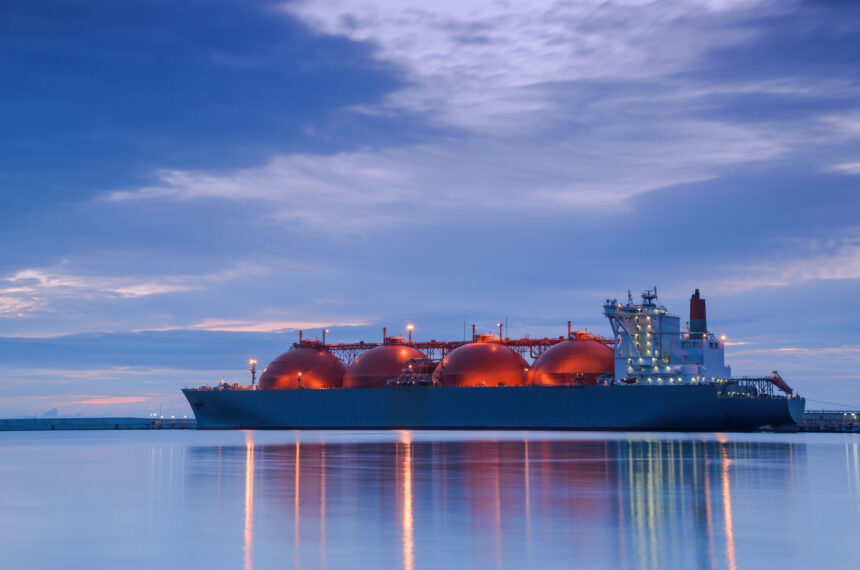
Global LNG exports have meanwhile fallen to their lowest level in six months, wiping out recent supply increases from the US and elsewhere as the conflict chokes flows through the strait. The ten-day moving average for LNG shipments fell roughly 20% since the start of the month to 1.1m tonnes — the lowest since September — according to a Bloomberg analysis of vessel-tracking data from Kpler. The decline stemmed primarily from Qatar and, to a lesser extent, the United Arab Emirates, both of which must ship fuel through the Strait of Hormuz to reach customers in Asia and Europe.
Qatar was forced to shut the Ras Laffan LNG export terminal — the largest in the world — following Iranian attacks. A strike last week caused further damage to the facility, and repairs to two of its fourteen production lines are expected to take years. Global LNG production had been rising steadily over the past year, driven primarily by new projects in the US and Canada, but those gains are being offset by the loss of Qatari output and the effective closure of the Strait of Hormuz, a key waterway for roughly one-fifth of global LNG supply.

