

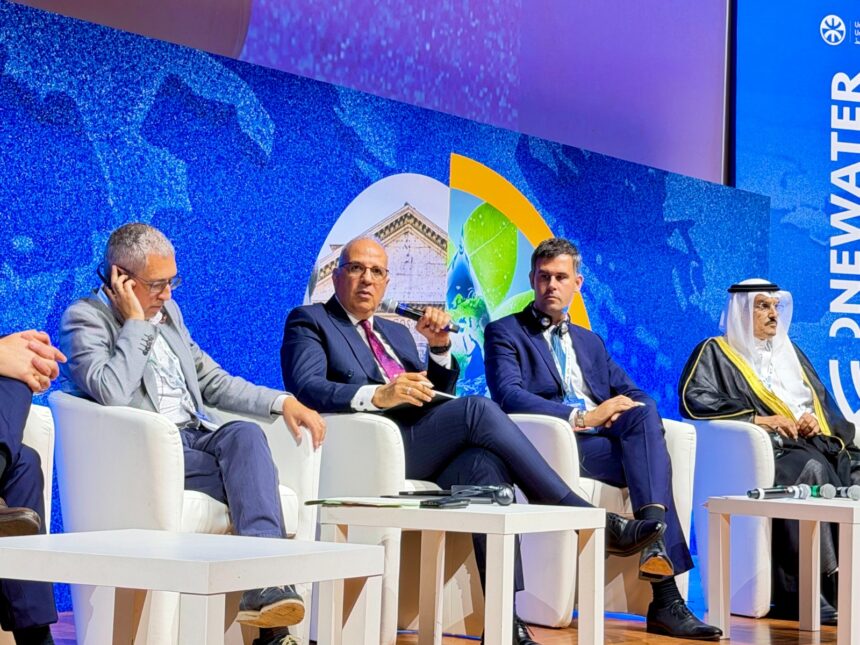
Water Resources and Irrigation Minister Hani Sewilam said Egypt relies on the Nile for 98% of its water resources originating outside its borders, calling for cooperation among Nile Basin countries based on international law and principles including no harm, prior notification, consultation and data sharing.
Sewilam made the remarks during two sessions at the Euro-Mediterranean Water Forum 2026 in Rome, which focused on water scarcity and non-conventional water resources, as well as the water-energy-food-ecosystems nexus.
He said Mediterranean countries face similar pressures from water scarcity, climate change, extreme weather events, deteriorating water quality and rising demand driven by development and food security needs.
Sewilam called for stronger regional cooperation, joint projects and financing mechanisms capable of translating policy proposals into implementable projects.
He said Egypt was expanding water treatment and reuse, developing non-conventional water resources and exploring desalination for intensive food production, while increasing its use of innovation, digital technologies and smart management under its “Water 2.0” approach.
Sewilam said Egypt was already cooperating with Nile Basin countries on water, development and capacity-building projects and saw further opportunities for integration based on the region’s water, rainfall, agricultural land, solar and wind energy resources.
He also called for a broader assessment of available water resources that goes beyond “blue water” in rivers and lakes to include “green water” from rainfall, soil moisture and vegetation.
During a separate session on the water-energy-food-ecosystems nexus, Sewilam said closer integration among these sectors could improve resource efficiency and strengthen water, food and energy security, particularly through regional and cross-border projects.
He said the African Water Vision 2063 could provide a framework for greater cooperation among African states in addressing water, food, energy and climate challenges.
Sewilam also pointed to falling renewable energy costs as an opportunity to expand the use of solar power in desalination and food production, while calling for greater research and innovation to reduce desalination costs.
He said greater use of desalinated water for food production would also require a significant increase in water productivity through modern agricultural systems, including hydroponics and aquaponics, which can produce more food with less water.
Mediterranean countries, he added, have significant renewable energy resources, technology and expertise that could support deeper cooperation between the northern and southern shores of the region and help translate the water-energy-food nexus into practical projects.


