

President Abdel Fattah Al-Sisi said Egypt would continue to prioritise diplomacy and peaceful solutions in dealing with Ethiopia’s dam, but stressed that this would not come “at the expense of Egypt’s existence and its people”, while noting that Cairo was also expanding desalination, water treatment, and water reuse to increase available resources.
Egypt has for years publicly maintained that it favours a negotiated solution that safeguards its water rights. The Egyptian government reiterated at the UN General Assembly this week that water security is an existential issue and that Egypt reserves its legitimate right under international law to protect it.
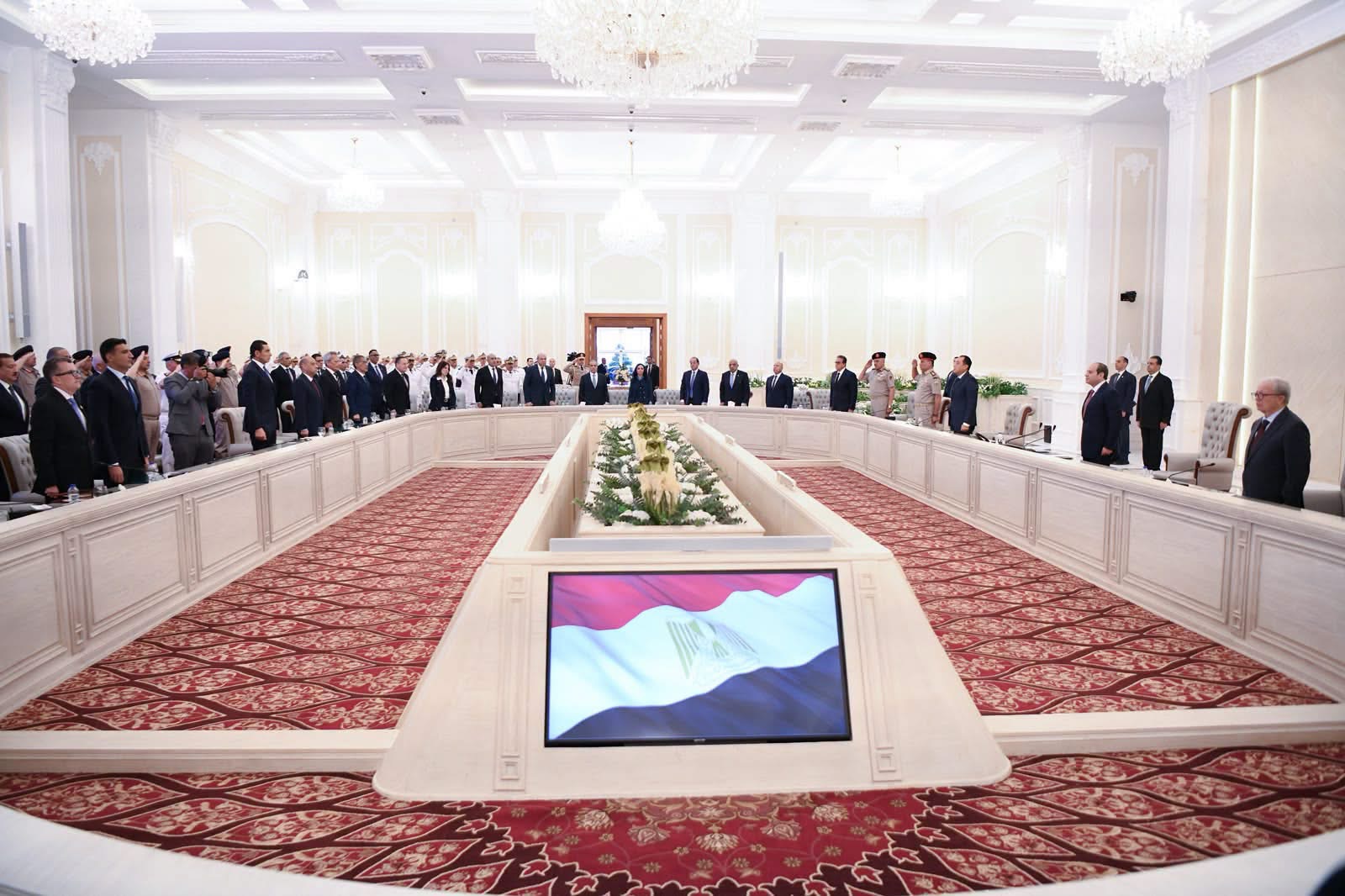
Al-Sisi made the remarks during an expanded meeting at the Strategic Command headquarters in the New Capital attended by Prime Minister Mostafa Madbouly, cabinet ministers, governors, senior officials, military and police commanders, village representatives, and experts.
Al-Sisi said construction of the Ethiopian dam followed the upheaval Egypt experienced between 2011 and 2013, arguing that the period had imposed a heavy cost on the country and highlighting the importance of maintaining state institutions and stability.
He said Egypt had substantial resources that could produce better results if used efficiently, while calling for stronger domestic cohesion and greater public awareness.
The president also pointed to efforts to increase Egypt’s available water resources through desalination, water treatment, and reuse.
On the economy, Al-Sisi said Egypt had lost about $20bn in Suez Canal revenue in recent years amid regional instability.
He added that the country had faced successive economic shocks since 2020, including the COVID-19 pandemic, the Russia-Ukraine war, and the war in Gaza.
Regional developments had also pushed up oil and basic commodity prices, affecting prices inside Egypt, he said, adding that Cairo was working to reduce tensions and prevent renewed fighting.
Al-Sisi said peace remained Egypt’s strategic choice and described the Palestinian issue as central to stability in the Middle East, reiterating Cairo’s support for a two-state solution.
He also stressed Egypt’s support for the security and stability of Gulf Arab states and said freedom of navigation through international waterways should be protected in accordance with international law.
Egypt has continued to emphasise diplomatic and political solutions to regional crises, with Prime Minister Mostafa Madbouly telling the UN General Assembly last week that Cairo supports political and diplomatic approaches to regional disputes while protecting its national interests.
Domestically, the president called for greater public confidence in state institutions and efforts to counter what he described as attempts to spread frustration and misinformation through social media.
He said around half of Egypt’s population lived in roughly 4,500 villages and called for closer engagement with local leaders in addressing social and service-related challenges.
Ministers also reviewed developments in transport, health, local development, electricity, finance, education, housing, and higher education over the past decade.
Al-Sisi instructed the Interior Ministry to reduce vehicle licensing costs and urged officials to improve the treatment of citizens using public services.
On education and artificial intelligence, Al-Sisi said improving education quality was essential to preparing younger generations for rapid technological change.
He called for greater use of the benefits offered by artificial intelligence while also putting safeguards in place to address its potential risks.

