

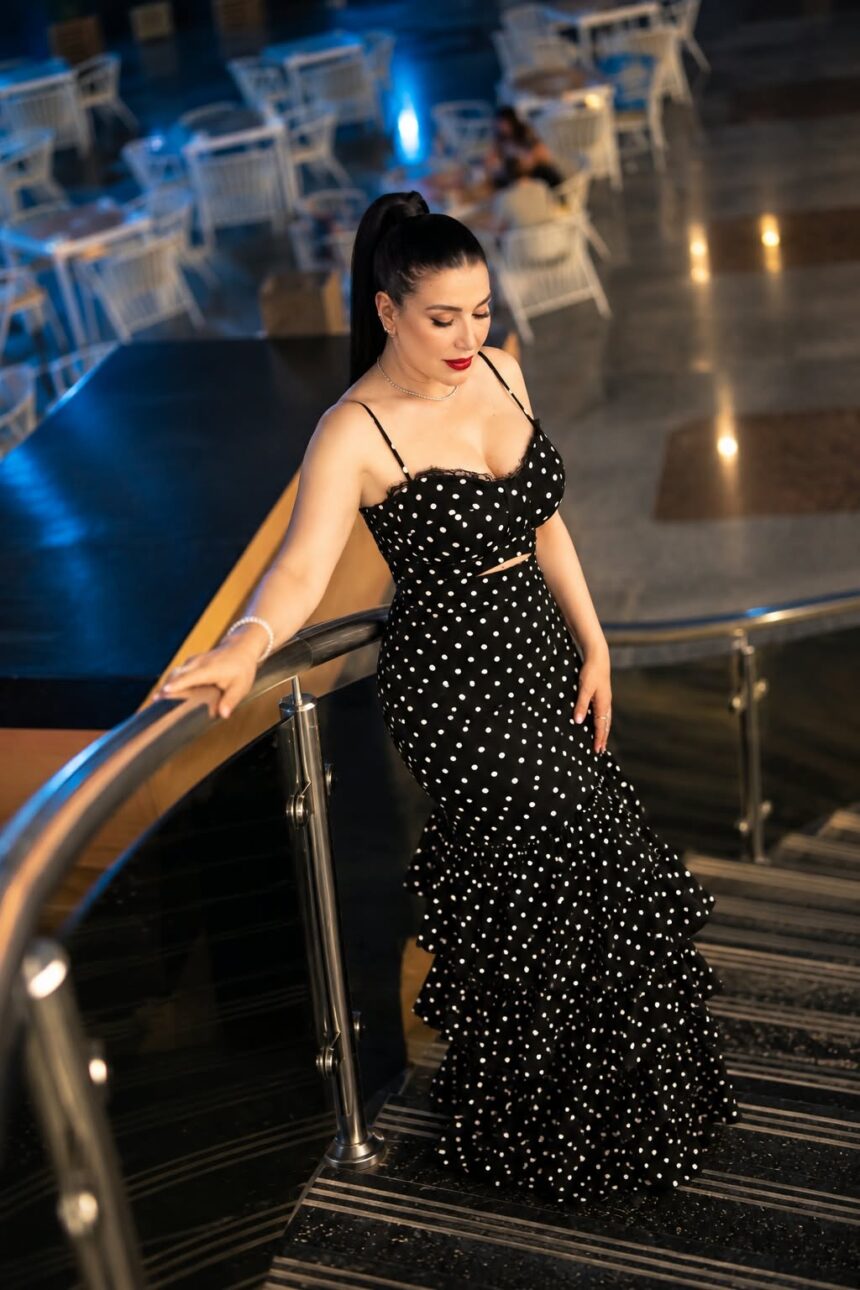
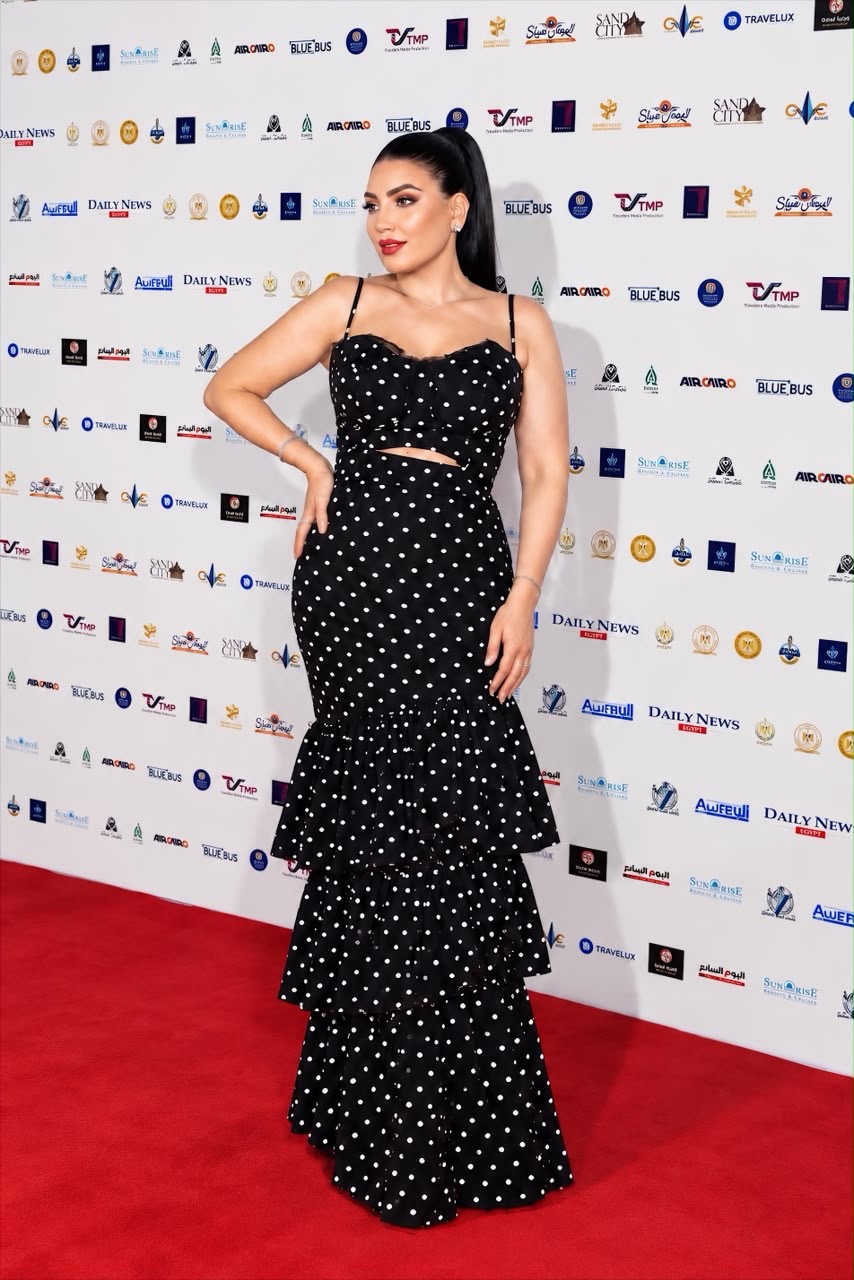
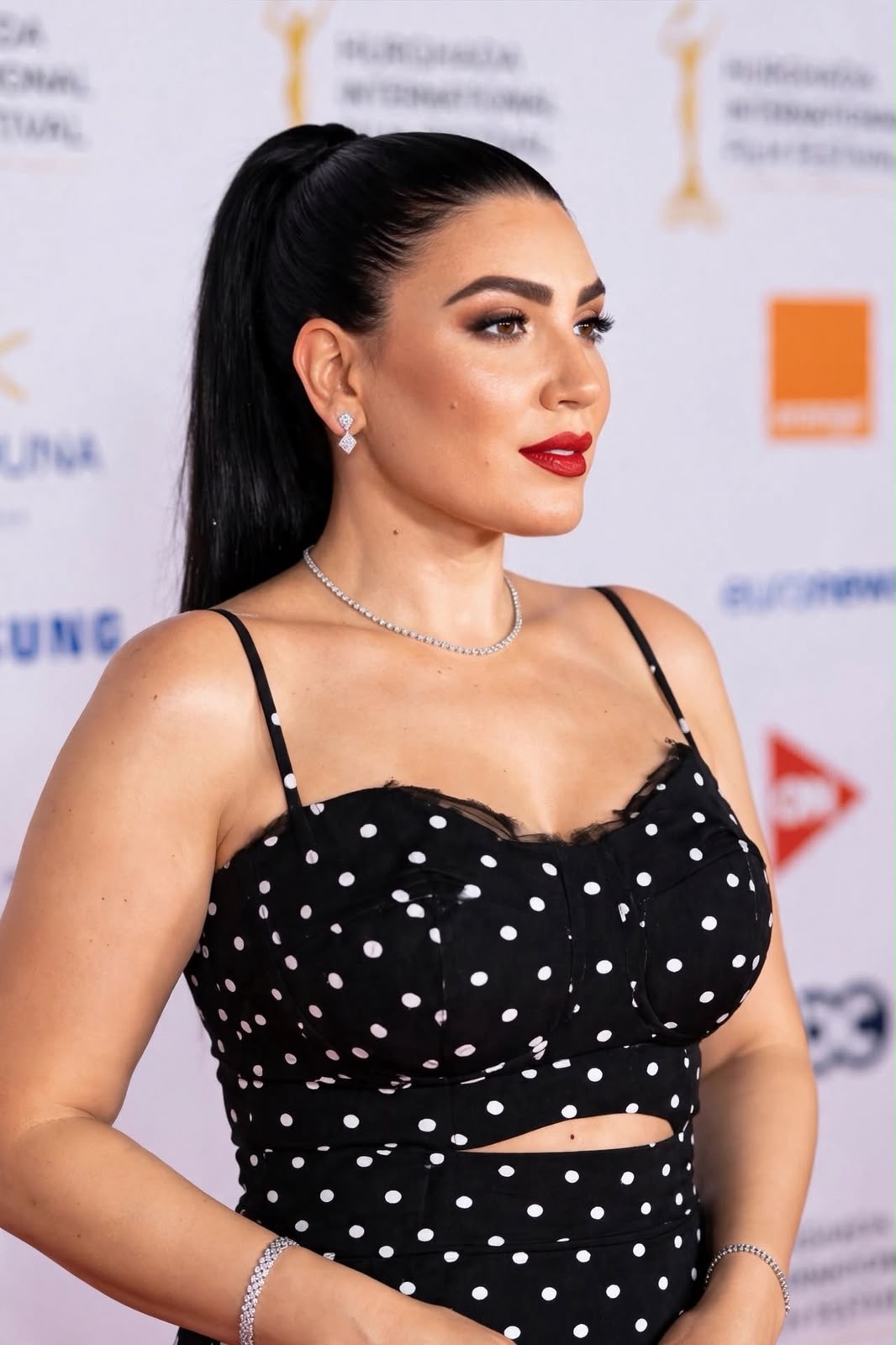
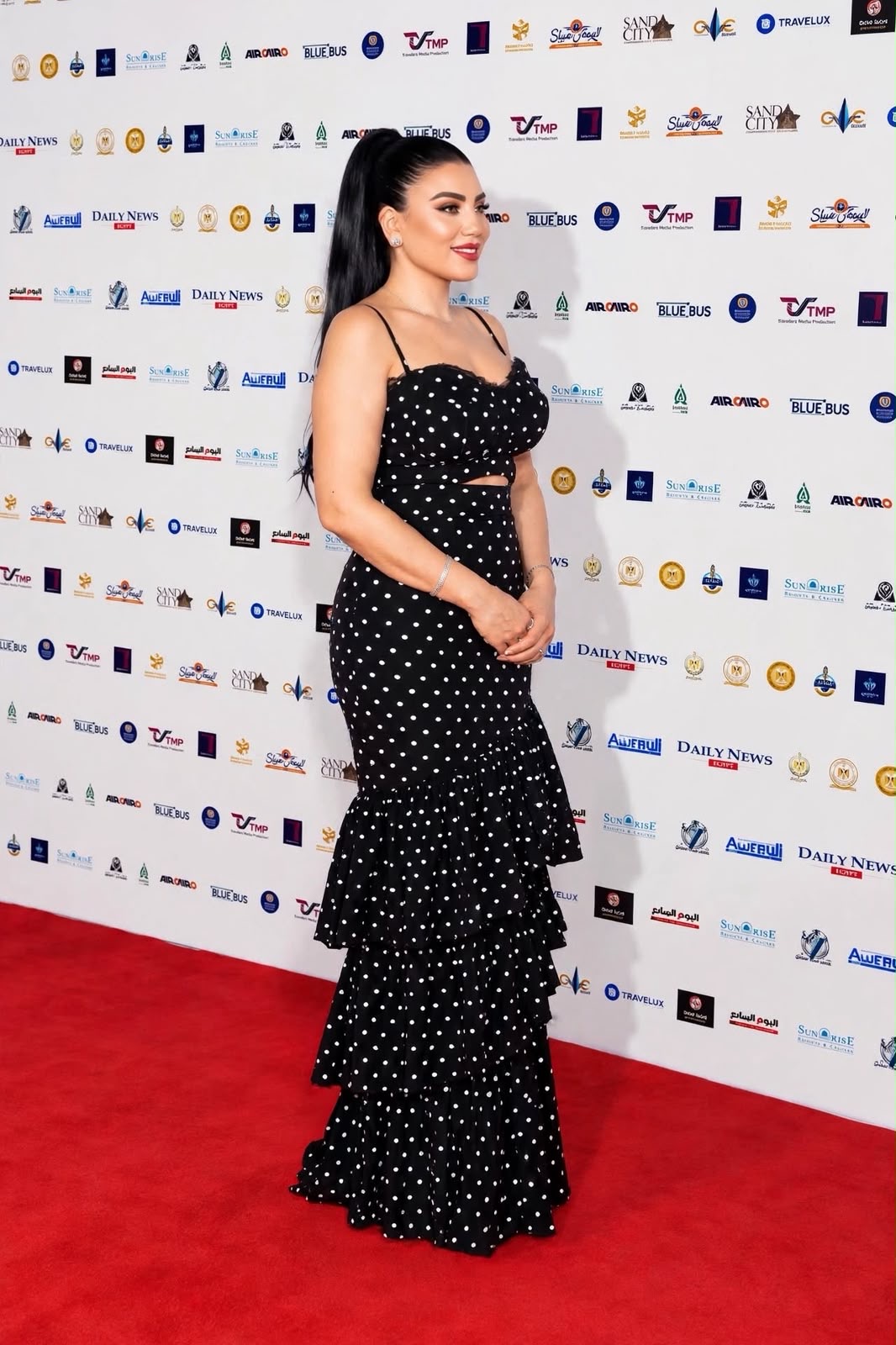
Against the backdrop of the Hurghada Youth Film Festival, Egyptian actress Abeer Sabry – who was a member of the jury for its fourth edition – spoke to Daily News Egypt about her latest projects, artistic ambitions, and enduring dreams.
In an extensive interview, she discussed her vision of cinema, her experience watching and evaluating films by younger filmmakers, the types of characters she seeks, and her belief that an artist’s value lies not simply in the size of a role, but in the impression it leaves on audiences.
Sabry stressed the importance of festivals dedicated to young filmmakers, describing them as valuable platforms for discovering new talent and giving emerging artists an opportunity to develop their voices. She noted that the quality of a film cannot be measured by its production budget alone, but by the strength of its idea, the clarity of its vision, and the filmmaker’s ability to connect with audiences.
She also reflected on her latest project, “Zamalek Boulak”, in which she portrays a businesswoman whose stable life in Zamalek is suddenly overturned, forcing her to move to Boulak and adapt to a completely different social environment. The role, she explained, allowed her to move away from familiar patterns and explore a different dimension of performance.
Sabry also spoke about her long-standing dream of portraying legendary singer Dalida, as well as her wish to work with Al Pacino. For her, acting is not simply about seeking leading roles or screen time, but about finding characters that challenge her and leave a lasting impression.
On a personal level, she discussed her relationship with her sister, media personality Marwa Sabry, as well as motherhood, adoption, and the quieter side of her personality away from the screen. She described herself as an introvert and a dreamer who values peace, privacy, and having a world of her own.
You joined the jury at the fourth edition of the Hurghada Youth Film Festival. How would you describe your experience?
It was a very important and enjoyable experience for me because I love discovering new talent and learning about the ideas of the younger generation.
When you serve on a jury, you are not simply watching a film; you are engaging with the dreams and experiences of the people who made it. Every young man and woman who presents a film has a vision they want to express, so I was keen to approach each experience with attention and respect.
Youth cinema has a different kind of energy because young filmmakers are still in a phase of exploration and experimentation. They may offer ideas and perspectives that we might not otherwise consider.
I was very happy to be part of this experience. I believe that having a festival dedicated to young people and giving them a genuine platform to screen and compete is extremely important for cinema.
After watching and evaluating a number of films, how would you assess the level of emerging talent?
There is certainly talent that deserves attention. What pleased me most was seeing a genuine desire among young filmmakers to experiment and develop a language of their own.
I do not believe that production resources alone are what make a good film. Sometimes the budget is limited, but the idea is strong, the director has a clear vision, and knows how to present it in a way that reaches audiences.
Short films, in particular, require considerable skill because you have very little time to say what you want to say. Condensation, pacing, and the ability to express an idea therefore become extremely important.
I enjoy seeing young filmmakers experiment and take risks, but the important thing is that their boldness should stem from a genuine artistic vision rather than simply being an attempt to attract attention.
Do you believe youth film festivals can serve as a genuine launching pad for a new generation of directors, actors, and writers?
A festival can be a beginning, but it should not be the end.
Young people need real opportunities after the festival—whether through production, training, workshops, or working with directors and producers. Talent alone is not enough if there is no one to discover it and provide it with an opportunity.
Every artist begins at some point from zero, and there is usually someone who believes in them and gives them a chance.
I believe the role of youth cinema festivals should not stop at screening films and presenting awards. It can also extend to building bridges between emerging talent and the film industry.
I hope that in the coming years we will see important directors, actors, and writers whose careers began through these festivals.
Let’s move on to your latest project, the series “Zamalek Boulak”. What did this experience add to your career?
I consider “Zamalek Boulak” a very important experience for me because the character I play is different from many of the roles I have portrayed before.
I play a businesswoman who has spent her life in Zamalek. She has a husband, commercial ventures, and a stable life. Then everything suddenly changes: she loses everything and is forced to move to Boulak, where she lives with her husband’s brother.
That social and class transformation was one of the most important aspects of the character for me.
It was not simply a move from one place to another, but a transition from one entire world into a completely different one, with all the clashes and attempts to adapt to a new reality that this entails.
I loved the character because it gave me room to explore human contradictions, and I hope I was able to leave an impression on audiences through it.
I do not like my presence in any project to be merely about appearing on screen. I am always looking for a character that adds something to my journey.
I believe that no artist succeeds alone. Success is an integrated system involving the director, writer, actors, and every other element of the production.
You have often spoken about your dream of portraying Dalida. What does this character represent to you?
Dalida is an extraordinary figure to me.
She was a woman who embodied both strength and vulnerability. She lived a life filled with contradictions, pain, success, and fame.
She had a voice capable of expressing both joy and sorrow. Portraying her life would therefore not simply be an opportunity to play a famous figure; it would be a major artistic and human challenge.
I feel that there are many aspects of her personality that I could approach as an actress, particularly her inner struggle as a woman and what she concealed behind the image seen by the public.
What about your long-standing wish to work with Al Pacino?
That is one of the great dreams that inspires any actor.
Working with Al Pacino has always been one of my wishes. Perhaps it is the kind of dream that seems distant or even crazy, but it remains there.
For me, art is like a beautiful illness. We enter a character and live through its details, and in the end, we emerge having gained something from it.
Every character I portray leaves some kind of mark on me.
If I had not become an actress, I think I would have become a writer—or perhaps the owner of a large garden where I could grow plants and live among them.
I have actually considered writing my memoirs, but I have not made a final decision yet.
Throughout your career, you have taken on bold roles addressing issues that concern women, including “Laylat El Eid”. What does this kind of work mean to you?
I do not approach my roles as a means of provoking controversy.
The phrase “provoking controversy” is one of the expressions I dislike most. I am an actress. If I find a role that appeals to me and feels new and different, I accept it. If I am not convinced by it, I turn it down.
For me, “Laylat El Eid” was not a protest against men. It addressed human issues from different perspectives.
The film dealt with subjects such as inheritance deprivation, harassment, domestic violence, child marriage, and female genital mutilation through a range of characters—some strong, others vulnerable—each carrying their own contradictions.
I love roles that leave an impression. I do not want to be merely a beautiful face appearing on screen and then disappearing.
Has your understanding of leading roles changed over the years?
I no longer view a leading role simply as an opportunity for greater screen time. Sometimes a supporting character can be more important than the lead if it is well written and leaves an impact.
I like being part of a complete work.
No artist succeeds alone. Success comes from a large group of people working both behind and in front of the camera.
That is why I am not particularly fond of the term “absolute stardom”.
What matters to me is portraying a real character and making audiences feel, when the work ends, that I have offered them something worth watching.
Your relationship with your sister, Marwa Sabry, appears to be particularly special. What does she mean to you?
I am extremely proud of Marwa—not only because she is my sister, but because she is intelligent and knows how to conduct an interview.
I raised her from a young age, so I feel that she is like a daughter to me.
Her success makes me happy, and sometimes I feel that her success matters more to me than my own.
She is independent, and I am independent, but ultimately we support one another.
I follow her episodes and sometimes advise her to be cautious when discussing certain topics, but I am always by her side.
You have spoken before about having children and adoption. How do you view the matter now?
I am content and at peace with the fact that I never had children.
After my father passed away, I developed an intense fear of having a child and then dying without knowing what would happen to them.
My siblings’ children are my own, and I feel maternal affection towards them.
At one point, I considered adoption, but I believe it requires deep thought and a great deal of responsibility.
Motherhood is not simply a decision; it is a responsibility and an entire way of life.
How would you describe yourself away from acting?
By nature, I am an introvert and a dreamer.
I create a world of my own and live in it.
Audiences may see me in bold or powerful roles, but in reality, I am much quieter and shyer than some people imagine.
I enjoy living through very small details that people may not know about me.
I love peace and quiet, and I like having a world of my own.
I believe that the distance between my real personality and the characters I portray is one of the things that makes acting so enjoyable for me.
What is the quality you love most about your personality?
I love my tenderness, which sometimes reaches the point of compassion.
I also value hard work and sincerity in my relationships.
When I love someone, I love them genuinely.
I believe this quality is very important in life because relationships, to me, are not merely casual acquaintances or passing presences. They involve responsibility and emotion.
I am also someone who loves to dream.
I spend a great deal of time in my imagination, and perhaps that is why I love acting. In the end, an actor lives more than one life through the characters they portray.
With the widespread popularity of digital platforms and the changing way audiences watch content, how do you view the artist’s responsibility today?
I believe the artist’s responsibility has become greater because audiences are no longer watching just one type of work. They now have countless and diverse choices. This gives artists the opportunity to reach a wider audience, but at the same time, it requires them to be more precise in their choices and to understand that every project they present leaves an impression on people.
Digital platforms have made viewing faster, and audiences can now follow productions from different countries and cultures. It is therefore no longer easy for an artist to rely solely on their name. Audiences compare and choose, and they can stop watching a project if they do not feel that it is sincere, entertaining, or well written.
I support progress and every new medium that gives art an opportunity to reach more people, but I believe speed should not come at the expense of quality. Sometimes a project needs time to mature, and a character needs to be studied in depth before it can appear authentically. I do not like producing work simply to keep up with a season or capitalise on temporary success.
Artists should always ask themselves: What am I offering? Why am I taking on this role? Can I add something to it? These questions matter because audiences have become more discerning. They no longer easily accept superficial characters or subjects that lack meaning.
I also believe digital platforms have opened the door for many talents that previously had no path to the screen. Young directors, writers, and actors are presenting different kinds of work. They may not find opportunities in traditional cinema, but they can find space through digital platforms. This is very positive, provided there are clear standards that protect the industry and safeguard the rights of those working in it.
Do you believe artists are required to maintain a constant presence on social media?
Not necessarily. Every artist has their own nature and personality. Some enjoy constant communication with their audience, while others prefer to maintain a private space away from the spotlight. I respect both approaches, but I believe the most important thing is that an artist’s social media presence should not become a substitute for genuine work.
Someone may succeed in attracting attention through a post or a short video, but lasting success requires talent and dedication. Audiences may follow you because of a photograph or a statement, but they will stay with you because of the art you offer.
I prefer my relationship with the audience to be based primarily on my work. Of course, I appreciate their affection and enjoy sharing certain moments with them, but I do not want to live under constant pressure to appear or comment on everything. I need peace and quiet, and time to read, think, and prepare for a new character.
What advice would you give young artists who are just beginning their careers?
I would tell them not to rush towards fame and to focus on developing themselves before seeking exposure. Talent is important, but it requires study, training, viewing, and reading. Actors should learn about the history of art, watch a wide range of work, and learn from every experience, even a small one.
I would also advise them not to compare themselves with others. Every artist has their own timing, path, and circumstances. One person may succeed at the beginning of their journey, while another may need years to find the right opportunity. That does not mean one is better than the other.
The most important thing is for artists to maintain their self-respect and not accept every project simply for the sake of appearing on screen. Opportunities matter, but so do choices. Sometimes turning down an unsuitable role is better than participating in a project that leaves a negative mark on an artist’s career.
I would also tell them not to fear failure. Every unsuccessful experience teaches you something, and every character in which you fail to achieve what you hoped helps you understand yourself better. Art is a long journey, not a short race.
Is there a personal project or dream you hope to achieve outside acting?
I would love to spend some time in a quiet place, away from the noise, and own a large garden where I could plant trees and flowers. I love nature. I feel that it gives people a different kind of energy and helps them regain their balance.
I would also like to write something drawn from my experience. It does not necessarily have to be a traditional memoir; perhaps it could be a collection of stories or reflections on art, life, and the people I have met. I have many memories, but I need the time and courage to put them on paper.
Writing is another form of confession for me, and perhaps it is more difficult than acting because an actor can sometimes hide behind a character, while a writer stands before the reader in their own name, with their own feelings and thoughts. I am still considering it, and perhaps the right time will come when I feel I have something worth saying.
After all these years, what still gives you the enthusiasm to continue?
Love. Love of art, love of characters, and love of the moment when I feel I am offering something sincere. When I read a good scene or discover a character with genuine human detail, I feel excited even when I am tired.
The audience also gives me tremendous energy. When someone approaches me and tells me that a role I played affected them or made them think about a particular issue, I feel that all the effort was worthwhile. These moments cannot be measured by awards or figures because they go straight to the heart.
I still believe that art can change people, even in a small way. A work may not solve an entire problem, but it can raise a question, awaken a feeling, or make someone feel that they are not alone. That alone is reason enough to continue.
Do you feel more at peace with yourself today than you were at the beginning of your career?
I believe I understand myself better now, but I cannot say that I have reached a complete state of inner peace. People are constantly changing, and every stage of life raises new questions.
At the beginning of my career, I was more afraid of other people’s opinions and more concerned with proving myself. Over time, I learned to listen to my inner voice and understand what suits me and what does not. I am still learning and still making mistakes, but I have become more compassionate towards myself.
I realised that an artist cannot please everyone, and that trying to satisfy everyone can cause them to lose themselves. So I choose what feels true to me and accept the consequences of my choices.
In the end, we live only once. It is important to be honest with ourselves and leave behind something that resembles us. The work may not be perfect, and it may not achieve everything we hope for, but it is enough to know that we gave our best and presented what we believe in.
How do you view the future, and what dreams are you still hoping to achieve?
Tomorrow is unknown, and by nature I sometimes fear the unknown. Nevertheless, I continue moving forward.
I do not believe a person should stop dreaming simply because they have achieved certain things.
There are still many dreams, both in art and in life.
I hope to portray different kinds of roles and always find characters that make me feel I am adding something new.
I also hope to see greater attention given to young people and emerging talent because they are the future of cinema.
Finally, what is your message to your audience?
I would say: Thank you for giving me my due, for watching my work, and for standing by me.
Art endures through talent and sincerity, not through trends alone.
I always try to be honest with myself and with my audience.
Perhaps I have fulfilled some dreams, while others have been postponed, but I still believe that the most beautiful thing a person can do is preserve the light within them.
I am simply trying to keep the light in my heart shining.


