The Egyptian Ministry of Education and Technical Education will soon announce ministerial decrees regulating the new Egyptian Baccalaureate certificate, following the International Baccalaureate Organization’s (IBO) approval of the second-year curricula, Minister Mohamed Abdellatif stated.
The minister also confirmed an increase in actual school days for the 2026/2027 academic year to 183 days, up from 116 in previous years, to ensure sufficient time for syllabus completion. The new Baccalaureate curricula, which will be available on the ministry’s official website within days, will introduce financial culture as a second-year activity, covering concepts such as the stock market, shares, and startup companies. Furthermore, the study of programming and artificial intelligence will be integrated to develop students’ problem-solving skills.
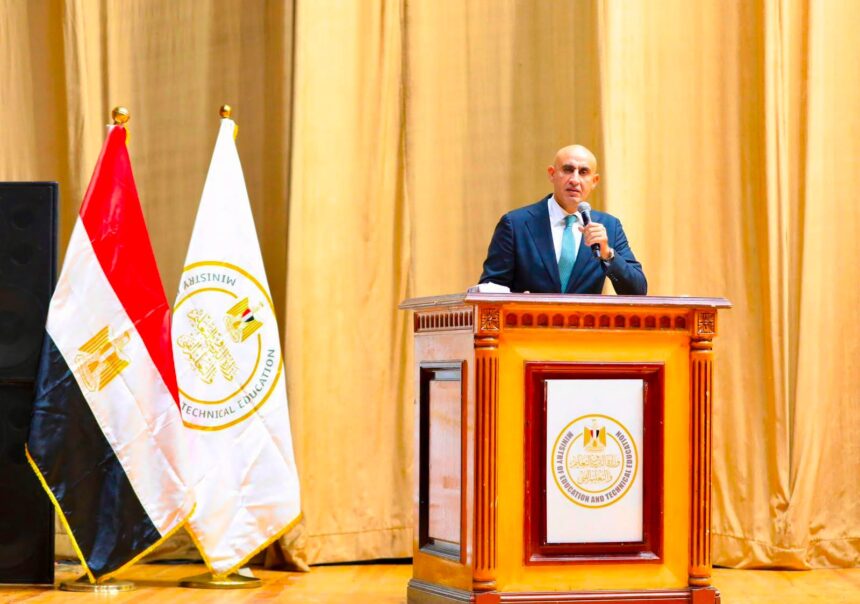
Abdellatif’s remarks came during an extensive meeting with approximately 4,500 school principals across various educational stages, alongside directorate and educational administration heads from 21 governorates, to discuss preparations for the new academic year. During the session, the minister emphasised that school principals and teachers are essential partners in educational decision-making.
The upcoming academic year will begin on 6 September for international schools, and 12 September for official, official languages, and distinguished official languages schools. Addressing classroom density, Abdellatif stated it is unacceptable to have more than 50 students per classroom, noting that all schools nationwide have committed to this mandated limit.
Discussing student literacy, Abdellatif cited recent United Nations reports indicating that the percentage of students with poor reading and writing skills dropped from 45% in the first assessment stage to 13% in the third. He emphasised that it is unacceptable for primary stage students to lack basic literacy skills, which serve as a foundational requirement for continued learning.
The minister issued several operational directives, instructing that religious education must be taught during the first four periods of the school day, and that all textbooks must be distributed on the first day of term without delay.
Regarding school maintenance, Abdellatif mandated strict disciplinary measures for vandalism. Any student who damages school furniture or facilities will be held financially responsible alongside their guardian, and will not be permitted to return to school until the damages are repaired according to regulations. He additionally directed schools to maintain regular maintenance schedules, coordinate with the Educational Buildings Authority, and focus on school planting and green spaces.
The minister also highlighted the Egyptian-Japanese educational experience as a pioneering model. Citing Japan’s global standing in mathematics, science, and programming, Abdellatif affirmed the ministry’s commitment to strengthening this partnership to benefit curriculum development.
The meeting was attended by Deputy Ministers Ahmed Daher and Ayman Bahaa El-Din; Assistant Minister for Strategic Planning and Follow-up Ahmed Al-Mohammadi; Assistant Minister for Examinations and Educational Evaluation Ramadan Mohamed; Assistant Minister for Presidential Initiatives and Curriculum Development Akram Hassan; Minister’s Advisor for Teachers’ Affairs Nadia Abdullah; Central Administration for Examinations Head Khaled Abdel Hakam; Permanent Undersecretary Mohamed Sami; Central Administration for Directorate Affairs Head Ali Abdel Raouf; and National Center for Educational Research Head Mohamed Ghazi.
Educational directors, administration heads, and school principals were in attendance from the governorates of Cairo, Giza, Qalyubia, Menoufia, Gharbia, Sharkia, Dakahlia, Alexandria, Beheira, Kafr El-Sheikh, Damietta, Port Said, Ismailia, Suez, Matrouh, North Sinai, South Sinai, Fayoum, Minya, Beni Suef, and Assiut.