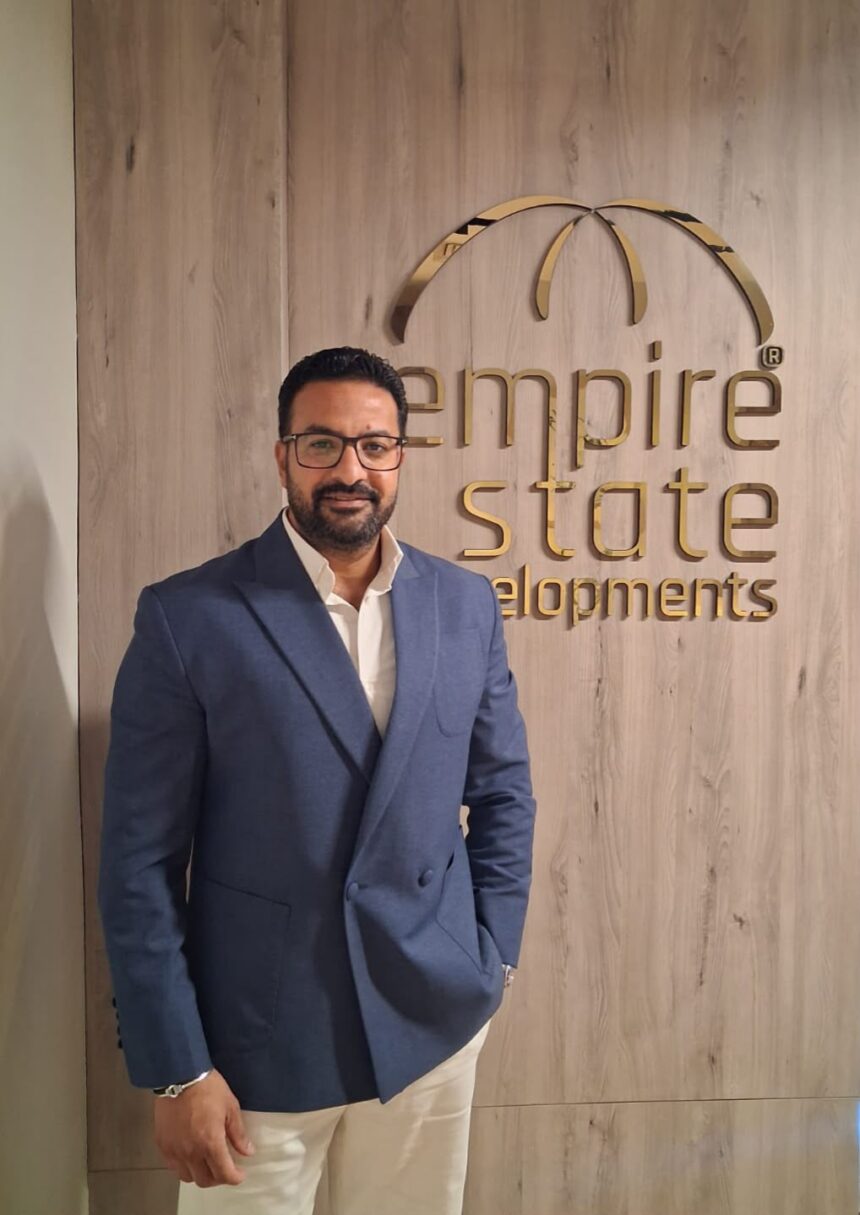
Egypt’s real estate market is entering a more selective phase where execution, liquidity management, and disciplined expansion matter more than rapid project launches, according to Mostafa Mohsen, Chairperson of Empire State Developments.
Mohsen said the company is focusing on growth and construction progress across all projects while preparing to achieve around EGP 5.6bn in sales from its latest residential project in the New Capital.
In an interview with Daily News Egypt, Mohsen explained that the company has adopted an ambitious expansion strategy in response to changing market conditions, prioritizing project delivery and cash flow management over launching multiple developments simultaneously.
He added that El Centro, the company’s mixed-use commercial and administrative project overlooking Central Park in Downtown New Capital, has recorded total contracted sales of EGP 1.5bn. Construction has surpassed 50%, with three basement levels completed and most of the above-ground floors already under construction. Around 97% of the project’s units have been sold, leaving only the top floor, which the company has intentionally retained.
Mohsen noted that Empire State is considering selling the floor at a later stage after further appreciation in value, or operating it as a panoramic restaurant, or leasing it to generate recurring income.
Empire State’s newest residential development, Upmount, launched in January 2026, is expected to generate total sales of EGP 5.5bn. The project consists of around 1,100 residential units, with deliveries scheduled to begin in 2030. He disclosed that the development introduces a modern interpretation of the “loft” concept, with double-height living spaces reaching six meters, inspired by contemporary international residential designs.
Loft apartments account for around 70% of total units, while conventional apartments represent the remaining 30%. Unit sizes range from 84 sqm to 230 sqm, offering one- to four-bedroom layouts. The first sales phase, representing around 30% of the project, has been largely sold, while future phases will include serviced apartments.
Mohsen highlighted that Egypt’s real estate developers have faced significant pressure following exchange-rate fluctuations and soaring construction costs, noting that the purchasing power of cash declined sharply over a short period.
Rather than relying on new project sales to finance existing developments, Empire State used internal resources from affiliated companies and shareholders to maintain construction progress. The company’s contracting subsidiary undertook construction works internally, reducing execution costs by accepting lower profit margins than external contractors, while an affiliated wood manufacturing business also contributed to lowering operating expenses.
Despite the recent slowdown in sales activity, Mohsen said the New Capital continues to offer attractive long-term investment opportunities. He noted that residential prices in districts such as R7 have increased from around EGP 6,000 per sqm in 2017–2018 to EGP 30,000–40,000 per sqm today, while administrative and commercial prices have risen from around EGP 20,000 per sqm in 2021 to nearly EGP 95,000 per sqm.
“The infrastructure is largely complete. The next phase is activating daily services, retail, restaurants, and entertainment facilities that encourage more residents to relocate permanently,” he said.
Foreign buyers account for more than 15% of Empire State’s sales, according to Mohsen, including investors from Gulf countries and Europe. The company plans to expand its overseas marketing efforts through property exhibitions in Saudi Arabia while continuing to target international investors interested in Egypt’s real estate sector.
Accordingly, Mohsen commented that Empire State will remain selective in launching new projects, preferring measured expansion over aggressive growth. While the company continues to see opportunities in the New Capital, it is also evaluating future investments in Sheikh Zayed, 6th of October City, and the North Coast, where demand remains relatively resilient.
He concluded that pricing decisions will continue to reflect changes in construction costs, exchange rates, and market conditions rather than fixed annual increases.