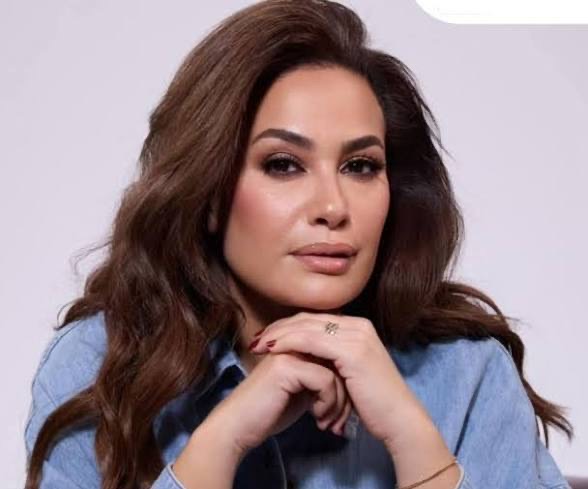
Following the standout success of “Manna’a” during Ramadan 2026–where it topped viewership charts and ignited wide critical and social debate–Tunisian actress Hend Sabry returns to the spotlight in a candid conversation on bold artistic choices, complex characters, and the evolving trajectory of her career.
■ After a four-year absence from Ramadan drama since “Hagma Mortadda” (2021) with Ahmed Ezz, why did you choose “Manna’a” for your return?
The primary reason was that it offered something entirely new for me. This is my first foray into popular drama, and also my first time portraying a character with such a dark, morally complex nature. The character of “Manna’a” –or “Gharam” at the beginning– is inspired by real events in Cairo’s El Batneyya neighbourhood in the mid-1980s, when the area was known as a hub for drug trafficking.
What drew me in was the transformation: a young widow evolving from a victim into a powerful figure in a harsh and unforgiving world. I had been searching for a role that breaks away from idealised portrayals. Ramadan audiences are naturally drawn to strong, conflict-driven narratives, and this project delivered exactly that. I was also captivated by the 1980s setting–its nostalgia, music, fashion, and visual identity. It felt like the perfect opportunity to present something both artistically rich and widely engaging.
■ Was portraying a villainous character like “Manna’a” a major artistic risk?
Absolutely–but it was a calculated one. Every meaningful project involves risk, and I have always embraced change and diversity in my career. The character is morally condemned for her actions, yet the story does not glorify evil. Instead, it explores the internal struggle between good and evil, and how extreme circumstances can push an ordinary person towards a darker path.
What I appreciated most was that the narrative ultimately restores moral balance. There is a powerful moment of redemption in the final episode. Perfect characters rarely create compelling drama–human contradictions are what make roles memorable. Judging by audience reactions, that depth clearly resonated.
■ Were you concerned about comparisons with previous works depicting El Batneyya and the drug trade?
I was aware that comparisons were inevitable, but we were never trying to replicate anything. We are telling a completely new story with its own details. The El Batneyya of the 1980s is a rich and layered setting, full of social and human conflict–comparable in depth to global classics such as The Godfather.
There is a whole generation today that knows very little about this district and its history, or how security campaigns eventually dismantled the drug trade there. The series reconstructs that world with authenticity, which is why it connected so strongly with audiences.

■ What was the biggest challenge during filming?
The challenge was both personal and collective. Recreating the 1980s with authenticity required enormous effort. United Media Services built a full replica of the El Batneyya neighbourhood at the Egyptian Media Production City. Every detail mattered–set design, costumes, vehicles, language, even the smallest accessories.
We wanted viewers to feel they were truly living in that era. On a personal level, the role was emotionally demanding, requiring a complex psychological journey–from vulnerability to power, and ultimately to self-awareness.
■ How was your collaboration with Ahmed Khaled Saleh, given your relationship with his late father?
Ahmed is like family to me. I have known him for many years, and I shared a close friendship with his father. During filming, I often found myself remembering Khaled, which brought moments of deep emotion.
At the same time, I felt proud to see Ahmed continuing his father’s legacy. Our collaboration was both warm and professional, and I believe that chemistry translated naturally on screen.
■ Did the intense competition of Ramadan 2026 influence your decision?
Not really. My focus has always been on the quality of the project rather than competition. That said, Ramadan 2026 was one of the strongest seasons in recent years, with remarkable diversity and high production value.
I’m very pleased with the success of “Manna’a” and proud that it managed to stand out. Ultimately, audiences seek quality–and that’s what we aimed to deliver.
■ What did “Manna’a” add to you, both artistically and personally?
It added a great deal. Artistically, it allowed me to explore popular drama for the first time–a genre I had long been curious about. The character itself was powerful, layered, and deeply human.
On a personal level, it taught me a great deal about psychological resilience and the human capacity to endure and adapt. The success of the series also gave me a significant emotional boost after my time away from Ramadan drama.
■ Were you affected by behind-the-scenes tensions or social media controversy?
Constructive criticism never bothers me–it is part of the profession. As for social media noise, I’ve learned that it does not necessarily reflect real public opinion.
The response I receive directly from audiences has been overwhelmingly positive. As for behind-the-scenes disagreements, they are natural in any large production, and I prefer not to dwell on them. What matters most is the final result.
■ You recently received the “Omar Sharif Award for Artistic Achievement”. How do you view this recognition?
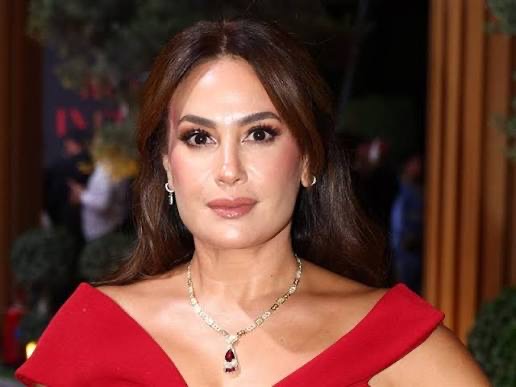
It is an honour I deeply value. Receiving an award bearing the name of Omar Sharif is incredibly meaningful, especially after more than 25 years in the industry.
It feels like recognition of my entire journey–from “Mowaten we Mokhber we Haramy” to “Emaret Yacoubian” and “Kira we El Gin”, and now “Manna’a”. I’m deeply grateful to the Red Sea International Film Festival and everyone involved.
■ What are your upcoming film projects?
I have two films that I will soon resume work on. The first is “Ad’af Khalqoh”, starring Ahmed Helmy and directed by Omar Hilal. The second is “Hamlet”, directed by Ahmed Fouzi Saleh.
Both projects are entirely different in terms of subject and character, and each presents new artistic challenges. It marks an exciting return to cinema after focusing on television.
■ What criteria guide your choice of roles at this stage?
Diversity above all. I always look for projects that differ from my previous work–whether in subject, character, or overall artistic vision.
I want every role to add something meaningful to my journey. The audience deserves originality and excellence, and that remains my guiding principle.
■ A final message to your audience?
I thank them from the bottom of my heart for their patience and unwavering support. “Manna’a” was my gift to them, and I promise many more projects worthy of their trust.