Egypt’s Ministry of Tourism and Antiquities has announced a major archaeological discovery at the Panhesy Tomb site in the Matariya district of Ain Shams, unveiling new evidence of funerary practices and daily life in the ancient necropolis of Heliopolis across multiple historical periods.
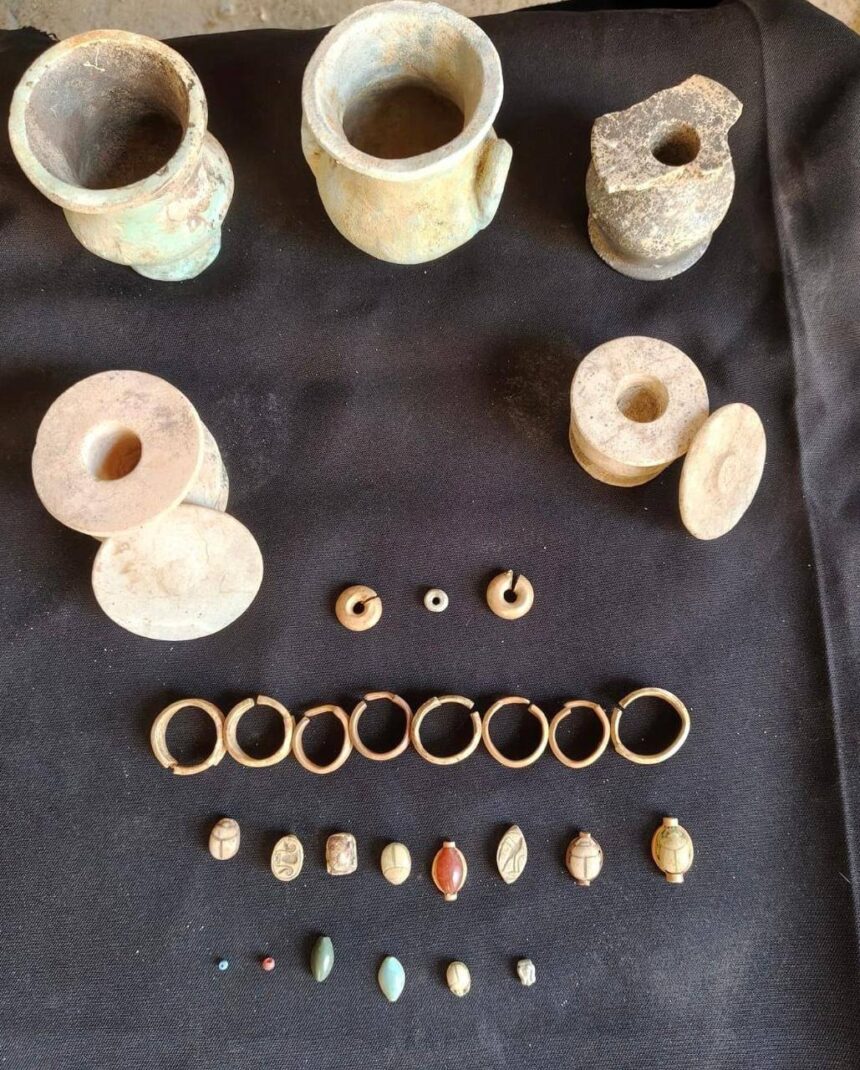
The discovery was made by an Egyptian archaeological mission from the Supreme Council of Antiquities during ongoing excavations at the site. Archaeologists uncovered a unique cache believed to represent the first near-complete funerary assemblage ever found in the area, alongside a collection of rare artefacts and several metal earrings that preliminary analysis suggests may be made of gold.
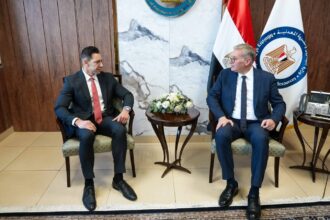
Minister of Tourism and Antiquities Sherif Fathy described the discovery as a significant achievement that reflects the growing success of Egyptian archaeological missions in uncovering and reinterpreting the history of ancient Heliopolis, one of the oldest and most influential religious centres of the ancient world.
“The newly discovered artefacts provide a clearer picture of the daily life and funerary practices of the area’s inhabitants throughout different historical eras,” Fathy said.
Exceptional Cache of Funerary Objects
According to Hesham El-Leithy, Secretary-General of the Supreme Council of Antiquities, excavations initially revealed a mudbrick burial containing human skeletal remains. Further excavation beneath the burial led to the discovery of a remarkable cache of funerary objects and personal adornments associated with ancient burial rituals.
Among the most significant finds were a copper mirror, two alabaster kohl containers with lids that still preserve traces of cosmetic substances, and a third kohl vessel crafted from black obsidian, a rare material in comparable archaeological contexts.
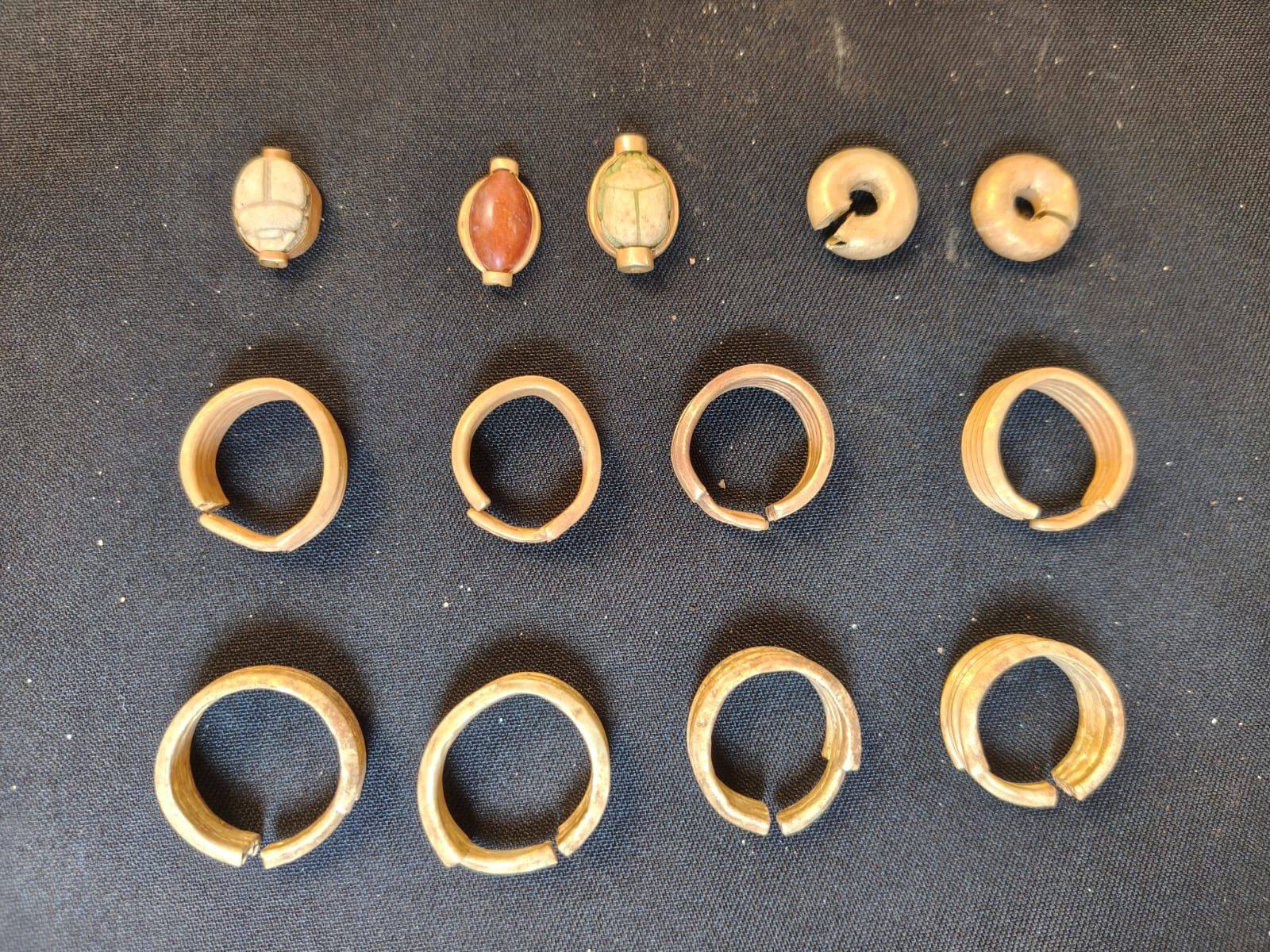
The mission, led by Kotb Fawzy Kotb, Head of the Central Administration of Cairo and Giza Antiquities, also uncovered two light-blue faience vessels. One of the vessels contained six symbolic scarabs engraved with sunken inscriptions, including two scarabs mounted in yellow metal frames believed to be made of gold.
Gold Jewellery and Rare Amulets
Mohamed Abdel Badie, Head of the Egyptian Antiquities Sector at the Supreme Council of Antiquities, said the assemblage also included a collection of symbolic faience amulets, including one shaped like a duck and another depicting the Atef Crown, a significant symbol associated with ancient Egyptian religious beliefs.
Archaeologists further recovered four semi-precious stones, two of which are believed to be agate. One reddish-pink stone was mounted in a yellow metal frame likely made of gold, while another displayed a distinctive greenish-blue colouration.
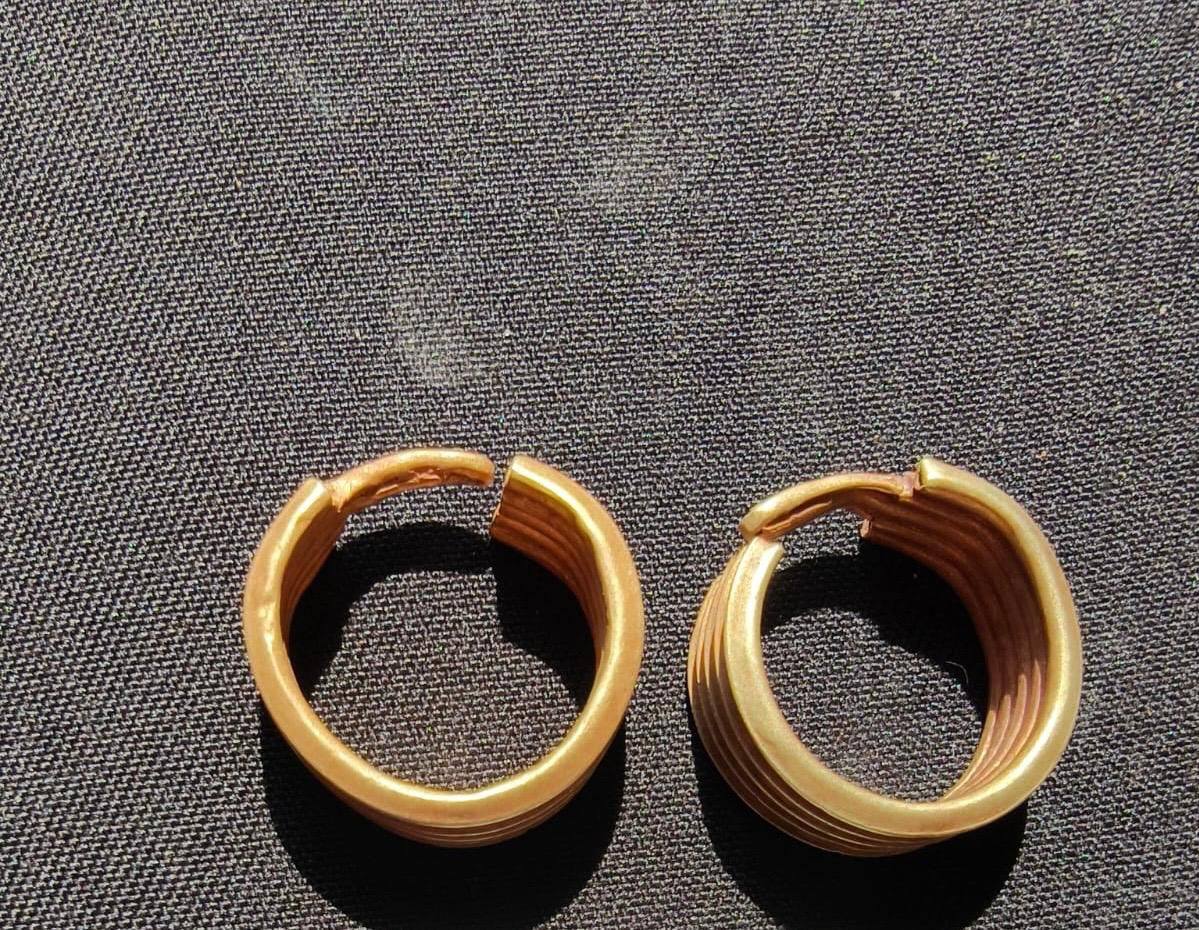
The excavation additionally revealed an exceptional collection of yellow-coloured metal earrings comprising five pairs of varying sizes. Preliminary examinations indicate the earrings are likely made of gold, with diameters ranging between 1.5 and 2.5 centimetres.
Building on Earlier Discoveries
Abdel Badie noted that the latest finds build upon discoveries made earlier during the current excavation season.
Previous work at the site uncovered remains of funerary structures constructed from mudbrick and limestone, along with two fragmented coffins—one made of pottery and another fashioned from gilded plaster decorated with red-painted motifs.
The latter coffin contained gilded human remains believed to belong to a military figure, as well as a coin that may date to the Roman period. Archaeologists also recovered limestone blocks bearing hieroglyphic inscriptions, providing valuable evidence for understanding the site’s chronology and cultural development.
Insights into Ancient Heliopolis
The Panhesy necropolis represents an important archaeological record documenting successive phases of occupation and use in the region. The cemetery served as a burial ground for prominent individuals from the Late Period through the Roman era and into the Christian period.
The site forms part of the vast necropolis of ancient Heliopolis—known in antiquity as Iunu (On)—which was the principal religious centre dedicated to the worship of the sun god Ra.
Archaeologists believe the discovery offers valuable new evidence for studying funerary customs, religious beliefs, and social change in one of ancient Egypt’s most sacred and historically significant cities, further enriching understanding of the civilisation that flourished there for millennia.