

Egypt has launched an intensive diplomatic offensive to prevent the Middle East from descending into “total chaos,” promoting a potential dialogue between the United States and Iran as the “only way” to ensure regional stability.
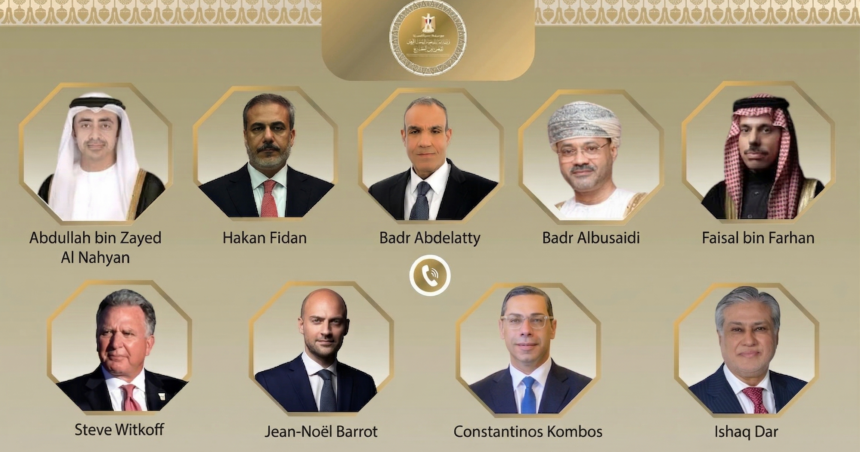
Foreign Minister Badr Abdelatty held a series of high-level telephone consultations on Monday and Tuesday with counterparts from Jordan, Saudi Arabia, the United Arab Emirates, Oman, Turkey, Pakistan, France, and Cyprus, as well as US Special Envoy for the Middle East Steve Witkoff. The discussions focused on containing the current military escalation, which Cairo warned could lead to “uncalculated consequences” for both regional and international peace.
Spokesman Tamim Khallaf stated that the diplomatic push aims to advance a negotiating path between Tehran and Washington in light of a recent initiative by US President Donald Trump. Abdelatty emphasised that the language of dialogue is the “true guarantee” to protect the region from an expanding conflict and to safeguard the resources of its people.
During his calls, the foreign minister issued a “full condemnation” of Iranian attacks targeting Gulf states, asserting that such actions cannot be justified by “flimsy pretexts” and must stop immediately. He confirmed that Egypt is actively engaging with all initiatives aimed at achieving a ceasefire and ending the war, stressing that Cairo will “spare no effort” in promoting diplomacy.
In a follow-up discussion on Tuesday with Jordanian Foreign Minister Ayman Safadi, the two ministers renewed their condemnation of Iranian attacks on Jordan and the Gulf. They declared “absolute solidarity” in protecting Arab national security and called for the activation of joint Arab action to face shared political and economic challenges. Respect for international law and state sovereignty, they noted, are essential conditions for a stable future.
Abdelatty and Safadi also coordinated on the upcoming ordinary session of the Arab League Council at the ministerial level, set for the end of March. They underscored the importance of the meeting in establishing a “unified Arab position” against the “dangerous escalation” currently facing the region.
Turning to the conflict in Lebanon, the ministers expressed support for Lebanese stability and the government’s authority over its entire territory, specifically backing the decision to ensure all weaponry is held solely by the state. They condemned Israeli “aggression” in Lebanon and what they described as “expansionist policies” in the region.
The ministers further warned that international focus on the confrontation with Iran must not come at the expense of efforts to end the “humanitarian catastrophe” in Gaza. They condemned “illegal” Israeli measures and settler attacks in the West Bank as “flagrant violations of international law” and denounced continued restrictions on the rights of Muslims and Christians to worship at holy sites in the occupied Palestinian territories.


