

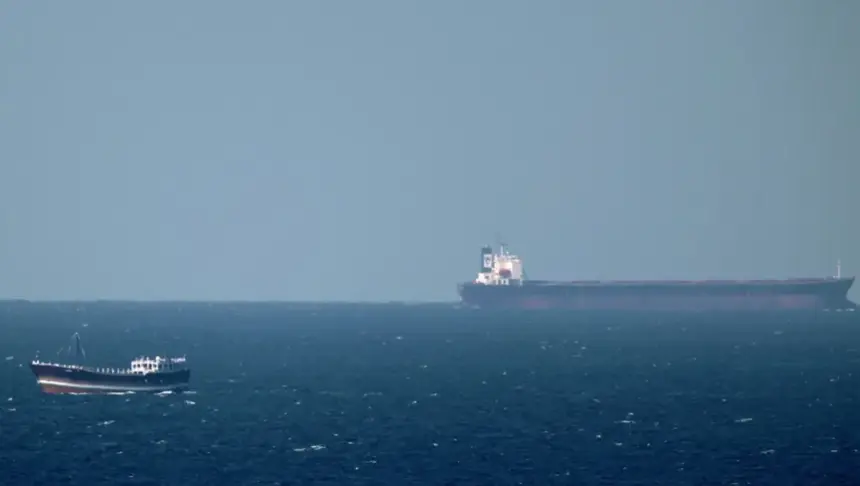
Global oil markets are facing escalating chaos as major producers begin cutting output and prices surge toward $100 a barrel following the effective closure of the Strait of Hormuz amid the ongoing conflict involving Iran, the United States, and Israel.
The United Arab Emirates and Kuwait have already commenced crude production cuts as storage facilities reach capacity, joining Iraq, where output has plummeted by approximately 60%. Analysts warn that other nations may be forced to take similar measures as tankers increasingly avoid the narrow Hormuz waterway, a passage that typically handles a fifth of the world’s oil. The disruption, now in its ninth day, shows no sign of an imminent resolution, leaving the vital corridor largely impassable.
Brent crude jumped 30% last week, marking its largest weekly gain in six years and leaving the benchmark only a few dollars away from the $100 threshold. Other regional indicators have already surpassed this level; Abu Dhabi’s Murban crude closed at $103 on Friday, while Oman crude futures reached $107. On the Shanghai International Energy Exchange in China, crude futures ended trading at the equivalent of $109 per barrel.
“Every extra day of disruption adds pressure, and in this scenario there is effectively no real ceiling on prices in the short term,” said Stefano Grasso, a former physical energy trader and senior portfolio manager at 8VantEdge in Singapore.
The geopolitical tension was further inflamed on Saturday when U.S. President Donald Trump stated that Washington would consider targeting previously untouched areas and groups in Iran. The President’s comments followed Iran’s vow not to retreat after U.S. and Israeli strikes began on Feb. 28. “The attacks will continue until they surrender or, more likely, collapse entirely!” Trump posted on social media.
Despite the escalation, U.S. Energy Secretary Chris Wright told CNN’s “State of the Union” on Sunday that the market is currently pricing in a “fear premium” that will not last. He predicted that even in a worst-case scenario, the timeline for a return to normalcy would be weeks rather than months. To mitigate the impact, Washington has launched a maritime reinsurance programme for the Gulf, covering up to $20bn in losses on a revolving basis.
On the ground, physical threats to energy infrastructure continue to mount. Saudi Arabia intercepted drones targeting the 1m barrel-per-day Shaybah oil field over the weekend, while Iranian strikes have continued against Bahrain and Qatar. Saudi Arabia is currently diverting record volumes of crude—approximately 2.3m barrels per day—to its Red Sea coast for export. While this is 50% higher than any month since late 2016, it remains far below the 6m barrels per day typically exported via the Arabian Gulf.
The supply squeeze is being felt acutely at the pump. In the United States, the national average for regular petrol reached $3.41 per gallon on Saturday, the highest level recorded during the Trump presidency. Patrick De Haan, head of petroleum analysis at GasBuddy, noted that a move toward $4.00 per gallon is no longer an unlikely scenario.
“The price is very high… especially in New York, everything has become very expensive,” said Ahmed Abdel Meguid, an Uber driver, while refuelling his vehicle in New York City.
The crisis has also sent jet fuel prices to record levels. In Northwest Europe, jet fuel hit $1,528 per tonne ($190 per barrel) on Thursday, as half of the European Union’s imports of the fuel usually transit through Hormuz. Susan Bell, senior vice president of downstream research at Rystad Energy, warned that with refineries already operating near maximum capacity, “prices could rise to no end… and without care.”
Asia, which is heavily dependent on Middle Eastern imports, is facing direct supply shortages. Japan, which sources 90% of its crude from the region, is seeing refiners request access to national reserves. China has reduced fuel exports to protect domestic supplies, and South Korea is considering oil price caps for the first time in 30 years, according to the Yonhap news agency.
Analysts at ING Groep suggest a base-case scenario of four weeks of disruption. Warren Patterson, the bank’s head of commodities strategy, noted that while U.S. and Israeli strikes might eventually weaken Iran’s ability to block the strait, a more extreme three-month total disruption of oil and liquefied natural gas flows could push prices to all-time records during the second quarter.