An Egyptian archaeological mission from the Supreme Council of Antiquities has uncovered two tombs dating back to Egypt’s Early Dynastic Period, along with several burials from the Predynastic and Late Periods, during excavation works at the Jabal Al-Tayr site in Minya.
The discovery sheds new light on the evolution of funerary architecture in ancient Egypt and underscores the long-term significance of Jabal Al-Tayr as a burial ground spanning multiple historical eras.
Minister of Tourism and Antiquities Sherif Fathy described the find as a significant addition to Egypt’s growing record of archaeological discoveries, noting that it provides valuable evidence for tracing the development of tomb architecture across different periods of history.
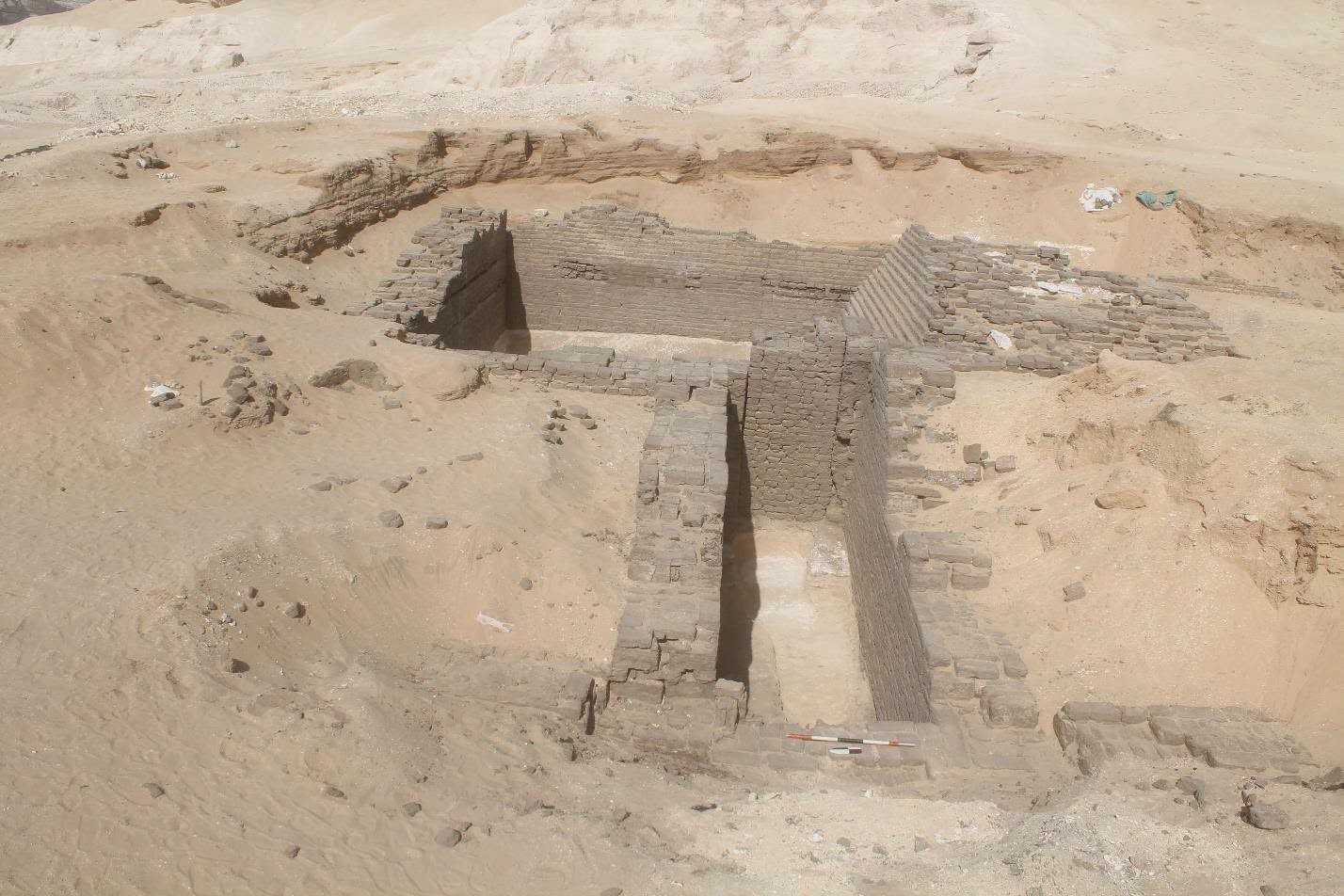
Hisham El-Leithy, Secretary-General of the Supreme Council of Antiquities, stated that the first tomb represents a rare architectural discovery due to its distinctive geometric design, while the second tomb closely resembles it and has been preserved in remarkably good condition. Preliminary studies indicate striking similarities between the design of the newly discovered tombs and the famous tomb of King Den at Abydos. According to El-Leithy, this resemblance reinforces the archaeological importance of Jabal Al-Tayr and confirms its status as a key necropolis used continuously from the Predynastic through the Late Period.
Mohamed Abdel Badie, Head of the Egyptian Antiquities Sector, revealed that the first tomb features a unique construction technique in which wall thickness gradually decreases from the base to the top. He noted that this concept may represent an early stage in the engineering evolution that eventually led to the Step Pyramid and later the true pyramid form. He added that the tomb likely underwent quarrying in later periods for stone extraction, yet surviving sections preserve important details about construction methods of the era, including oxidation lines that illustrate precise stone-cutting techniques and massive wooden supports used to reinforce the walls.
The second tomb, located south of the first, follows nearly the same architectural layout but appears not to have been subjected to quarrying, allowing many of its original features to remain intact.
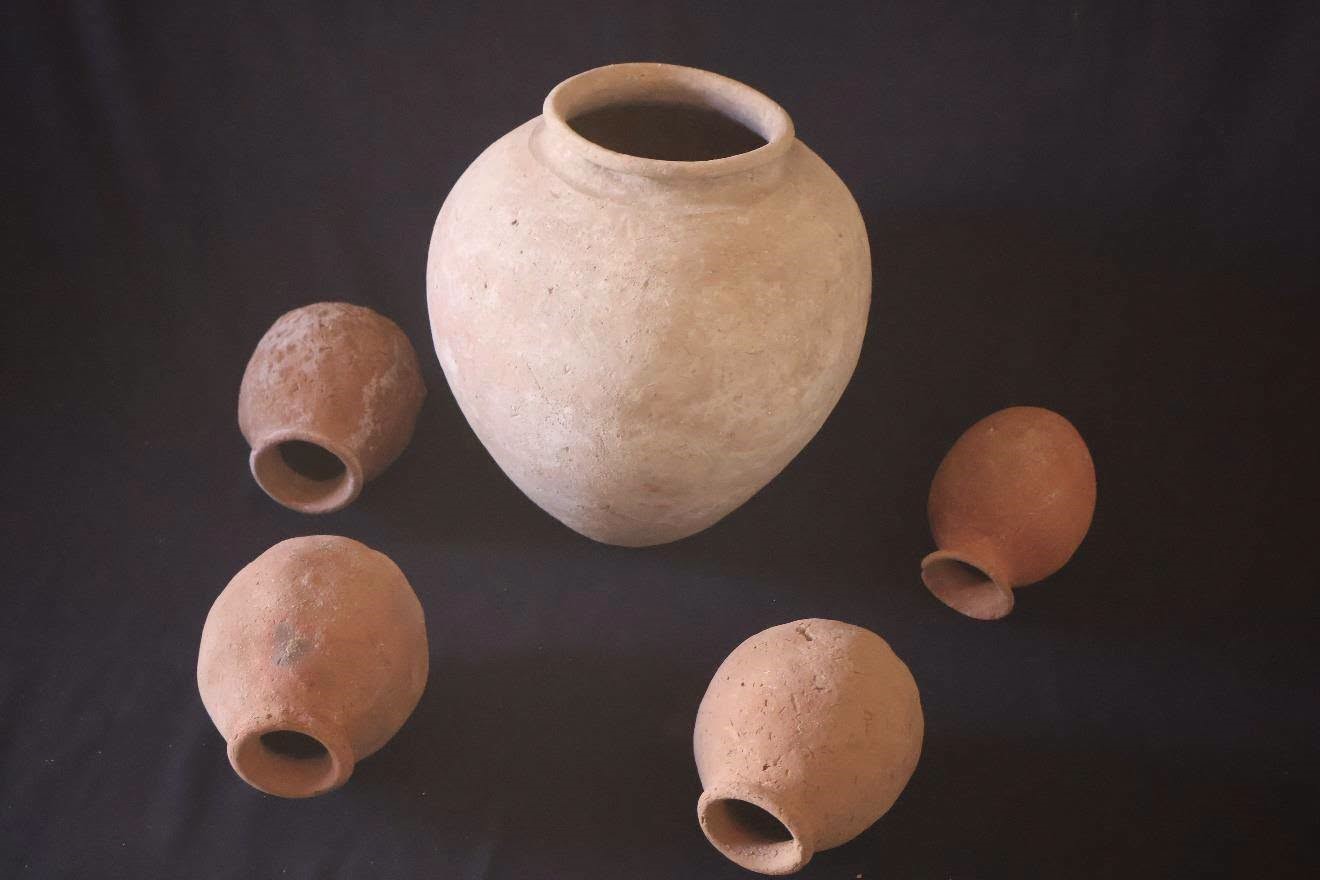
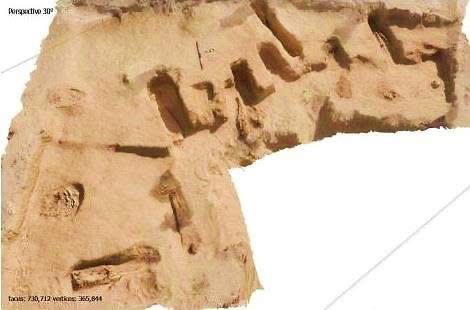
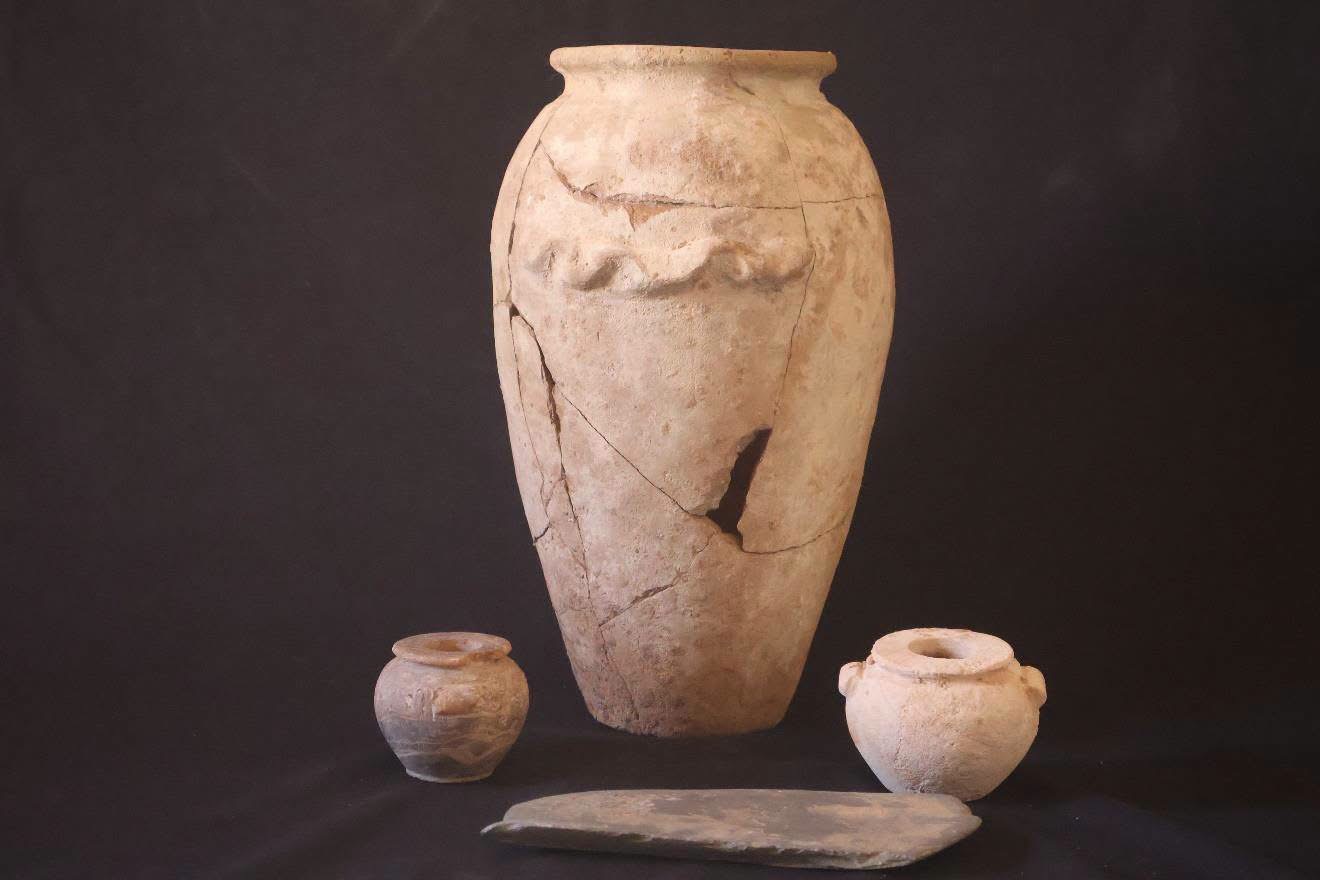
Meanwhile, Sami Dardiri, Head of the Central Administration of Middle Egypt Antiquities, announced that excavations also uncovered part of a Predynastic cemetery containing burials in a crouched position wrapped in deteriorated plant mats. Several graves were accompanied by black-topped pottery vessels dating to the Naqada II and Naqada III periods.
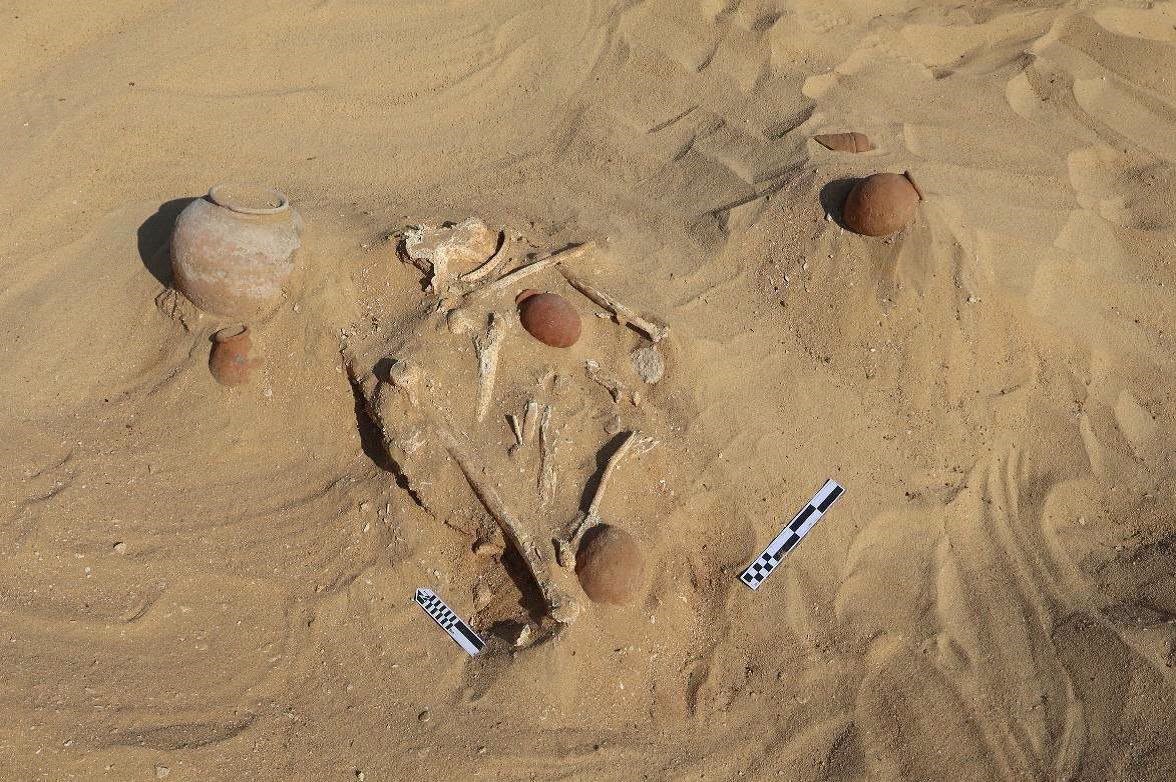
The mission further discovered a number of individual and collective human burials, some within decayed wooden coffins believed to date to the Late Period. These findings provide additional evidence that the area continued to serve as a cemetery across successive historical eras.
Excavation work at the site is ongoing, with archaeologists expecting further discoveries that may reveal additional details about the history and development of one of Middle Egypt’s most significant ancient burial grounds.