

US President Donald Trump called for restraint on Sunday after Israeli strikes on Beirut’s southern suburbs threatened to derail what he described as a near-final peace agreement with Iran, warning that a rare opportunity to bring greater stability to the region should not be squandered.
“The attack in Beirut should not have happened, especially on such an important day,” Trump said on Truth Social, referring to ongoing efforts to secure a US-Iran understanding. While reiterating that Israel had “the right to defend itself against threats,” he described the incident that triggered the Israeli response as “minor and insignificant.”
“We are very close to an agreement that could bring peace to the region, including Lebanon,” Trump wrote. “Israel should not launch further attacks anywhere in Lebanon, and no other party, including Hezbollah, should attack Israel. This could be the beginning of a long and beautiful peace. Don’t ruin it.”
Trump’s comments came as Israeli media reported that the country’s security cabinet would convene in a fortified bunker amid concerns over potential Iranian missile attacks. Israel’s police commissioner ordered heightened alert levels nationwide, while the military said air raid sirens had sounded across parts of northern Israel and that the incident was under investigation.
Earlier in the day, Israeli warplanes struck Hezbollah targets in Beirut’s southern suburbs following orders from Prime Minister Benjamin Netanyahu and Defence Minister Israel Katz. The Israeli military said it had carried out a “precise strike” against Hezbollah infrastructure in response to fire directed at Israeli territory.
Lebanon’s Health Ministry said the strike on the Ghobeiry area killed three people, including two women, and wounded 16 others, according to a preliminary toll.
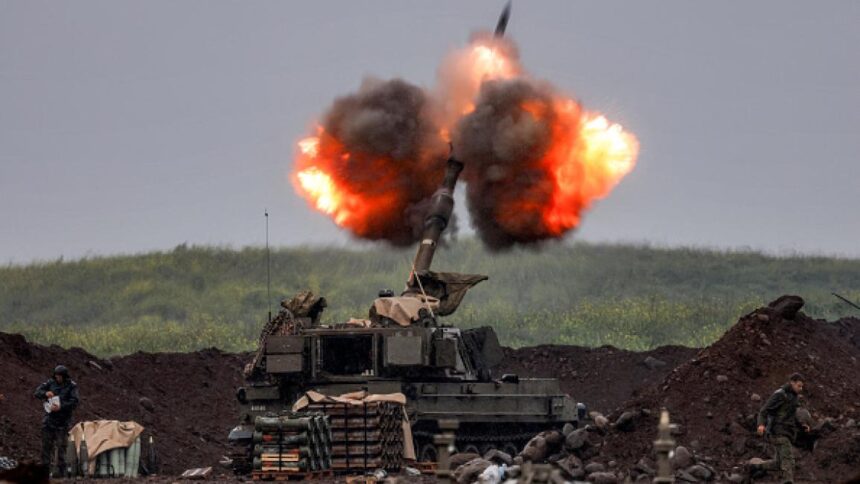
Israeli forces also expanded operations across southern Lebanon. Air strikes and artillery shelling targeted several towns, including Srifa, Choukin, Nabatieh al-Fawqa, and areas around Kfartebnit, while shelling struck the outskirts of Smaiyeh and Deir Qanoun Ras al-Ain near Tyre.
Hezbollah said it had responded by launching rockets at concentrations of Israeli troops and military vehicles near Kfartebnit and carrying out a third strike on the southern outskirts of Majdal Zoun. The group also accused Israel of escalating attacks after issuing evacuation orders covering 24 towns and villages south of the Zahrani River.
The latest escalation raised concerns in Tehran, where Parliament Speaker Mohammad Bagher Ghalibaf warned that the Beirut strike directly threatened the diplomatic track with Washington. He said the attack had been carried out with a “green light from the United States” and demonstrated either Washington’s unwillingness or inability to uphold previous commitments to protect Beirut’s southern suburbs from attack.
Iranian Foreign Minister Abbas Araghchi, however, maintained that Tehran had emerged from the conflict in a stronger position.
“Many officials and political observers now acknowledge that Iran has come out of this war more powerful and cohesive,” Araghchi said during a meeting in Tehran, attributing that perception not only to Iran’s military capabilities but also to the resilience and unity of its people.
Despite Trump’s repeated insistence that an agreement would be signed on Sunday, Iranian officials urged caution. Foreign Ministry spokesperson Esmaeil Baghaei said negotiations under the so-called Islamabad Memorandum remained focused on ending the conflict and that the nuclear file had deliberately been set aside at this stage.
“The timing of any memorandum remains uncertain,” Baghaei said, adding that Tehran was closely monitoring developments amid the absence of clear public signals from Washington.
Iran’s Fars News Agency suggested that Trump’s unusual emphasis on securing a Sunday signing reflected a desire to transform the occasion into a symbolic political victory, noting that the date coincided with the US president’s birthday. The agency said Iranian negotiators were aware of the optics and would not allow the process to become a media spectacle.
Pakistani Prime Minister Shehbaz Sharif nevertheless struck an optimistic tone, saying the two sides were “closer than ever” to a peace agreement and expressing hope that a deal could be concluded within 24 hours.
The developments underscore the fragility of ongoing diplomatic efforts, with renewed military escalation threatening to complicate negotiations that regional and international actors hope could ease tensions and pave the way for a broader period of stability in the Middle East.