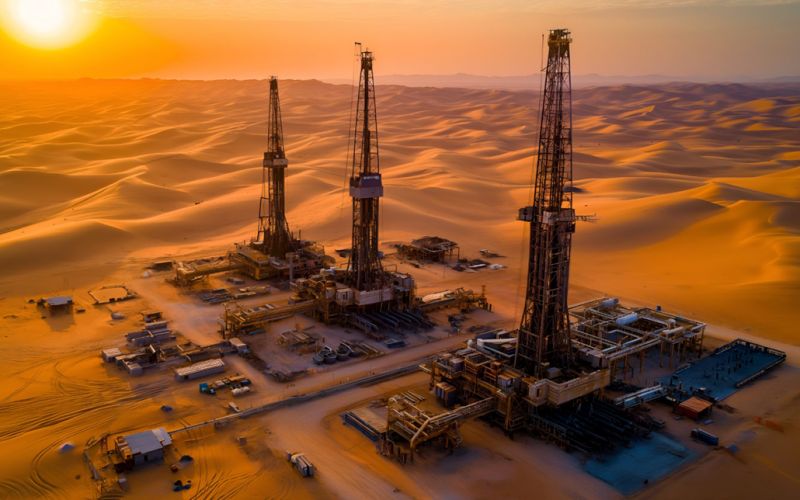
Egypt’s petroleum sector has increased production in the Western Desert by approximately 12,000 barrels per day (bpd) of crude oil and condensates over the past two weeks, driven by output growth from Khalda Petroleum and the General Petroleum Company.
The Ministry of Petroleum and Mineral Resources attributed the production additions to intensive investment programmes implemented after settling accumulated dues to investment partners. The ministry stated that gradually reducing these arrears over a two-year period restored investor confidence, accelerated exploration and drilling activities, and converted promising opportunities into actual production.
Khalda Petroleum, a joint venture between the Egyptian General Petroleum Corporation and U.S.-based Apache Corporation, accounted for more than 10,000 bpd of the recent increase. The company’s production rose from 113,300 bpd on May 26, 2026, to approximately 123,500 bpd on June 8, 2026.
According to the ministry, Khalda achieved this increase by bringing five new wells online—three developmental and two exploratory. The company utilised artificial intelligence and digital solutions to accelerate the development of discoveries and maximise production efficiency.
Concurrently, the state-owned General Petroleum Company recorded its highest production rates since October 2024. The company’s total output reached approximately 74,500 barrels of oil equivalent per day, which includes roughly 61,000 barrels of crude oil.
The company’s recent gains included putting the GPF-1X exploratory well on production in the Abu Senan area of the Western Desert, yielding 1,500 bpd of crude alongside one million cubic feet of natural gas per day. The ministry noted that the Abu Senan operations serve as a model for maximising output from mature fields using modern technologies and Egyptian technical expertise.
Drilling results at the GPF-1X site also indicated the presence of oil-bearing structures in additional layers, including North Bahariya and Abu Roash. Further testing and evaluation are planned for the coming period to assess the potential for adding new reserves.
The ministry stated that the overall results reflect its strategy to develop new discoveries, expand drilling operations, and create an attractive environment for further investments, which aims to support domestic production and reduce the national import bill.