

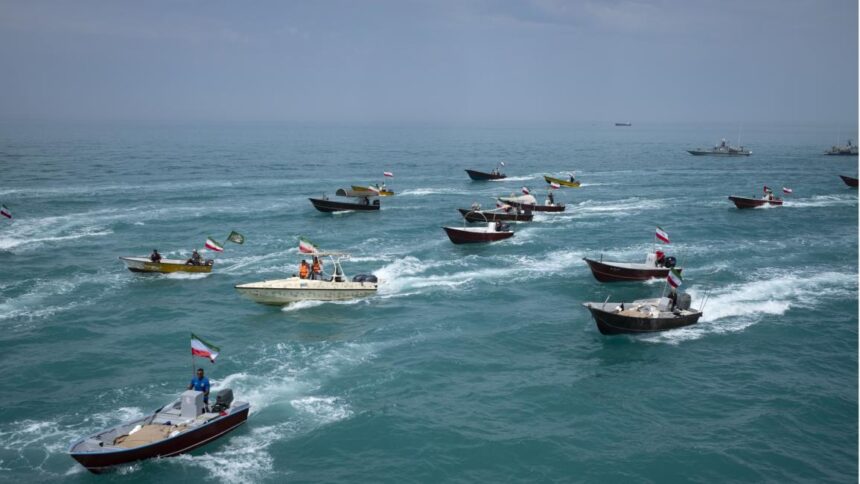
Iran and the United States sharply escalated rhetoric over the Strait of Hormuz on Wednesday, with Tehran warning of an “unprecedented practical military response” if Washington maintains its naval blockade near the strategic waterway.
Iranian state television, citing an informed source, said continued US “maritime piracy” and restrictions on shipping could trigger direct action if Washington fails to meet Tehran’s conditions. The source added that Iran’s restraint so far has been aimed at preserving diplomatic opportunities, but sustained naval pressure could usher in a new phase of escalation carrying significant costs for the United States.
Reflecting a tougher stance, Kazem Gharibabadi, Iran’s Deputy Foreign Minister, said some neighbouring countries could no longer be considered neutral if found to have facilitated US or Israeli military operations against Iran, underscoring broader regional tensions.
Meanwhile, the The Wall Street Journal reported that Donald Trump has instructed aides to prepare for a prolonged blockade strategy targeting Iran’s economy by tightening restrictions on vessels travelling to and from Iranian ports, in an effort to force concessions over Tehran’s nuclear programme.
The developments come amid significant disruption to global trade flows. The United Nations said shipping traffic through the strait has fallen by 95.3% since the outbreak of conflict on 28 February, with wide-ranging implications for energy markets and supply chains. UN officials estimated food prices have risen by around 6%, while crude oil prices in Europe have surged by 53% due to shipping constraints.
The sharp decline highlights the strategic importance of Hormuz, a critical chokepoint through which roughly one-fifth of global oil trade passes, making any prolonged disruption a major international concern.
At the same time, CNN reported that Pakistani mediators are expecting a revised Iranian peace proposal after Washington rejected an earlier offer, suggesting diplomatic channels remain open despite mounting military and economic pressure.
On the nuclear front, Rafael Grossi, Director General of the International Atomic Energy Agency, said a US-Iran agreement would require political will from Tehran. He added that most of Iran’s highly enriched uranium is believed to remain at the Isfahan nuclear complex despite recent strikes.
Grossi noted that the agency is seeking access to inspect nuclear facilities at Natanz nuclear facility and Fordow Fuel Enrichment Plant, stressing that highly enriched uranium should either be removed from Iran or reduced to lower enrichment levels.
