
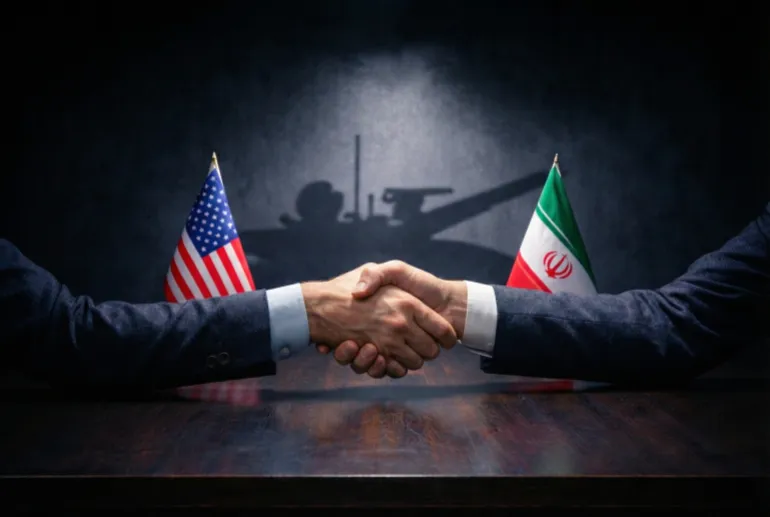
The United States and Iran appeared on Saturday to be closer than ever to ending months of conflict, with Pakistani and Iranian officials signalling a potential breakthrough, even as new intelligence disclosures and continued violence in Lebanon underscored the fragility of the moment.
Pakistani Prime Minister Shehbaz Sharif said Washington and Tehran had reached the final text of a peace agreement and were expected to complete an electronic signing process within the next 24 hours.
“We have never been closer to a peace agreement,” Sharif said, according to Reuters. “The United States and Iran have agreed on a framework that will end months of conflict in the Middle East.”
Iranian Foreign Minister Abbas Araghchi revealed additional details about the proposed memorandum of understanding, saying it spans fewer than two pages and allows negotiations to be extended beyond 60 days if a final agreement is not reached. He noted that Iran’s Supreme National Security Council is fully overseeing both the negotiations and the draft text.
However, Iran’s Foreign Ministry sought to temper expectations, stressing that the memorandum is not a final agreement with Washington but rather a framework aimed at ending the conflict and addressing the core issues dividing the two sides.
“Given previous experiences, the focus at this stage is solely on ending the war on all fronts, including Lebanon,” the ministry’s spokesperson said, adding that the complex issues between Tehran and Washington would require careful follow-up.
The cautious optimism surrounding the talks coincided with reports of continued preparations for a possible military confrontation. CNN, citing five sources familiar with US intelligence assessments, reported that Iran had deliberately collapsed tunnels containing its stockpile of highly enriched uranium and planted mines at their entrances to hinder future access.
The network also reported that General Dan Caine, Chair of the Joint Chiefs of Staff, made a discreet visit to US Central Command headquarters in Florida late last month to review contingency plans involving the deployment of ground forces into Iran to secure the uranium stockpile if required.
Meanwhile, Iranian President Masoud Pezeshkian said the conflict had failed to achieve its objectives despite the deaths of senior military commanders and nuclear scientists, as well as attacks on Iranian infrastructure. He praised the Iranian people for enduring economic hardship, describing their resilience as “a major test.”
Regional actors also sought to distance themselves from the conflict. The United Arab Emirates firmly denied media reports alleging that it had transferred or facilitated the release of $3bn in frozen Iranian assets, calling the claims baseless and urging media outlets to rely on official sources.
Despite the diplomatic momentum, fighting continued along the Lebanese front. Israeli strikes targeted areas around Nabatieh and Kfar Rumman in southern Lebanon, while artillery fire hit the town of Majdal Zoun near Tyre.
Hezbollah said it launched two explosive drones at a gathering of Israeli troops near Kfartebnit and fired rockets at an Israeli military position in Maroun al-Ras.
In Beirut, Prime Minister Nawaf Salam told Reuters that Hezbollah should move “as fast as we are, or at the same pace,” in supporting Lebanon’s negotiations in Washington.
“We remain in constant contact with Hezbollah, and all that is required is that it fulfils its commitments,” Salam said. “Our problem with Hezbollah is its weapons. We regard the party as a Lebanese political force.”
He added that while developments in the Islamabad talks were having repercussions inside Lebanon, “no one negotiates on behalf of Lebanon,” reiterating that southern Lebanon should ultimately become a weapons-free zone.
Separately, Iranian authorities announced that funeral ceremonies for Supreme Leader Ali Khamenei and members of his family will begin on 4 July in several Iranian cities before concluding with burial rites in the holy city of Mashhad.