

Think tanks and research centres in the United States play a pivotal role in shaping policymaking; not merely as academic observers, but as influential actors that help frame future scenarios guiding US domestic and foreign policy.
Institutions in Washington rely heavily on the studies and projections produced by these centres, treating them as early indicators of global shifts and barometers of public sentiment, both within the United States and internationally. Within this ecosystem, the Middle East remains a top priority, given its complex interplay of security concerns, energy dynamics, economic pressures, and protracted geopolitical tensions.
This prominence was reflected in the agenda of the “DoorKnock Mission” to Washington, D.C. organised by the American Chamber of Commerce in Egypt, which included extensive engagements with leading think tanks to foster direct dialogue with Washington’s policy and research community.
The Economy at the Core: Conflict with Global Spillovers
During the delegation’s meetings in Washington, senior researchers from the Atlantic Council, the Middle East Institute, and the Washington Institute for Near East Policy outlined the wide-ranging consequences of ongoing regional tensions.
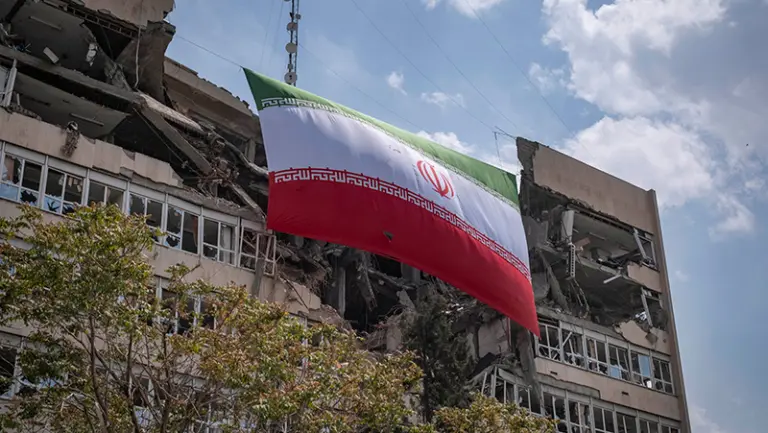
They stressed that any military escalation, particularly those linked to Iran or flashpoints such as the Strait of Hormuz, would have immediate and far-reaching global economic repercussions. Disruptions to energy supplies would likely drive up oil and gas prices, increase transportation and insurance costs, and ultimately feed into higher prices for goods and services worldwide.
Such shocks, they noted, tend to trigger inflationary pressures that extend well beyond the region. Moreover, the economic fallout often outlasts the conflict itself, as global markets require extended periods to stabilise, depending on the resilience and adaptability of individual economies.
Egypt: Between Pressures and Opportunity
Experts noted that Egypt has already felt the impact of regional instability, particularly through declining traffic in the Suez Canal, which has weighed on foreign currency revenues.
However, they also highlighted the country’s structural strengths, including relative political stability, ongoing economic reforms, and sustained investment in infrastructure. These factors, they argued, enhance Egypt’s capacity to absorb external shocks.
At the same time, shifts in global supply chains—accelerated by the COVID-19 pandemic and compounded by geopolitical tensions—are prompting multinational companies to reassess their production and investment strategies. This realignment presents an opportunity for countries like Egypt to position themselves as alternative hubs in the global distribution of manufacturing and logistics.
In this context, economic zones—particularly the Suez Canal Economic Zone—are gaining prominence as focal points for investment in industry, logistics, energy, and export-oriented services.
Robert Satloff: A Region of Overlapping Scenarios
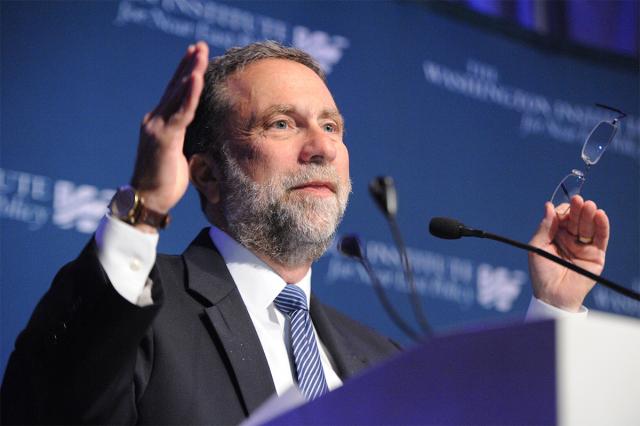
Robert Satloff, Executive Director of the Washington Institute for Near East Policy, argued that the Middle East cannot be understood through a single trajectory. Instead, it must be viewed as a set of overlapping and evolving scenarios shaped by competing actors and shifting dynamics.
He observed that key players, including the United States, Israel, Iran, and various resistance movements, continue to frame the conflict in terms of victory and defeat rather than compromise. This mindset, he said, widens the gap between political rhetoric and diplomatic reality.
As a result, prospects for sustainable political settlements remain limited, particularly as some actors pursue maximalist objectives that may extend to the elimination of their adversaries. This dynamic contributes to a broader diplomatic paralysis, where escalation often takes precedence over negotiation.
Interlinked Crises: Iran, Gaza, and Lebanon
On Iran, Satloff pointed to the fragmented nature of the country’s political system, where multiple centres of power complicate the prospects for decisive strategic shifts.
In Gaza, he noted that Israel’s stated objective of ending Hamas’s rule remains highly contentious, with ongoing debate over both its feasibility and potential costs.
Lebanon, meanwhile, presents a different but equally complex picture, with efforts underway to rebalance the role of Hezbollah within state institutions, though without clear assurances of swift or lasting outcomes.
US Policy: Strategy Beyond Slogans
Satloff also addressed the nature of US policymaking, noting that political slogans such as “America First” do not fully capture the underlying strategic calculus in practice, he said, policy decisions continue to be shaped by a careful balancing of economic priorities and geopolitical interests.
Within this framework, there is growing recognition in Washington of the importance of partnerships with countries such as Egypt, particularly in areas such as investment, technology transfer, and capacity building.
A Region in Flux
The discussions concluded that the Middle East is undergoing a prolonged and incomplete phase of reconfiguration, in which security, economic, and political dynamics are deeply intertwined.
In the absence of a cohesive regional framework, and amid an increasingly fragmented decision-making landscape, the region remains open to multiple trajectories, with no clear long-term settlement in sight.
