
Egypt’s Higher Committee for Public-Private Partnership (PPP) Affairs has approved a new package of infrastructure and service projects for implementation under public-private partnership arrangements, including industrial wastewater treatment plants, seawater desalination facilities and electricity infrastructure.
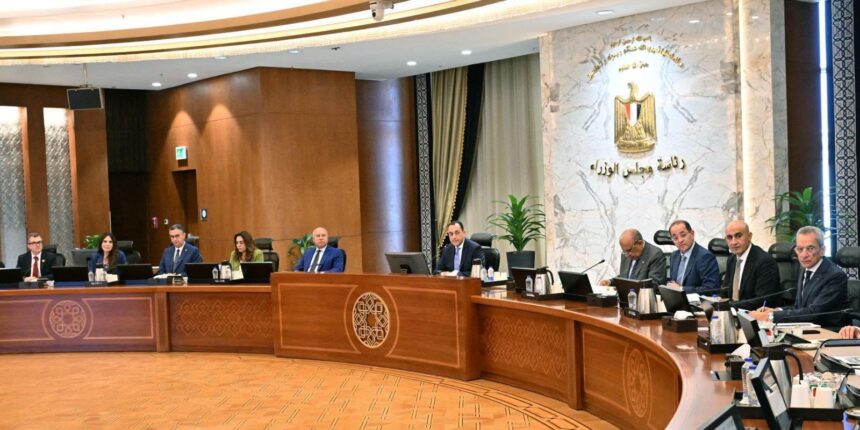
Prime Minister Mostafa Madbouly chaired the committee’s meeting on Sunday, attended by several ministers and officials, and stressed the government’s commitment to expanding private sector participation across economic and service activities.
Madbouly said strengthening the private sector’s role remained a key government priority, highlighting the committee’s role in coordinating efforts among ministries and relevant authorities within a governance framework that supports sustainable development in targeted sectors.
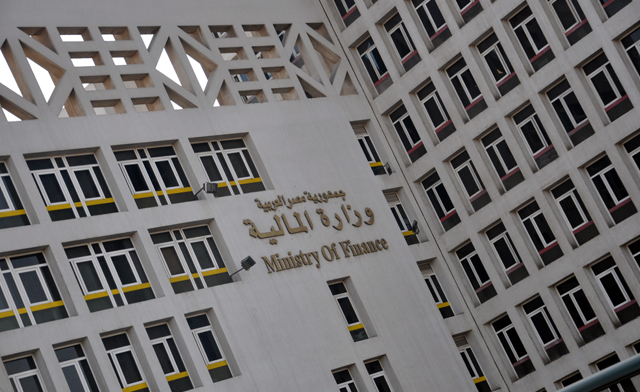
During the meeting, Atef Hanoura, adviser to the finance minister for PPP projects, reviewed a list of proposed projects submitted by the Ministry of Housing, Utilities and Urban Communities and Port Said Governorate, following consultations among the ministries of finance, planning, housing, transport and local development.
The committee approved adding three projects to the PPP programme and beginning preparations for their tendering. These include an industrial wastewater treatment plant serving the El-Raswa Industrial Zone in South Port Said, with a first-phase capacity of 35,000 cubic metres per day; a seawater desalination plant in Suez with a capacity of one million cubic metres per day, to be implemented in two phases; and the right to operate the Hadayek El-Assema transformer station, its connecting lines and associated electricity networks.
Each project will be submitted to the committee for approval before tendering, in accordance with Law No. 67 of 2010, as amended, which regulates private sector participation in infrastructure, public services and utilities projects.
Four industrial wastewater treatment plants
The committee also approved the tendering of four industrial wastewater treatment projects across several governorates as part of a programme aimed at reducing the environmental impact of industrial activities and ensuring the safe treatment and disposal of industrial wastewater.
The projects include a treatment plant for industrial wastewater generated by the Amreya Industrial Zone in Alexandria, with an average capacity of 20,000 cubic metres per day, and a plant serving the Abu Rawash Industrial Zone in Giza, with an average capacity of 20,000 cubic metres per day in its first phase.
The other two projects comprise a treatment plant for the Wadi El-Natrun Industrial Zone in Beheira, with an average capacity of 15,000 cubic metres per day, and a plant serving the El-Raswa Industrial Zone in South Port Said, with an average capacity of 35,000 cubic metres per day.
The programme seeks to leverage private sector technical expertise and capabilities while securing the financing and investment needed to build and operate the facilities in compliance with applicable quality standards and environmental requirements.
Desalination projects to serve Port Said and Suez
The committee approved launching a tender for a central seawater desalination plant in Port Said with a capacity of 900,000 cubic metres per day. The facility is expected to serve Port Said and several areas in Ismailia Governorate.
It also approved tendering the proposed Suez desalination plant, with a capacity of one million cubic metres per day across two phases. The project is expected to supply Suez, the Suez Canal Economic Zone and neighbouring areas. Its second phase is also planned to meet the needs of future expansions in the New Administrative Capital and surrounding areas.
The two projects form part of Egypt’s 2020–2050 strategic plan for seawater desalination, which aims to develop alternative water supplies to complement existing water treatment facilities and meet current needs, population growth and future demand in existing communities.
Commodity tracking and electricity infrastructure
In another decision, the committee approved the Ministry of Supply and Internal Trade’s plan to contract the X Trace consortium under a PPP arrangement to implement a system for tracking and tracing strategic commodities.
The proposed system is intended to help combat illicit trade by improving the monitoring and traceability of strategic goods.
The committee also approved tendering the right to operate the Hadayek El-Assema transformer station, its connecting lines and associated electricity networks under the PPP framework.
Hadayek El-Assema is a fourth-generation smart city affiliated with the New Urban Communities Authority and designed in line with international standards for new urban development.
All approved projects will proceed in accordance with Law No. 67 of 2010 and its amendments governing private sector participation in infrastructure, public services and utilities projects.