


Ahmed Amoui, Head of the Egyptian Customs Authority, said the government is drawing on leading international experiences to modernise the customs system, expand the use of advanced technology and improve the use of Advance Cargo Information (ACI) system to improve risk assessment.
The efforts aim to accelerate shipment clearance, facilitate trade flows, strengthen governance and enhance the competitiveness of the Egyptian economy.
Amoui added that the government is working to develop its system for handling cross-border e-commerce shipments to keep pace with growing international trade, improve customs service efficiency and simplify procedures as part of broader efforts to advance digital transformation and modernise customs operations.
In this context, a delegation from the Egyptian Customs Authority participated in an advanced customs capacity-building programme organised by the Korea International Cooperation Agency (KOICA), in cooperation with the Korea Customs Service (KCS), in Seoul.
The programme, entitled Cross-Border E-Commerce Management and Customs Valuation, was attended by a delegation headed by Amal El-Gabry, Director General of Development Initiatives and Head of the E-Commerce Unit. The delegation also included Sally Gabr, Nora Labib, Lamia Awadeen and Ahmed El-Sakka.
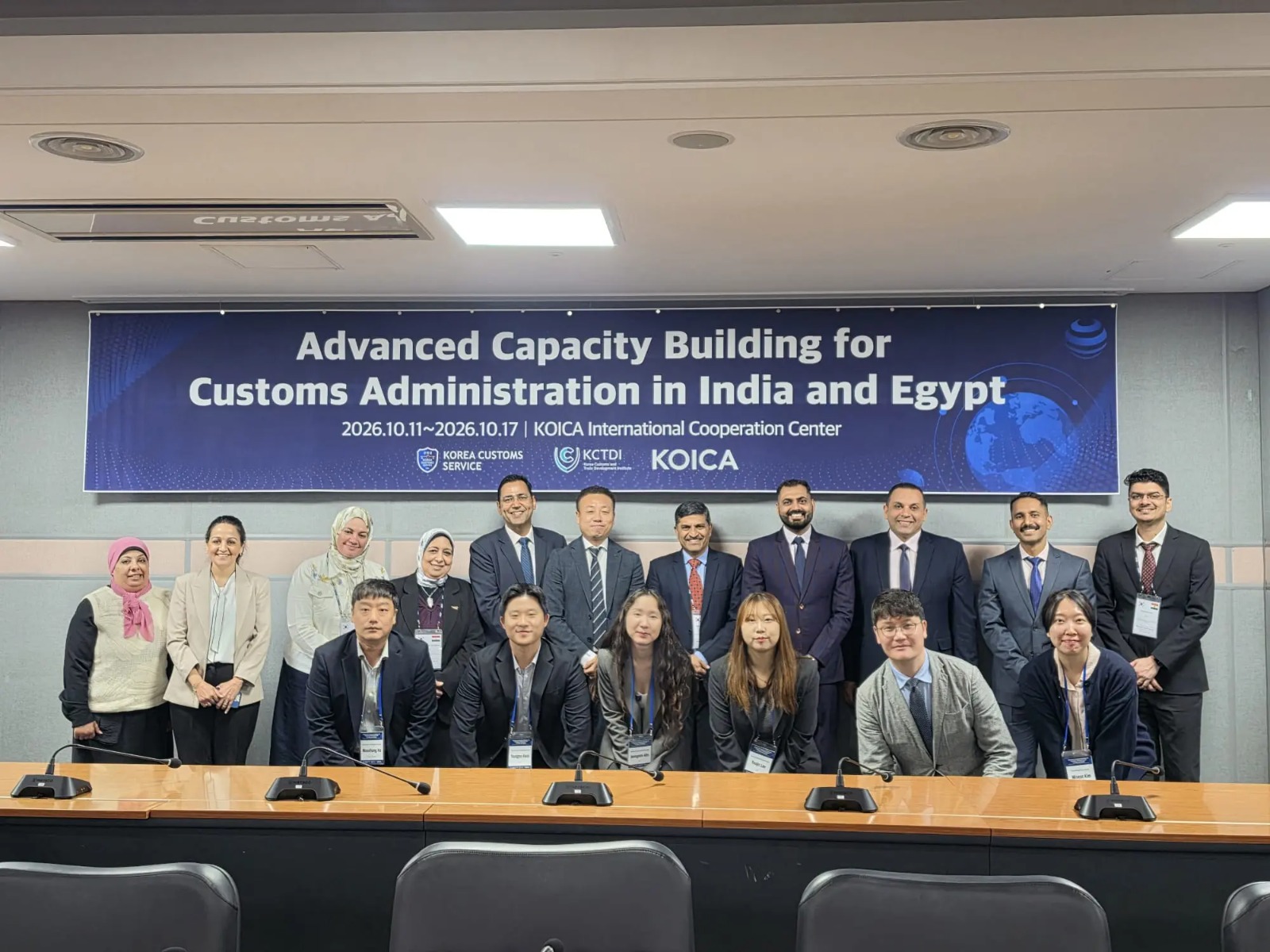
El-Gabry said the programme provided an opportunity to examine South Korea’s experience in managing growing volumes of e-commerce shipments, particularly postal and express cargo.
The delegation also explored mechanisms for integrating information exchange systems with risk analysis to direct inspection and supervisory resources towards higher-risk shipments while reducing unnecessary interventions in legitimate trade.
She added that the delegation learned about the role of specialised technical committees and advance rulings in standardising customs classification and valuation decisions, reducing disputes and improving procedural transparency for traders.
The delegation also examined operations at the Incheon Logistics Centre, including the integration of shipment data with X-ray images, the use of technical analysis to support inspection and targeting decisions, and procedures for verifying importers’ information.
El-Gabry said the visit’s recommendations included studying ways to improve the Advance Cargo Information system for e-commerce shipments and exploring the possibility of introducing a personal customs identification code through the Nafeza platform.
The recommendations also covered assessing the potential for establishing centralised connectivity for X-ray images, strengthening specialised risk analysis for postal and express cargo shipments, and improving customs classification procedures and advance rulings.
They further called for examining how Korean customs applications could be adapted to meet the operational requirements of Egypt’s customs system.


