

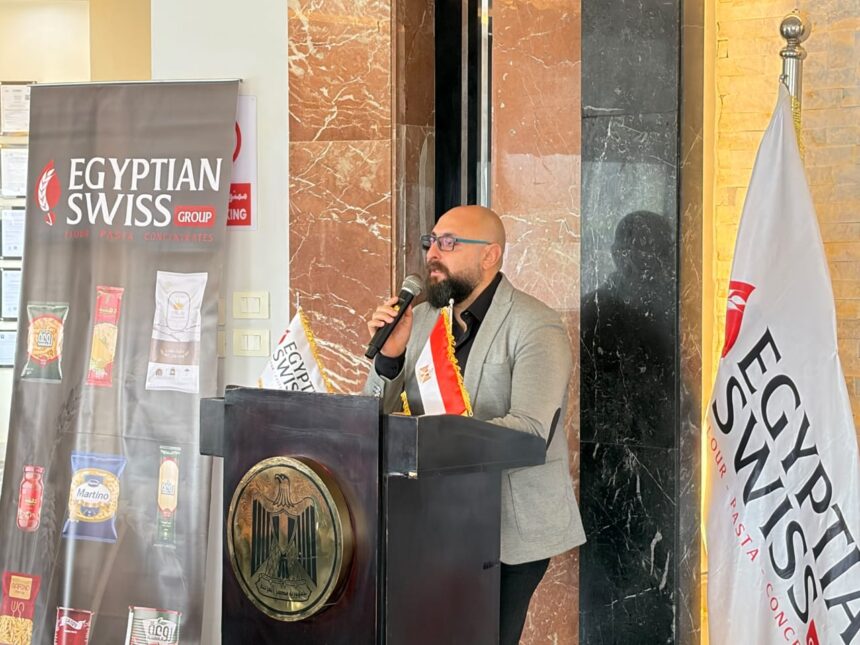
Egyptian Swiss Group for Pasta, Milling, and Concentrates is targeting turnover of EGP 11bn this year, with expected growth of 10% to 15% across its pasta, flour, tomato sauce and grain businesses, General Manager Ahmed El-Sebaei said.
The group exports to around 60 countries and allocates approximately 80% of its production to overseas markets, accounting for 10% of Egypt’s pasta exports and 15% of its flour exports, El-Sebaei said during an event marking World Pasta Day.
The company has begun implementing a €5m (about EGP 308.5m) investment to establish a new pasta production line, including packaging machinery. The Italian-made equipment is expected to arrive and be installed within nine months to one year.
The investment forms part of a five-year expansion plan that also includes increasing milling capacity, expanding ready-made sauce production and assessing solar energy projects.
The group operates two flour mills in 10th of Ramadan City and Alexandria, with a combined milling capacity of 1,500 tonnes of wheat per day. Its three pasta production lines have a combined capacity of 7,500 tonnes per month, while its tomato processing plant produces tomato paste, concentrates, sauces and jams.
El-Sebaei said the company was considering adding new milling lines next year, with each expected to cost between €4m and €5m, depending on capacity and equipment specifications.
The group is also considering bank financing for its expansion plans and has received offers from several lenders, although it has yet to finalise its financing arrangements.
Export expansion and market diversification
Egyptian Swiss is targeting new markets in China, Europe and the United States. The company has obtained the certification required to export to China and is exploring opportunities to supply flour and pasta to the market.
It is also considering supplying flour to a Chinese company planning to establish a bakery products factory in Egypt, amid challenges associated with import quotas in China.
The group has recently received orders from several European markets and is seeking to diversify its export destinations to reduce exposure to geopolitical risks and fluctuations in demand. It currently manufactures products under customers’ brands in Kenya, Yemen and Zambia.
El-Sebaei said global wheat prices had risen by around $50 to $70 over the preceding six weeks, putting pressure on production costs and profit margins.
The company relies entirely on imported wheat and is exploring sourcing opportunities in countries including Romania and France. Export revenues help secure the foreign currency needed to import raw materials and meet other operational requirements.
The group is also considering expanding its tomato processing business and developing ready-made pasta and pizza sauces. These products are currently sold internationally but have yet to be introduced to the Egyptian market.
Despite its export focus, the company maintains a domestic presence through brands including Rawaa and Dahsha. It also supplies pasta under the Zeina brand through its cooperation with the Ministry of Supply.
The group is assessing solar energy projects at its industrial facilities to reduce electricity costs and has begun measuring its carbon footprint.
El-Sebaei said the company would implement its investments in phases, depending on market demand, production capacity and export opportunities, while seeking to manage rising raw material and operating costs


