

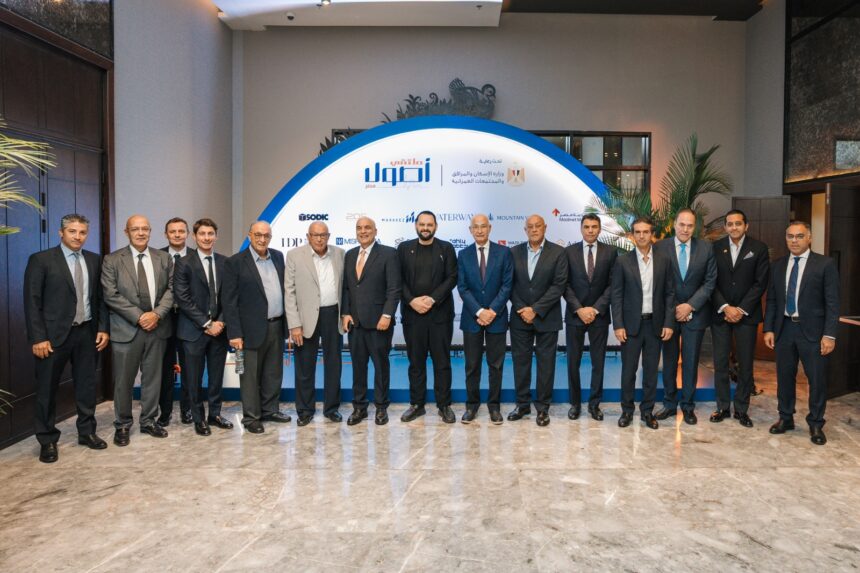
Egypt’s real estate sector needs a clearer regulatory framework to protect buyers, strengthen developer accountability and support sustainable investment, participants at the second Osoul Masr forum said, as government officials and industry executives discussed proposals to address delayed deliveries, regulate property marketing and expand housing supply.
Minister of Housing, Utilities and Urban Communities Randa El-Menshawy said the government was working towards a comprehensive regulatory framework governing relations between the state and developers, noting that discussions on establishing a developers’ union began in 2018 before expanding into broader efforts to organise the market.
She added that developers that fail to complete their projects or meet their contractual obligations should not be treated as qualified real estate developers. Companies that fail to honour existing commitments would not receive new ministerial approvals, licences or permits for additional projects, linking future expansion to performance on ongoing developments.
The proposed regulatory measures include opening a separate bank account for each project, dividing developments into implementation phases with defined schedules, and prohibiting the advertising or sale of units before obtaining the required approvals and permits.
Addressing delayed deliveries, El-Menshawy said clear rules were needed to protect buyers. Under the framework she outlined, delays exceeding 12 months would require instalments to be deferred until delivery, subject to applicable regulations. Any extension to a delivery date should also be documented through a contractual addendum specifying the additional period and revised handover date.
The minister said Egypt’s real estate market continued to benefit from population growth, household formation, and domestic and foreign investment demand. She cited growth of approximately 319% in the sector between 2018 and 2025.
Sales by Egypt’s 10 largest developers reached around EGP 670bn in the first half of 2026, compared with EGP 651bn in the same period of 2025, representing annual growth of 2.9%, she said. The North Coast accounted for approximately 33% of the leading developers’ sales, valued at about EGP 221bn.
The government is also considering involving private developers in the construction of 100,000 social housing units, with incentives being studied to encourage the provision of homes for low- and middle-income households.
Developers call for balanced regulation
Mamdouh Badr El-Din, Chairperson of Badr El-Din Companies, called for clearer rules governing real estate marketing and brokerage. He said regulating intermediaries and defining their relationship with developers would encourage more professional practices, protect buyers and companies, and strengthen confidence in the market.
Amr Badr El-Din, Managing Director of Arkan Palm Development, said difficulties faced by speculators who rely on reselling units for quick gains should not automatically be interpreted as evidence of a structural crisis across the sector.
He argued that assessments of a potential bubble should consider the relationship between market prices and development costs, warning that inaccurate use of the term could undermine foreign investor confidence.
Mahmoud El-Gammal, Chairperson of G Developments, similarly stressed the distinction between price increases driven by higher development costs and those caused by speculation. He said market conditions should be assessed through construction progress and delivery performance rather than price movements alone.
Transparency, financing and maintenance
Mohamed Khaled El Assal, CEO and Managing Director of Misr Italia Properties, called for a reliable database covering available units, demand, sales and construction progress.
He said limited access to verified information could encourage perceptions of a slowdown that do not reflect the full picture of market activity.
El Assal also called for greater flexibility in construction deadlines based on project size, land availability and infrastructure conditions, warning that unrealistic schedules could put pressure on developers’ cash flows.
Abdallah Sallam, President and CEO of Madinet Masr, said regulation should extend beyond developers and buyers to include banks and mortgage finance institutions.
He noted that Egyptian developers carry substantial responsibilities for financing, construction and marketing, while their reliance on bank financing remains limited compared with some international markets. Clearer allocation of responsibilities across the sector, he argued, could improve access to funding while maintaining buyer protection.
Maintenance deposits were another key issue. Mohamed Allam, Vice Chairman and CEO of Hassan Allam Properties, called for a legally binding mechanism to ensure that buyers pay maintenance deposits. He said returns on these deposits are sometimes insufficient to cover rising operating and maintenance costs, threatening service quality and the long-term value of properties.
Housing supply and real estate exports
The forum also examined ways to increase affordable housing supply and strengthen Egypt’s property exports.
Raymond Ahdy, CEO of Wadi Degla Developments, said private-sector participation in delivering 100,000 social housing units would require incentives that reflect the costs of land, construction and financing. Making land available at suitable prices and providing accessible mortgage finance could help reduce final unit prices and expand supply.
The discussions reflected broad agreement on the need for a more transparent and accountable real estate market, although participants differed over the balance between tighter oversight and operational flexibility. While the government emphasised enforcement and buyer protection, developers called for regulation that takes account of project economics, financing constraints and implementation timelines.
The main proposals included clearer licensing standards, regulation of marketing and shared-sales arrangements, reliable market data, stronger maintenance collection mechanisms, improved access to financing, and incentives for private-sector participation in affordable housing. Participants said coordinated reforms across these areas would be essential to strengthening confidence and supporting the long-term development of Egypt’s real estate sector.