

Egypt has signed contracts worth approximately EGP 4.6bn to operate and maintain 11 seawater desalination plants with a combined designed capacity of 485,000 cubic metres per day, as the government seeks to improve operational efficiency and expand private sector participation in the water sector.
The contracts cover plants affiliated with three drinking water and wastewater companies in North and South Sinai, Matrouh and the Red Sea governorates, according to a statement by the Ministry of Housing, Utilities and Urban Communities.
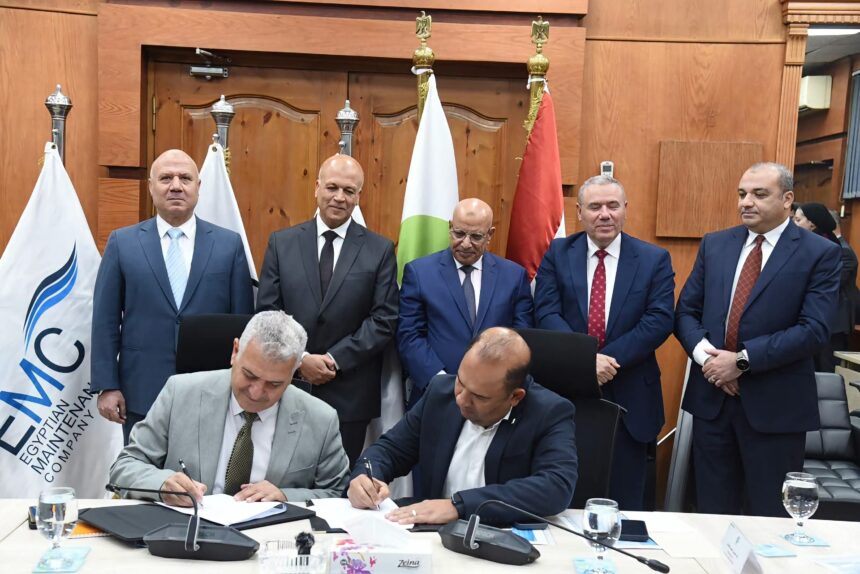
The signing ceremony was attended by Ahmed Omran, Deputy Minister of Housing for Utilities, and Mostafa El-Shemy, Chairperson of the Holding Company for Drinking Water and Wastewater, alongside water sector officials and representatives of the participating private sector companies and consortia.
Housing Minister Randa El-Menshawy said Egypt had developed a comprehensive strategy to expand seawater desalination through 2050, diversify drinking water sources and support urban, industrial and tourism development, particularly in coastal governorates and border areas.
Egypt currently has around 129 desalination plants with a combined capacity of approximately 1.4 million cubic metres per day, while another 19 plants with a total capacity of 687,000 cubic metres per day are under construction.
The long-term strategy targets desalination capacity of nearly 10 million cubic metres per day by 2050, El-Menshawy said.
She added that the new contracts aim to improve the management and operation of drinking water facilities by leveraging private sector technical and technological expertise, enhancing operational and maintenance efficiency, and protecting investments already made in the desalination sector.
Ahmed Omran said expanding desalination capacity must be accompanied by continuous improvements in operations and maintenance. The contracts are intended to enhance technical readiness, reduce breakdowns and downtime, improve energy efficiency, and ensure water quality and reliable drinking water supplies in the areas served.
El-Shemy described the agreements as an important step towards improving the management of assets held by the state-owned holding company.
He said the contracts cover 11 plants operated by three affiliated water companies, with a combined designed capacity of 485,000 cubic metres per day.
The company aims to move away from maintenance practices that primarily respond to equipment failures towards a system based on preventive maintenance and advance planning, El-Shemy said.
He stressed that private sector participation would not diminish the role of the holding company’s subsidiaries. Instead, it would strengthen their capacity to manage assets, supervise operations, conduct technical oversight and monitor compliance with contractual obligations.
The holding company will periodically evaluate the contracts based on operational efficiency, water quality, technical readiness and operating costs, he added.
According to Assem Shokry, Deputy Chairperson of the Holding Company for Drinking Water and Wastewater, the contracts have a total value of approximately EGP 4.6bn, with an average annual cost of around EGP 1.2bn.
The contracts cover seven plants in North and South Sinai with a combined designed capacity of 240,000 cubic metres per day, three plants in Matrouh with a total capacity of 165,000 cubic metres per day, and one plant in the Red Sea governorate with a capacity of 80,000 cubic metres per day.
In North and South Sinai, the facilities include the Kilo 17 plant west of Arish, with a capacity of 100,000 cubic metres per day; plants in Ras Sidr, Abu Zenima and New Nuweiba, with a combined capacity of 65,000 cubic metres per day; the El-Tor and New Dahab plants, with a combined capacity of 45,000 cubic metres per day; and the Sharm El-Sheikh plant, with a capacity of 30,000 cubic metres per day.
The Red Sea contract covers the Yusr desalination plant, with a capacity of 80,000 cubic metres per day.
In Matrouh, the agreements cover the Rumaila 4 plant, with a capacity of 65,000 cubic metres per day; the Dabaa plant, with a capacity of 40,000 cubic metres per day; and the Rumaila 1, 2 and 3 plant complex, with a combined capacity of 60,000 cubic metres per day.
The participating private sector companies and consortia include Egypt Maintenance Company (San Misr), Proserv, Orascom Construction, Metito and Orascom, Contrac for Services Management, and Elsewedy Utilities.
The holding company will monitor implementation in coordination with its subsidiaries through a technical oversight and evaluation system covering operational performance, plant readiness, water quality, energy consumption and compliance with preventive maintenance programmes.


