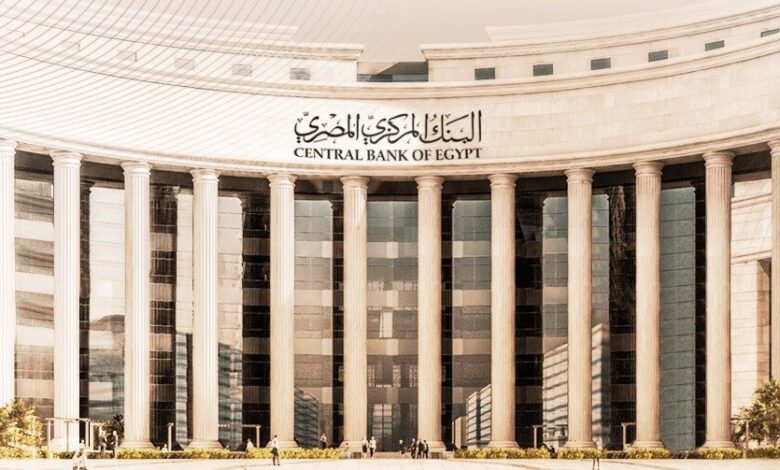
The Central Bank of Egypt’s (CBE) Monetary Policy Committee (MPC) will hold its sixth scheduled meeting of the year on Thursday to decide on its key policy rates, a major indicator of the near-term direction of interest rates on the Egyptian pound, amid strong expectations that rates will remain unchanged for a fifth consecutive meeting.
At its last meeting on 20 August, the MPC kept the overnight deposit rate at 19%, the overnight lending rate at 20%, and the main operation and discount rates at 19.5%, marking its fourth consecutive hold following similar decisions on 2 April, 21 May, and 9 July. The committee said the decision was consistent with its assessment of the latest inflation developments and outlook.
The MPC said the decision was aimed at maintaining an adequately positive real interest rate to ensure that inflation expectations remain anchored and support inflation’s downward trajectory.
It added that it would continue to assess monetary conditions in light of incoming economic developments, the projected inflation path, and surrounding risks, and would not hesitate to take the necessary measures to preserve price stability and ensure inflation returns to its target over the near term.
The committee expects inflation to begin declining gradually from the first quarter of 2027, approaching its target of 7% (±2) during the second half of the year.
It said the projected downward path would be supported by maintaining an appropriately restrictive monetary stance over the forecast horizon, alongside the continued moderation in underlying monthly inflation and a broad-based easing of inflationary pressures across the components of the consumer price index. However, the inflation outlook remains subject to upside risks, particularly an escalation of regional tensions and a greater-than-expected impact from fiscal consolidation measures.
Earlier this month, the CBE reported that annual core inflation rose to 14.9% in August from 14.7% in July. On a monthly basis, the CBE’s core consumer price index increased by 0.3% in August, compared with no change in July.
Meanwhile, the Central Agency for Public Mobilisation and Statistics (CAPMAS) reported that the headline consumer price index for urban areas rose by 0.1% month-on-month in August, compared with no change in July. Annual urban headline inflation eased to 14.5% from 14.9% in July.
Polls expect no change
A Reuters poll showed that the CBE is almost certain to leave interest rates unchanged on Thursday, as inflation gradually eases while regional risks encourage policymakers to remain cautious before adjusting rates.
Eleven of the 12 economists surveyed by Reuters expected the CBE to keep its overnight deposit rate at 19% and its lending rate at 20%. HC Securities & Investment was the sole exception, forecasting a one-percentage-point rate increase.
Mohamed Abu Basha of EFG Holding said inflation was slowing, but higher oil prices were increasing the risk of renewed price pressures.
Heba Mounir of HC Securities & Investment, the only analyst forecasting a rate increase, said Egypt’s relatively stable external position might not be sufficient to shield the country from the impact of the regional crisis on energy prices.
HC expects inflation to continue accelerating during the fourth quarter, partly driven by the annual increase in old rents and an anticipated rise in domestic fuel prices.
Jamil Naeem of S&P Global Market Intelligence said the CBE’s MPC was likely to keep interest rates unchanged, noting that core inflation continued to rise in August even as urban headline inflation slowed.
A separate Bloomberg survey of 10 Egyptian financial institutions and investment banks also showed expectations that the CBE would keep rates unchanged at Thursday’s meeting, amid inflationary risks stemming from higher global oil prices and escalating geopolitical tensions, as well as volatility in foreign investor flows and a stronger US dollar.
The institutions surveyed included EFG Hermes, Thndr Securities Brokerage, Al Ahly Pharos, CI Capital, Zilla Capital, NAEEM Brokerage, Ostoul Holding, Mubasher Trade, Prime Securities, and Cairo Capital Securities.
Careful balance required
Banking expert Shaimaa Wagih said the MPC was entering Thursday’s meeting at a stage where the decision had become more complex than simply choosing between cutting rates and keeping them unchanged. She said the economic environment now required a careful balance between continuing to bring inflation down, maintaining the attractiveness of the Egyptian pound and local assets, and supporting economic activity and investment without allowing price pressures to re-emerge.
Wagih said the significance of the current stage was that the Egyptian economy had already made substantial progress through the monetary tightening cycle, while inflation remained above target. At the same time, the external environment had become more volatile because of geopolitical developments, energy prices, and the policies of major central banks.

Against this backdrop, she said keeping interest rates unchanged at this stage could serve as a tool for managing monetary conditions and preserving recent stability gains rather than signalling an end to the monetary easing cycle.
Although inflation has been gradually declining, Wagih said the picture required a deeper reading than the fall in the annual headline rate alone. Headline inflation stood at 14.5% in August 2026, while core inflation reached 14.9%.
She said the decline in headline inflation was a positive development, but did not necessarily mean that inflationary pressures had disappeared.
The rise in core inflation indicated that some pressures remained embedded in more persistent price components, she added, making the CBE more cautious in determining the timing of monetary easing. The key measure of success in the coming period would therefore not simply be lower inflation, but a sustained and consistent decline accompanied by improving inflation expectations and stability in financial and foreign exchange markets.
Wagih also highlighted the importance of real interest rates in the monetary policy equation. She said current interest rate levels showed that monetary policy remained restrictive, with the overnight deposit rate at 19%, the lending rate at 20%, and the main operation rate at 19.5%, unchanged since the MPC’s August meeting.
With headline inflation at around 14.5%, nominal interest rates remain above the inflation rate, providing a positive real interest rate margin that she said was important for anchoring inflation expectations and maintaining the attractiveness of Egyptian pound-denominated instruments.
At the same time, she cautioned that maintaining positive real interest rates did not mean high rates should remain a permanent solution. The longer restrictive monetary policy remained in place, the greater the financing costs borne by companies and individuals, potentially weighing on investment, credit, and consumption.
She said managing the real interest rate was therefore more important than focusing solely on the nominal policy rate, with the objective being to reach a balance that allows inflation to continue falling without imposing a greater-than-necessary monetary cost on economic activity.
Impact of FX market
Wagih also said monetary policy in Egypt could not be separated from developments in the foreign exchange market, as major currency movements could feed through into the prices of goods and services via import costs and production inputs.
For this reason, she said, the CBE views foreign exchange market stability as a key component of the disinflation process. Greater confidence in foreign currency inflows and improvements in reserves and dollar liquidity would give monetary policymakers more room to manoeuvre.
Conversely, any external shock that raises energy or import costs or increases demand for foreign currency could revive inflationary pressures even if domestic indicators were improving. Foreign exchange market stability had therefore become a prerequisite for a successful monetary easing cycle rather than simply an outcome of it, she said.
Wagih added that Egyptian monetary policy did not operate in isolation from the global economy, which is facing heightened uncertainty stemming from geopolitical tensions, energy markets, and supply chains. The next interest rate decision should therefore take future risks into account rather than focusing solely on current data.
On the other side of the equation, she said, the Egyptian economy needed continued improvement in economic activity, investment, and credit. Interest rates should therefore not be viewed solely as a tool for tackling inflation, but as part of a broader framework affecting the cost of capital, bank lending, private investment, and domestic demand.
Keeping monetary policy highly restrictive for too long could slow the recovery in investment, while easing prematurely before the downward inflation trend was firmly established could generate renewed pressures on prices and the foreign exchange market. Timing, she said, had therefore become more important than the direction of the decision alone.
“In my view, the core challenge in the coming period is to manage risks in a balanced manner. There are factors supporting continued monetary easing and others calling for greater caution. Keeping interest rates unchanged at this stage could therefore serve to recalibrate the pace of monetary policy, giving the downward inflation trend more time to become firmly established while maintaining positive real interest rates and the attractiveness of local assets,” Wagih said.