
As a politician, I measure our national success in economic impact, foreign policy, and soft power. But as an EgyptAir pilot who first sat in a cockpit in 2013—a year of immense turbulence for our nation and our flag carrier—I measure success by the weight of pride I feel walking through international terminals with the Horus logo on my chest.
For years, our national airline navigated through turbulent skies. The challenges of regional instability, economic fluctuations, and fierce global aviation competition left many wondering if EgyptAir could ever reclaim its historic status as a titan of the Middle Eastern and African aviation. Today, however, the narrative is decisively shifting. We are witnessing a calculated, pragmatic ascent.
Reviving a 95-year-old legacy carrier is not a task for the faint-hearted, nor is it achieved through PR campaigns. It requires a grueling operational overhaul. Over the past few years, under the strategic oversight of Minister of Civil Aviation Dr. Sameh El Hefny, we have seen a shift toward aggressive modernization. This momentum is being driven by Chairman and CEO of EgyptAir Holding company Cpt. Ahmed Adel, Vice Chairman Cpt. Sherif Khalil, and Chairman and CEO of the Airline Cpt. Mohamed Elyan.
I do not write this to offer hollow applause—as a proud son of the company I am inherently skeptical of premature celebration. But the reality of their tenure is written in the logbooks and the balance sheets. They have recognized that the name “EgyptAir” is not merely a corporate brand; it is a flying embassy.
The responsibilities this brand carries are colossal. Every time our wheels touch down in a foreign capital, Egypt arrives. The punctuality, the service, and the scale of our network directly dictate the health of our tourism sector, which is the lifeblood of our economy.
Recognizing this, the current administration has steered the company toward tangible metrics of growth. We have seen a vital expansion in the fleet, bringing in next-generation aircraft that improve operational efficiency and passenger comfort. Parallel to this, the inauguration of new strategic routes has directly opened untapped tourism corridors.
Perhaps the most aggressive maneuver in our recent soft-power strategy is the landmark three-season global partnership with FC Barcelona. By securing the rights as the Exclusive Official Airline Partner for the club’s football, basketball, and handball teams through the 2028/29 season, EgyptAir is no longer just competing for passengers; it is competing for global mindshare. Placing the Egyptian flag in front of millions of European, African, and Middle Eastern fans is a masterstroke in restoring our image as a modern, globally connected nation.
This operational and commercial aggression has not gone unnoticed by the industry, as evidenced by our recent Skytrax recognition, which serves as a metric that the internal culture of service and safety is healing. Furthermore, the recent congratulations from the President of the Republic should not be viewed merely as a pat on the back. In the realm of statecraft, such acknowledgment is a directive. It means the state recognizes the progress, but it also means the bar has been irrevocably raised. The grace period is over; excellence is now the baseline expectation.
There is still a long process ahead. The global aviation market is unforgiving, and the margin for error is razor-thin. We must continue to refine our ground services, aggressively court international transit hubs, and maintain an uncompromising standard of training.
But as someone who has sat in the cockpit through the roughest storms of the last decade, I can confidently say the turbulence is clearing. Under this administration, EgyptAir has remembered what it is: the pioneer of Arab aviation. The responsibility of carrying the name of Egypt is an incredibly heavy burden, but for the first time in a long time, we finally have the right force to lift it.
About the Author
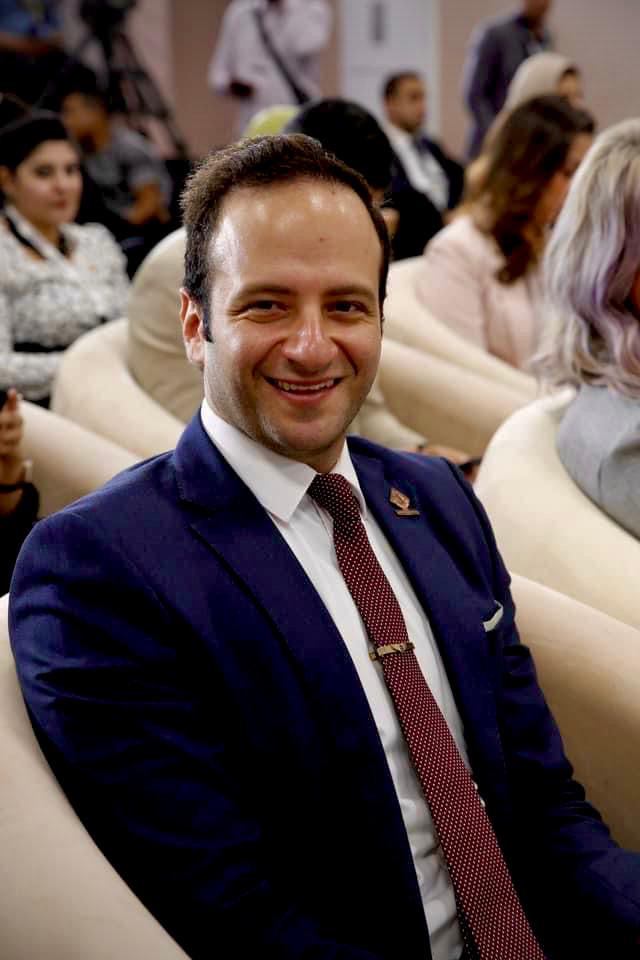
Dr. Mohamed L-seidy: a pilot and a politician member of CPYP. His writing focuses on strategic management, political economy, and Egyptian foreign policy in a multipolar world.