

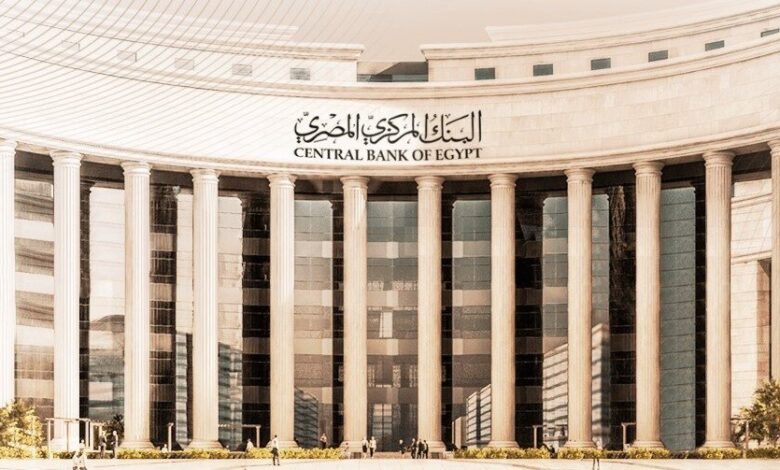
The Central Bank of Egypt (CBE) has instructed banks operating in the local market to complete the core data of all companies they deal with—whether borrowers or non-borrowers—using commercial registry information and incorporate it into their respective databases.
In a circular addressed to banks, the CBE stressed the need to upload data on all companies and establishments to the National Financial Inclusion Database for Companies using the unified commercial registration number. Banks are also required to update the data on a monthly basis in accordance with the applicable procedures.
The instructions further require banks to record the unified commercial registration number of micro, small and medium-sized enterprises (MSMEs) in the Egyptian Credit Bureau (I-Score) system, in line with existing regulations. The number must also be added to the CBE’s credit registration system once the necessary infrastructure to receive the data has been completed.
The CBE said banks must complete these procedures for borrowing companies by the end of December 2026, while the process for non-borrowing companies must be finalised by the end of June 2027.
According to the central bank, the initiative forms part of its broader efforts to promote financial inclusion for both individuals and businesses, support Egypt’s entrepreneurship ecosystem, and build a more comprehensive and accurate database that will improve access to banking services.
The CBE noted that it established the National Financial Inclusion Database for Individuals in 2018, based on the national identification number, to measure and publish financial inclusion indicators on a semi-annual basis. In November 2022, it launched the National Financial Inclusion Database for Companies, covering large enterprises as well as micro, small and medium-sized enterprises (MSMEs), in addition to both borrowing and non-borrowing companies. The database also includes information on companies owned or managed by women and is primarily built around the unified commercial registration number.
As part of its efforts to complete and verify the core data of companies and establishments held by banks, the CBE signed a cooperation protocol with the Internal Trade Development Authority (ITDA), affiliated with the Ministry of Supply and Internal Trade, in May 2026. The agreement enables banks operating in Egypt to access verified electronic data from the commercial registration system.
Under the protocol, banks will be able to obtain accurate and up-to-date information on companies and establishments, including the unified commercial registration number, economic activity, legal form, ownership and management structure, paid-up capital, and information on female ownership or management. The CBE said this will enhance banks’ ability to provide banking services more efficiently and improve the quality of financial inclusion data nationwide.


