

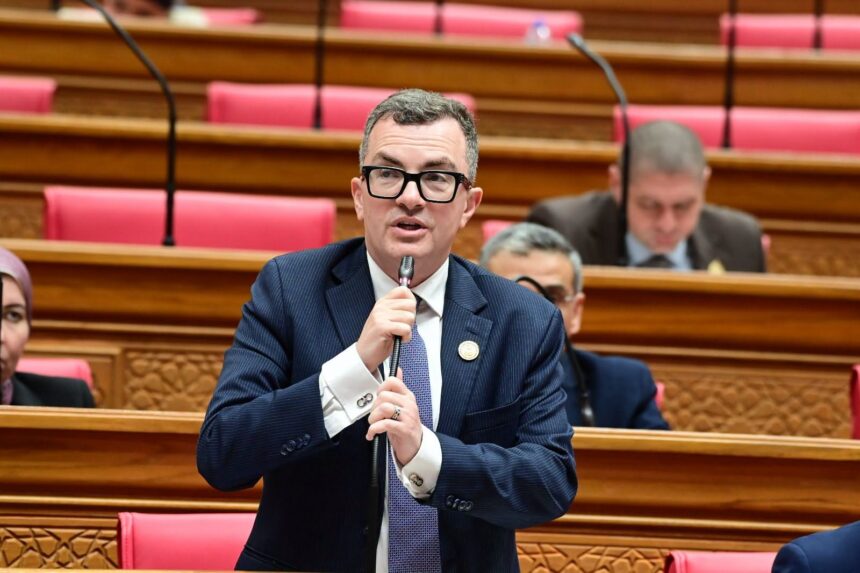
Egypt’s parliament has granted final approval to the economic and social development plan for the 2026/27 fiscal year (FY), which targets a gross domestic product (GDP) of EGP 24.5trn, Minister of Planning and Economic Development Ahmad Rostom announced.
The House of Representatives, chaired by Speaker Hesham Badawi, also passed the state budget for the same FY alongside the medium-term plan spanning 2029/30. Rostom addressed the legislature following a report presented by the parliament’s Planning and Budget Committee regarding the general framework of the plan.
Responding to parliamentary discussions on GDP calculation methods, Rostom stated that the process is governed by strict scientific rules fully aligned with recognised international frameworks. He noted that the state is targeting a major developmental shift to reach the EGP 24.5trn GDP target, adding that every pound spent in the plan will be strictly monitored to ensure it is allocated to its predetermined position.
The new plan prioritises human development sectors, increasing allocations for the health sector by 39.5% and the education sector by 25% during the new FY. Rostom described these increases as an inevitable investment in human development, noting that all ideas and recommendations raised during parliamentary debates would be considered for implementation.
Investments directed toward local development and governorates will rise by 13.4% compared to the previous year, reaching EGP 39bn. Rostom explained that health and education project allocations go directly to the heart of the governorates to meet citizens’ needs, separate from the investments directed to the general headquarters of the governorates themselves.
To ensure strict governance, the Ministry of Planning and Economic Development has established specific monitoring mechanisms for new projects based on an electronic linkage between the planning and finance systems, alongside completing a full digital integration with the National Investment Bank. This measure aims to guarantee that service projects enter operation immediately upon completion and ensures equitable investment distribution across governorates by developing the funding formula.
According to Rostom, the methodology for approving and managing projects in the current plan relies on stringent criteria. This framework requires continuous field reviews of execution rates on the ground and measuring how effectively executing agencies use their allocated funds. Furthermore, the ministry mandates ensuring project alignment with Egypt Vision 2030, the government’s work programme, and the State Ownership Policy Document, alongside restricting approvals to projects that possess a clear strategic plan and a detailed feasibility study.
Developing public services remains the state’s top priority, Rostom said, with the implementation of the first phase of the “Haya Karima” (Decent Life) presidential initiative and the universal health insurance project leading the plan’s targets. These projects are being executed under the directives of President Abdel Fattah Al-Sisi and Prime Minister Mostafa Madbouly.
Total spending on the first phase of Haya Karima reached EGP 425bn, yielding a direct positive impact on 18% of Egypt’s population. The officially launched second phase targets 1,667 villages across 52 centres, aiming to serve 21.4m citizens in the Egyptian countryside.


