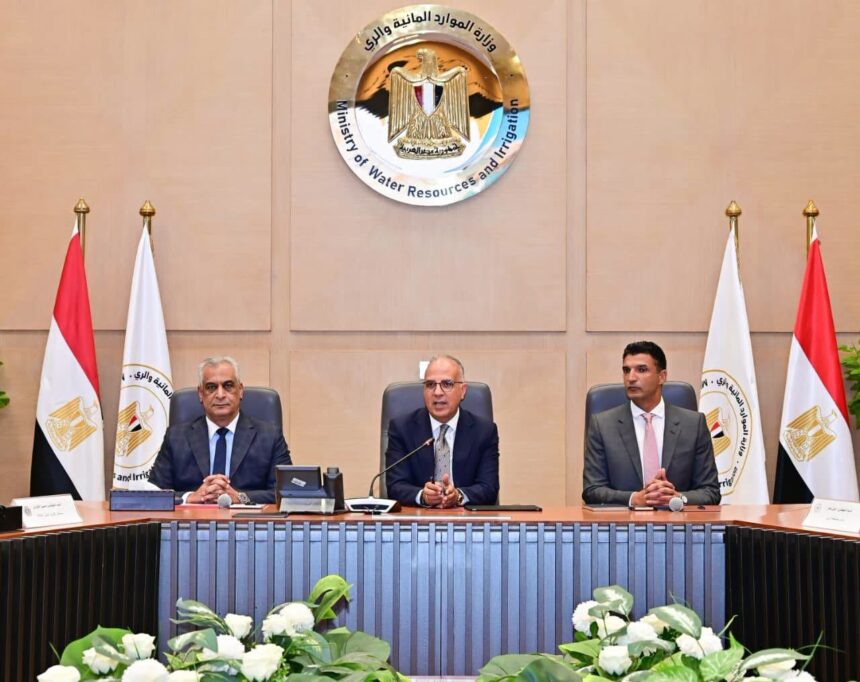
The ministers of water resources and irrigation, industry, and military production have held an expanded meeting to develop an integrated framework for sustainable water management in Egypt’s industrial sector, with a focus on improving water-use efficiency and localising technologies for industrial wastewater treatment and recycling.
Minister of Water Resources and Irrigation Hany Sewilam said the government is committed to integrating water sustainability into industrial expansion plans, stressing that water must be treated as a strategic resource that is managed efficiently while supporting industrial growth and maximising the economic return from every cubic metre consumed.
He said increasing the added value generated from water use in industry would strengthen the national economy, provided factories adopt high efficiency standards, minimise water losses, and expand wastewater treatment and recycling systems.
Sewilam noted that Egypt’s water demand exceeds its available resources, making water reuse a cornerstone of the country’s water management strategy. He stressed that wastewater generated by industrial activities should be treated in accordance with legal and technical standards to enable its safe reuse.
He added that feasibility studies for industrial projects should include comprehensive assessments of water requirements, supply sources, efficiency measures, and treatment and recycling systems, making sustainable water management a fundamental component of industrial planning.
Minister of Industry Khaled Hashem said the manufacturing sector, as a key driver of economic development, has a responsibility to conserve natural resources while advancing the country’s industrial expansion strategy.
He said the ministry is promoting more efficient resource use through initiatives such as the “Industry Solar” programme, which encourages factories to adopt solar energy and improve energy efficiency. The ministry is also working to reduce industrial water consumption by promoting closed-loop water systems within factories, a move he said would help attract international manufacturers to localise production in Egypt in cooperation with the Ministry of Military Production.
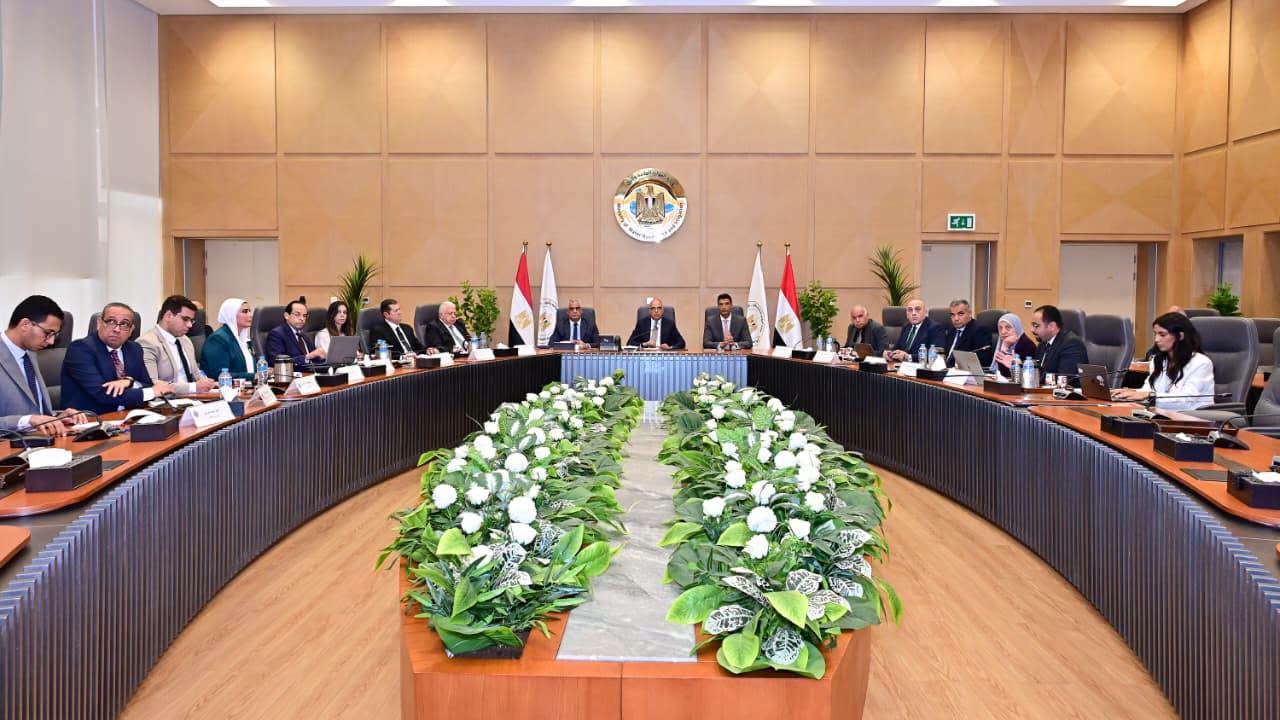
Hashem proposed establishing a joint committee comprising representatives from the ministries of industry, water resources and irrigation, and housing to develop mechanisms for improving water-use efficiency across industrial facilities.
Minister of State for Military Production Salah Gamblat said the ministry is placing the manufacturing, technological, and engineering capabilities of its affiliated companies at the service of national efforts to improve water management and deepen industrial localisation.
He said military production companies would continue supporting the implementation of water treatment and desalination projects, expand local manufacturing of their components, and help industrial facilities adopt advanced technologies for water conservation, industrial wastewater treatment, recycling, and reuse in production processes.
Gamblat added that introducing the concept of a water footprint for Egyptian products would enhance their competitiveness in both domestic and international markets.
He said the next phase requires embedding effective water governance within industrial facilities through precise systems for monitoring and measuring water consumption across production processes, while expanding the use of closed-loop systems to reduce losses and dependence on new water sources.
The minister reaffirmed the ministry’s commitment to working closely with other government bodies to implement national priority projects in line with Egypt Vision 2030.
The ministers agreed to establish a joint working group to develop a comprehensive framework for sustainable water management in the industrial sector. The framework will include criteria for selecting industrial sites, assessing water requirements, setting standards for efficient water use, treatment and recycling, establishing licensing and monitoring mechanisms, regularising existing facilities, and piloting the proposed framework on selected industrial projects before wider implementation.
The meeting also reviewed the legislative and institutional framework governing industrial water use and discussed progress made by technical working groups from the three ministries. Discussions covered water footprint methodologies, closed-loop systems, Zero Liquid Discharge technologies, and mechanisms for applying these systems across different industrial sectors.
Participants also discussed standardising procedures for allocating water to industrial projects, creating a unified mechanism for assessing water requests, integrating water approvals into industrial licensing procedures, requiring investors to implement monitoring, treatment, and reuse systems, and linking licence renewals to technical and environmental compliance assessments.