Egypt produces around 1.1 million tonnes of methanol annually, meeting domestic industrial demand while exporting surplus volumes to global markets, Minister of Petroleum and Mineral Resources Karim Badawi said.
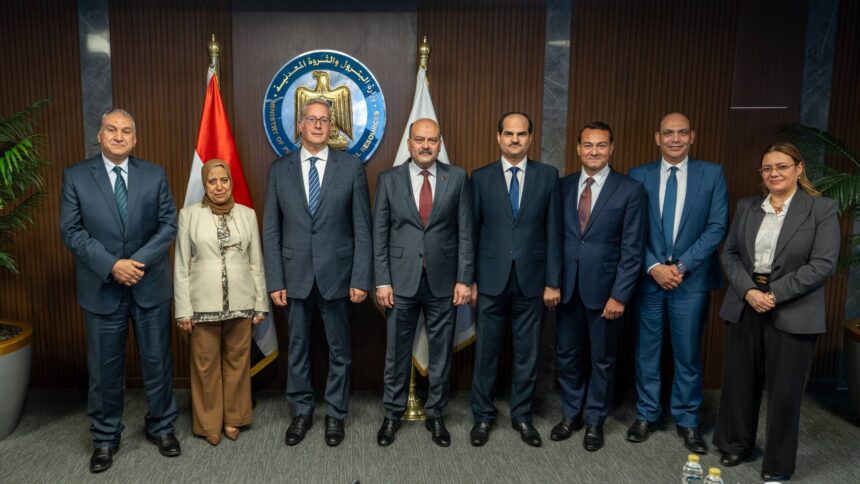
Speaking at the general assembly meeting of Methanex Egypt to approve its 2025 financial results, Badawi highlighted the company’s strategic role in supporting local industries and strengthening Egypt’s export capacity. He also called for assessing potential expansion plans to capitalise on growing international demand.
The minister pointed to a successful collaboration between Methanex Corporation, the Ministry of Petroleum, and The American University in Cairo to launch a Process Safety Management diploma. The first cohort graduated in February, marking a step forward in enhancing safety standards across the sector.
For his part, Managing Director Mohamed Shindy said the company remains Egypt’s sole methanol producer, operating as a joint venture between Methanex Corporation and key state-linked entities, including Egyptian Petrochemicals Holding Company, Egyptian Natural Gas Holding Company, Gasco, and Arab Petroleum Investments Corporation.
He noted that the partnership, spanning more than 15 years, has helped maximise the value of natural gas resources while supporting the development of methanol-based industries domestically and internationally.
Methanex Corporation is currently the largest Canadian investor in Egypt, with total investments of around $1bn in its industrial complex in Damietta—highlighting investor confidence in Egypt’s petrochemical sector.
Shindy added that the company has played a central role in developing the local methanol market, with volumes supplied domestically rising from around 20,000 tonnes annually at the start of operations to nearly 200,000 tonnes today. Methanol use in downstream industries can generate up to three times its base value when converted into higher-value products.
He revealed that a nearby methanol derivatives plant in Suez is expected to begin operations soon, supported by a newly completed pipeline that will supply an additional 58,000 tonnes of methanol to the domestic market, further supporting industrial growth.
On exports, Shindy said Methanex Egypt has been a consistent source of foreign currency inflows, leveraging the company’s global supply chain. Since the start of operations, more than 12 million tonnes have been exported to European and Asian markets.
In 2025, the company achieved full operational reliability at 100%, increased production to approximately 1.1 million tonnes, and recorded 1.5 million safe working hours—underscoring its strong commitment to occupational health and safety.
He also highlighted the company’s role in advancing process safety management practices in Egypt since 2018. In collaboration with the Ministry of Petroleum and the American University in Cairo, Methanex Egypt launched the country’s first professional diploma in process safety management. A new agreement has recently been signed to support a third phase of capacity-building programmes aimed at enhancing operational and asset safety across Egypt’s oil, gas, and petrochemical sectors.