

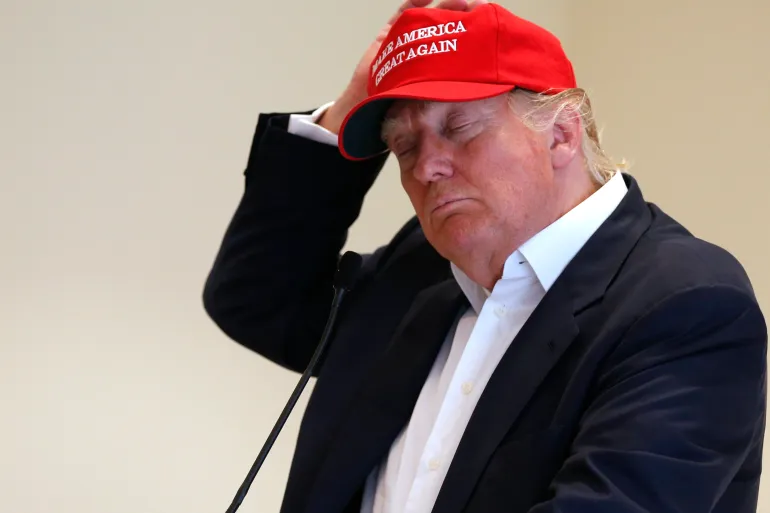
US President Donald Trump said he had cancelled plans to send a delegation to Pakistan for talks with Iran, describing the trip as unnecessary and indicating that discussions could be conducted remotely as diplomatic contacts continue through regional intermediaries.
Speaking to Fox News, Trump said he had called off a planned visit by envoy Steve Witkoff and Jared Kushner to Islamabad, saying he had instructed them not to undertake an 18-hour trip “to talk about nothing.” He added that the United States “holds all the cards” and that Iran could reach out to Washington “any time it wants.”
In separate remarks to Axios, Trump said the decision did not signal a return to conflict, noting that military escalation was not currently under consideration. He added that talks could be held “just as effectively by phone,” pointing to a preference for direct or informal engagement over extended in-person negotiations.
The move comes as Pakistan continues to play a central mediating role. Iran’s Foreign Minister Abbas Araqchi met Prime Minister Shehbaz Sharif in Islamabad, where they discussed bilateral relations, regional coordination, and efforts to end the conflict. Araqchi expressed appreciation for Pakistan’s role in facilitating de-escalation and hosting consultations.
A Pakistani source told Reuters that Araqchi had presented Tehran’s demands and reservations regarding US proposals during the visit, underscoring the persistent gaps between the two sides despite ongoing diplomatic engagement.
In Tehran, President Masoud Pezeshkian urged citizens to reduce electricity consumption following significant damage to energy infrastructure caused by recent strikes, saying authorities were working to regulate usage. He also pointed to the impact of a US maritime blockade on Iranian ports.
On the ground, United States Central Command said a US destroyer intercepted a vessel flying the Iranian flag en route to an Iranian port as part of blockade enforcement. Meanwhile, Iran’s Islamic Revolutionary Guard Corps reported detaining another ship in the Strait of Hormuz on suspicion of cooperating with the US military.
In the Gulf, the Gulf Cooperation Council reaffirmed support for international efforts to ensure freedom of navigation through the Strait of Hormuz, amid growing concerns over disruptions to global trade routes.
More broadly, Egyptian President Abdel Fattah Al-Sisi described the Middle East as entering a “critical and decisive” phase, warning against attempts to redraw the region’s map and reiterating Egypt’s rejection of any displacement of Palestinians.
Separately, Saudi Arabia and Qatar condemned a drone attack targeting border posts in Kuwait, calling it a threat to regional security. Kuwaiti authorities reported material damage but no casualties.
In Ankara, Foreign Minister Hakan Fidan said Türkiye could consider participating in demining operations in the Strait of Hormuz if an agreement is reached between Iran and the United States, reflecting broader international readiness to help secure maritime routes following any potential settlement.