Economic relations between Egypt and Germany are gaining renewed momentum, supported by rising trade volumes, expanding German investments, and deepening cooperation in strategic sectors such as energy, infrastructure, and manufacturing.
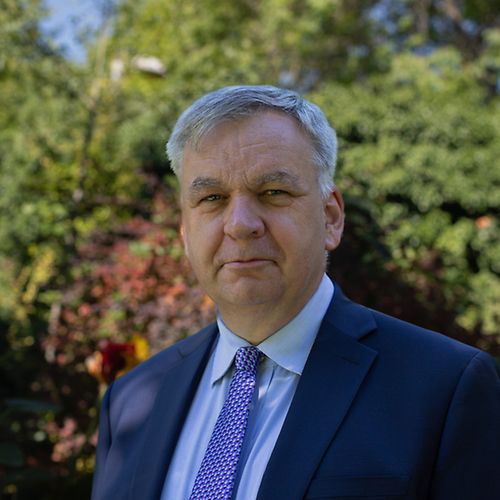
In an interview with Daily News Egypt, German Ambassador to Egypt Jürgen Schulz discusses the current state of bilateral relations, highlighting growing business interest, key investment trends, and the two countries’ joint push to position Egypt as a regional hub for clean energy.
What is the current volume of trade between Egypt and Germany, and what are the growth expectations for the coming year?
Germany is Egypt’s fifth-largest trading partner and its most important partner within the European Union, with bilateral trade currently amounting to around €5.5bn. This figure clearly reflects the depth of our economic relationship.
While there is no specific numerical forecast for the coming year, we are witnessing growing interest from German companies seeking to expand their activities in Egypt or to enter the market for the first time. In addition, Egyptian exports appear to be on an upward trajectory. These trends give us confidence in a positive outlook for bilateral trade going forward.
What is the current level of German investments in Egypt, and which sectors are attracting the highest investment?
Around 1,600 German companies are currently operating in Egypt. This in itself demonstrates the depth of German engagement in the Egyptian market. These companies are active across a wide range of key sectors, including machinery and industrial supplies, chemicals, infrastructure, automotive components, water management, and energy.
In addition, we are seeing growing interest in production and service-oriented investments, particularly in regional service hubs, IT services, and call centres. This is strongly supported by Egypt’s skilled workforce and the availability of German-speaking talent, which makes the country an increasingly attractive location for such activities.
Are there plans for new German companies to enter the Egyptian market, and which industries are they targeting?
Over recent years, we have observed increasing interest from German businesses in expanding their presence in Egypt or entering the market for the first time. This reflects growing confidence in Egypt as an industrial and investment destination.
Well-known German companies such as Bosch have expanded their presence and manufacturing activities in Egypt in recent years. These developments underline the attractiveness of the Egyptian market for German industry and point to continued momentum in our economic cooperation.
What future investments are being considered, particularly in energy and renewables, manufacturing, and infrastructure?
Germany will continue to support the expansion of renewable energy through Egypt’s NWFE programme. The German government is particularly focused on financing the modernisation of Egypt’s electricity grid. This will, in turn, enable further private sector investment in solar and wind energy facilities and support the broader energy transition.
Are there any upcoming German trade missions to Egypt next year, and if so, when are they planned and which sectors will they focus on?
German businesses are constantly exploring opportunities, including in Egypt. Often, companies travel individually to meet potential partners and customers. At times, larger groups of German businesses visit as part of organised delegations.
For example, the Euro-Mediterranean Arab Association (EMA), a German business association focused on the region, has organised business missions to Egypt. In addition, during meetings of the Joint Economic Commission between the German and Egyptian governments, German companies have participated to deepen engagement with their Egyptian counterparts. The sectors covered during these engagements have included industrial production, business services, and machinery.
How can Egypt attract more German SMEs (Mittelstand) to invest locally, and what support mechanisms exist?
To attract more German small and medium-sized enterprises—the Mittelstand—Egypt’s key strengths lie in reliability, transparency, and long-term predictability. Clear and efficient administrative procedures, a stable regulatory environment, and fair market conditions are particularly important for SMEs, which tend to take a long-term perspective when investing abroad.
Germany supports this process through well-established mechanisms. The German-Arab Chamber of Industry and Commerce (AHK Egypt) actively assists German SMEs by providing market information, facilitating business contacts, and organising delegation visits and trade fair participation. In addition, programmes such as “Partnering in Business with Germany” help to build lasting partnerships between German and Egyptian companies. Together, these instruments lower entry barriers, build trust, and encourage the German Mittelstand to invest and grow locally in Egypt.
Are there upcoming agreements or plans regarding debt-swap programmes between Egypt and Germany?
Germany and Egypt are currently implementing two active debt-swap agreements. These programmes demonstrate our long-term commitment to sustainable development and social stability in Egypt. The current arrangements are set to run until mid-2027, as successive debt repayments are being swapped. Debt-swap mechanisms have proven to be an effective and flexible instrument in our cooperation and may continue to play an important role in the future.
How is Germany supporting Egypt through NWFE to enhance energy, water, or food security?
Germany has been the primary partner country of Egypt’s NWFE programme, which plays a central role in enhancing energy, water, and food security through an integrated approach.
Our primary focus within NWFE is on the energy pillar, where Germany is supporting the expansion of renewable energy and, in particular, the modernisation of Egypt’s electricity grid. This is essential to integrate increasing volumes of wind and solar power and to unlock significant private sector investment. By strengthening Egypt’s energy system, we contribute to the broader stability and sustainability of the entire nexus.
Are there plans to expand funding or technical assistance under these programmes in priority sectors?
Yes, Germany will continue its support through targeted funding and technical assistance in priority sectors. In the field of energy transition and green hydrogen, we combine financial support with policy and technical cooperation.
This includes grant funding for project preparation, concessional loans to de-risk early-stage investments, and mechanisms that help link future production with international demand. In parallel, we provide technical assistance to support regulatory frameworks, grid integration, and institutional capacity building.
This holistic approach is designed to ensure that investments are sustainable, scalable, and aligned with Egypt’s long-term development priorities. We see this as a dynamic process and remain open to expanding our engagement where it can deliver the greatest impact.
Are there specific German companies planning projects in Egypt related to green hydrogen production or energy transition?
One of the most advanced initiatives in this field is the Egypt Green Hydrogen Project, which brings together an international consortium and is strongly supported by Germany. The project is designed to produce around 259,000 tonnes of green ammonia annually from 2027 onwards.
Germany is supporting this flagship initiative through targeted instruments, including €30m from the PtX Development Fund and a long-term offtake framework under the H2Global mechanism, with a volume of approximately €397m.
Are there ongoing negotiations or upcoming projects involving German companies in solar, wind, hydrogen, or energy storage?
Germany and Egypt remain in continuous dialogue to further develop their longstanding development cooperation. Egypt continues to be a key partner for Germany, particularly in the areas of renewable energy and sustainable development, and discussions on future projects are ongoing.
How can Egypt and Germany collaborate to position Egypt as a regional hub for clean energy exports?
Egypt and Germany can work together very effectively to position Egypt as a regional hub for clean energy exports. The pathway is clear: it requires the continued expansion of renewable electricity generation and the modernisation of the electricity grid, including through initiatives such as the NWFE platform.
A strong and flexible grid is essential to integrate large volumes of wind and solar energy and to enable the scaling up of green hydrogen production for both domestic use and export.
At the same time, this must be supported by a streamlined and predictable regulatory framework, as well as tailored financial instruments that reduce risks for investors. Germany contributes to this approach through policy dialogue, technical assistance, and innovative financing mechanisms that connect Egyptian production with European demand.
By aligning infrastructure, regulation, and financing, both countries can unlock Egypt’s full potential as a competitive and reliable supplier of clean energy to the region and beyond.
Are there joint initiatives to facilitate B2B partnerships between Egyptian and German companies?
Yes, this is a core component of our work. The German Embassy in Cairo, together with the German-Arab Chamber of Industry and Commerce (AHK Egypt), actively brings German and Egyptian companies together.
We support business delegations, facilitate participation in trade fairs, and create platforms where companies can connect, exchange expertise, and develop long-term partnerships.