

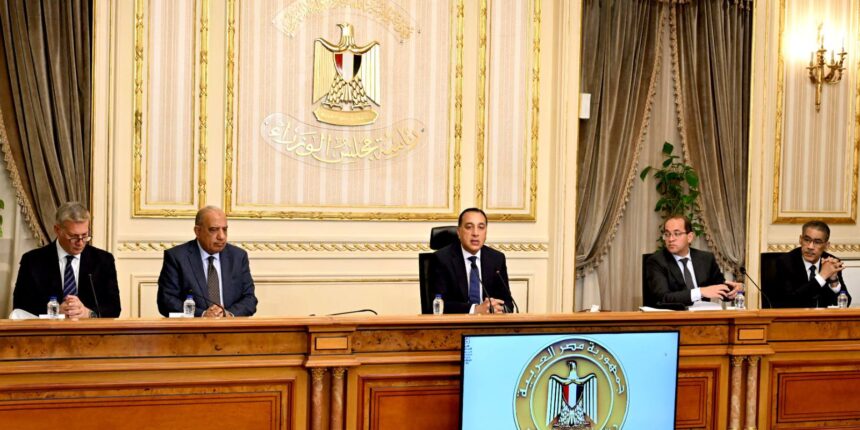
Egypt has mandated nationwide shop closures from 9:00 pm and introduced partial remote work to mitigate the economic impact of the war in Iran and a doubling of its monthly energy bill.
Prime Minister Mostafa Madbouly told a press conference on Saturday that the conflict, which began one month ago, caused energy costs to jump from $1.2bn in January to $2.5bn in March. He warned that the government would resort to further levels of energy rationing if the war continues for an extended period.
Starting today, shops across the country will close at 9 p.m. to reduce energy consumption. “The government has no choice but to implement this decision,” Madbouly said.
The measures come as Egypt faces accelerating inflation due to rising costs of energy and shipping. Inflation reached an annual 13.4% in urban areas in February, up from 11.9% in January, according to data from the Central Agency for Public Mobilisation and Statistics.
Madbouly stated that the government is working to curb inflation to avoid further interest rate hikes. “We discussed the future of product prices with the Federation of Industries and Chambers of Commerce, emphasising the need to avoid significant increases following the rise in petroleum product prices,” he said.
To conserve fuel, the government has ordered a total slowdown of major projects for two months to save diesel and petrol.All government agencies and institutions have also been directed to reduce their consumption of petroleum products by 30%.
The regional conflict intensified at the end of February when the United States and Israel launched attacks on Iran. Tehran responded with strikes across several regional countries, effectively closing the vital Strait of Hormuz, which handles approximately one-fifth of global oil supplies.
Global crude prices reached $112 per barrel at Friday’s close, exceeding the $105 per barrel price point used for Egyptian government calculations. Madbouly noted that Egypt’s daily diesel consumption of 24,000 tonnes now costs an additional $24m per day, or roughly $750m per month.
On March 10, the Ministry of Petroleum and Mineral Resources raised fuel and gas prices by between 14% and 30%, the third such increase in 12 months. Additionally, fares for railways and some metro lines were increased by up to 25% on Friday. Madbouly emphasised that the state continues to bear the majority of these costs, noting that the recent exceptional price increases cover less than one-third of the rise in global costs.
Regarding currency, the Prime Minister reported that banks face no crisis in providing dollars to meet all needs, despite declining state revenues and the rising import bill.
To further reduce energy use, the government will implement a partial remote work system. Starting April 5, all public and private sector employees will work from home every Sunday for one month, excluding the production, service, and hospital sectors. Madbouly indicated that a second weekly remote work day could be added if the war persists.
To mitigate the economic impact on citizens, the government announced a new package to improve state wages effective next fiscal year. Madbouly stated that wage increases for all state employees would exceed the current inflation rate, with President Abdel Fattah al-Sisi specifically directing larger increases for the health and education sectors.
The press conference was attended by Minister of Electricity and Renewable Energy Mahmoud Esmat, Minister of Finance Ahmed Kouchouk, Minister of Petroleum and Mineral Resources Karim Badawi, Minister of State for Information Diaa Rashwan, and Minister of Planning and Economic Development Ahmed Rostom.
