

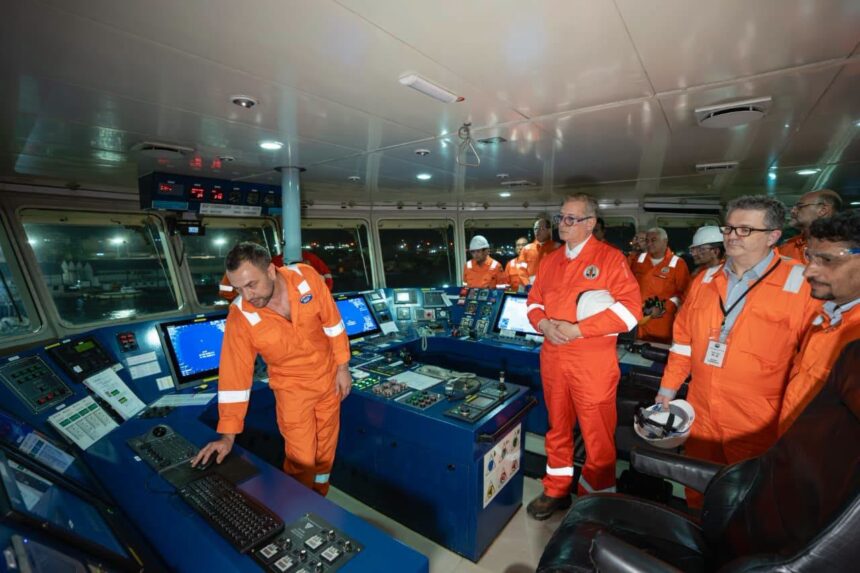
Karim Badawi, Minister of Petroleum and Mineral Resources, said the expanded use of advanced seismic survey technology was key to improving exploration activities and maximising the development of Egypt’s oil and gas resources. He noted that the deployment of Ocean Bottom Node (OBN) technology in the Gulf of Suez had helped raise drilling success rates from 26% to 80%.
Badawi said the results underscored the importance of advanced technology in improving the accuracy of drilling targets and reducing exploration risks and costs. This, in turn, enhances investment efficiency and increases the likelihood of successful drilling operations.
The minister made the remarks during a visit to the Commander vessel at Port Said Port to review final preparations for a major offshore seismic survey project in Egypt’s eastern Mediterranean waters. The project is scheduled to begin operations on 30 October and is among the largest of its kind in the region.
Implemented by the Egyptian Natural Gas Holding Company (EGAS) in cooperation with an international consortium comprising SLB and Viridien, the project aims to generate high-resolution geological data on subsurface formations that may contain natural gas. The findings will help identify promising exploration areas, support better-informed investment decisions and improve the prospects of new discoveries in the eastern Mediterranean.
Badawi said the eastern Mediterranean project builds on the wider application of OBN technology and the experience gained from the Gulf of Suez. It will also strengthen the integration of seismic survey results from different areas, including the Nile Delta, providing a more comprehensive picture of Egypt’s geological potential and helping determine exploration priorities.
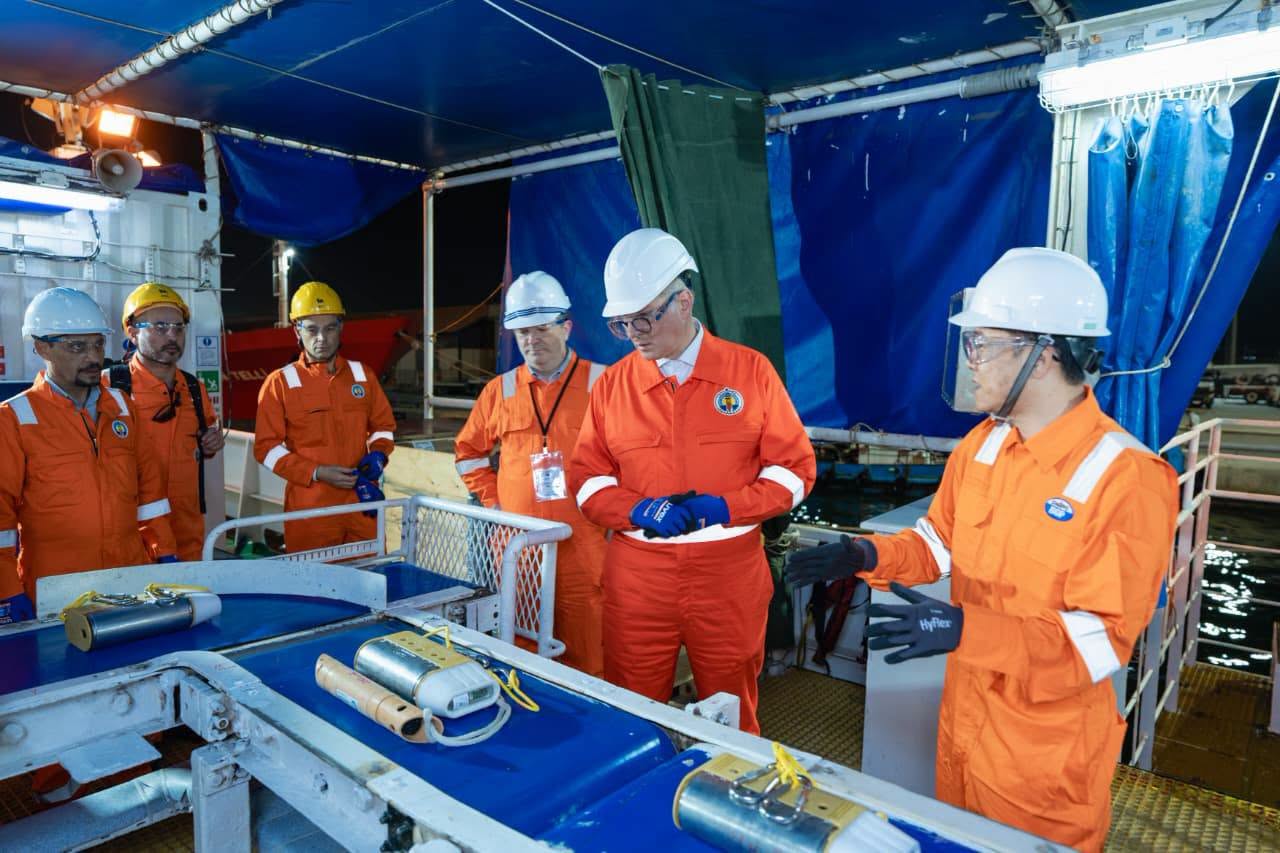
The Minister of Petroleum stressed the importance of adhering to the project’s timetable and maintaining close coordination among all partners, while accelerating data processing, analysis and utilisation. These efforts would help translate survey findings into technical and investment decisions that support Egypt’s natural gas exploration plans.
He added that accurate seismic data were crucial to encouraging international oil companies to direct new investments towards promising exploration areas. By reducing uncertainty surrounding targeted geological formations, such data can improve the chances of successful drilling and help companies make more informed investment decisions.
For his part, Henning Berg, Chief Executive Officer and member of the Board of Directors of Viridien, said the company had extensive global experience in seismic surveys using OBN technology, having conducted around 80% of such operations worldwide. He highlighted its experience in similar projects across several Gulf countries, including the United Arab Emirates and Saudi Arabia, saying this expertise would support the implementation of the Egyptian project.
OBN seismic surveys use sensors deployed on the seabed to collect high-resolution geophysical data. These data produce clearer images of subsurface geological formations, helping assess natural gas potential and identify the most promising locations for exploratory drilling.
The Commander is the first vessel to participate in the project, with two additional vessels scheduled to join it. Survey operations will begin in the Denes area off Port Said and the Ras El Bar area, covering an initial area of around 300 square kilometres. This phase is scheduled for completion by the end of 2026, alongside preparations for subsequent phases in 2027.


