The government is prepared to provide various incentives and directly enter into partnerships to accelerate mining projects to the production phase, Egypt’s prime minister said on Tuesday.
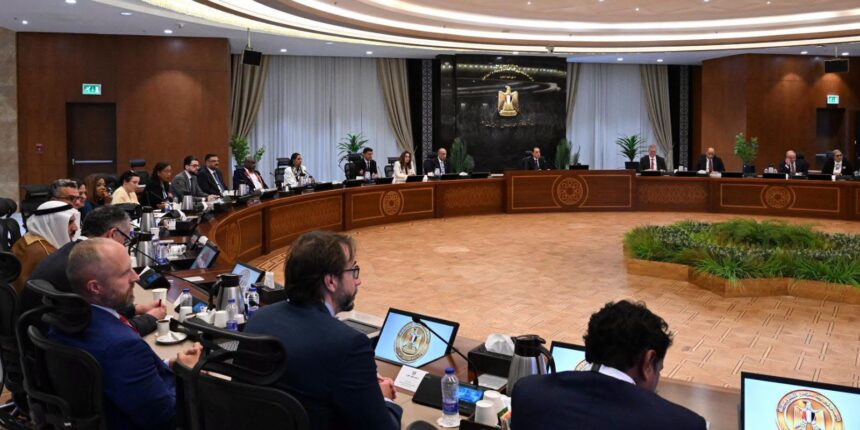
Mostafa Madbouly made the remarks during a roundtable discussion titled “From Discovery to Industrial Development: Building Investor Confidence Across the Mining Value Chain in Egypt.” The event was held at the cabinet headquarters in the New Administrative Capital as part of the fifth edition of the “Egypt Mining Forum 2026,” which opened on Monday under the patronage of President Abdel Fattah Al-Sisi with the slogan “Unlocking the Exploration Potential of Egypt and the Arab-Nubian Shield.”
Madbouly stated that the sector is entering a new phase after the government addressed structural issues that previously restricted investments, backed by significant state spending to provide necessary energy and infrastructure. He noted that the sector’s roadmap is now promising, adding that the state’s current priority is to translate the forum’s outcomes into real projects. Following presidential directives, the government is seeking to shorten execution timelines and work with stakeholders to reach production as quickly as possible, the prime minister said.
Minister of Petroleum and Mineral Resources Karim Badawi told attendees that sector development is not limited to raw extraction but aims to create real mineral wealth through value addition along the production chain. He highlighted the importance of global partnerships, noting recent meetings with international firms.
Badawi stressed that developing the sector requires inter-ministerial cooperation and private sector partnership. He added that the country can leverage its processing capabilities to become a regional hub for manufacturing minerals from other African countries, thereby enhancing its role in regional value chains.
During the roundtable, leaders of local and global mining companies and international financial institutions discussed factors necessary to attract investment, including geological potential, infrastructure availability, governance, predictability, and policy sustainability.
Investors stressed the need for open communication channels with the government, faster responses to investment proposals, and accelerated environmental and mine licensing procedures to allow operations to begin promptly based on regional benchmarks. Attendees also highlighted the country’s gold production potential and strategic geographic location linking the Middle East and Africa.
Addressing energy requirements, Minister of Electricity and Renewable Energy Mahmoud Esmat said the government is working to supply electricity tailored to the specific stages and needs of each project, which includes leveraging renewable energy sources and storage solutions for a stable supply. Minister of Industry Khaled Hashem presented models linking mineral raw materials to processing industries, stressing the need to implement practical measures to overcome investment challenges.
Minister of Labour Hassan Raddad outlined regulations governing working hours and work planning, emphasising the need for companies to comply with approved labour regulations.
Separately, Amal Ammar, President of the National Council for Women (NCW), said the sector’s expansion would open new technical, administrative, and leadership roles for Egyptian women. She cited Hoda Mansour, managing director and vice chairperson of Sukari Gold Mine Company and an NCW member, as a model of female leadership based on competence and merit under President El-Sisi’s administration.
The roundtable was also attended by Minister of Local Development and Environment Manal Awad and Deputy Minister of Transport Nihad Shaheen. Madbouly concluded by reaffirming the government’s openness to investor contributions and expressing his readiness to meet directly with participants and relevant ministers to discuss specific cooperation proposals.