

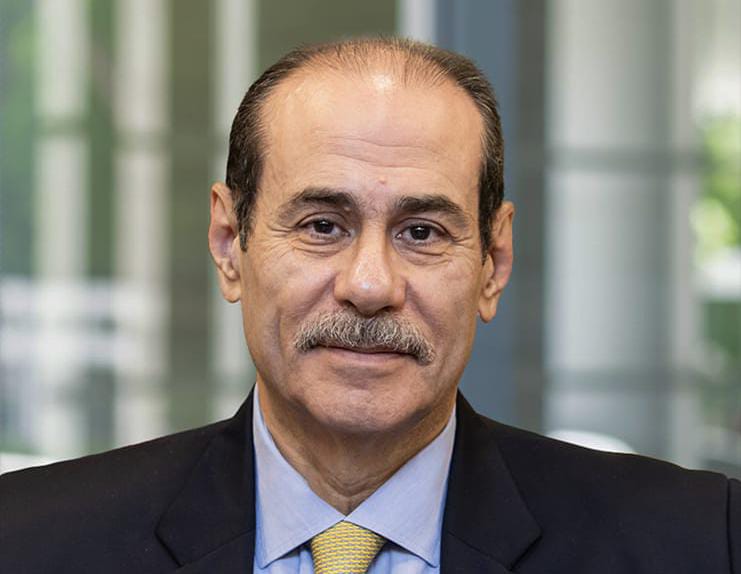
Tarek El-Kholy, Deputy Governor of the Central Bank of Egypt (CBE), said bank financing directed to small enterprises has reached around EGP 301bn, while bank and non-bank financing for microenterprises has exceeded EGP 107bn.
Of this amount, around EGP 33bn represents direct financing from banks, while approximately EGP 66.5bn is indirect financing provided by banks to entities, associations, and companies that, in turn, extend loans to microenterprises.
El-Kholy said micro, small, and medium-sized enterprises (MSMEs) are a fundamental pillar of the Egyptian economy and a key driver of growth and employment.
Egypt has around 3.858 million MSMEs, accounting for 99.3% of all enterprises in the country and providing approximately 12.5 million jobs, equivalent to 82% of total employment, he noted.
The remarks came in a speech delivered by the CBE Deputy Governor at the CERISE+SPTF Global Meeting 2026, hosted by the Egyptian Federation for MSME Finance on Tuesday under the auspices of the Cabinet, with the participation of the CBE, the Financial Regulatory Authority (FRA), and international and local institutions and entities. The conference runs from September 29 to October 1.
MSMEs drive employment and economic activity
El-Kholy said microenterprises alone account for around 80% of all MSMEs, compared with 19% for small enterprises and 0.7% for medium-sized enterprises, according to the results of the 2022/2023 economic census issued by the Central Agency for Public Mobilisation and Statistics (CAPMAS).
He added that the growing role of these enterprises in absorbing labour has coincided with a decline in Egypt’s unemployment rate from around 9% to 6%, underscoring the importance of continuing to support their ability to grow, remain sustainable, and create more jobs.
The CBE Deputy Governor said the MSME financing portfolio grew by around 409% between 2015 and June 2026, driven by measures and initiatives adopted by the central bank to increase financing flows to the sector.
He added that the microfinance portfolio, including both bank and non-bank financing, recorded a substantial increase of more than 1,570% between 2016 and June 2026, reaching more than 3.9 million clients with a total value exceeding EGP 107bn.
El-Kholy said neither the banking nor non-banking sectors had previously given microenterprise financing the same level of attention it receives today. However, recent years have witnessed a significant shift in both the volume of financing and the diversity of institutions operating in the sector.
CBE expands financing requirements
Reviewing measures taken by the CBE to increase financing available to the sector, El-Kholy said banks were required in 2016 to allocate 20% of their credit portfolios to financing MSMEs.
The requirement was subsequently raised to 25% in 2021, including a 10% allocation to small enterprises.
He said the CBE gave banks a grace period to adjust their positions and meet the required ratios before applying prescribed penalties to non-compliant banks.
The approach was intended to ensure an increase in financing and expand the number of businesses able to access the banking sector, he added.
Women’s access to finance
El-Kholy said women’s economic empowerment is an important pillar of the strategy to expand access to finance.
Women-owned or women-managed businesses account for around 24% of MSMEs receiving financing from the banking sector, he noted.
Women also account for around 53% of clients benefiting from non-bank microfinance providers, he said, adding that sector indicators he had reviewed showed extremely low default rates among women-managed enterprises, approaching zero in some cases.
NilePreneurs supports business development
The CBE Deputy Governor also highlighted the role of the NilePreneurs initiative in providing financial and non-financial services to business owners.
The initiative includes 140 business development centres across 25 governorates, he said.
The centres have provided around 1.3 million non-financial and advisory services to approximately 589,000 beneficiaries, 41% of whom are women, while also helping facilitate financing worth nearly EGP 24bn, he added.
Supporting the transition to the formal economy
El-Kholy said the CBE’s strategy is not limited to increasing the volume of financing directed to microenterprises, but also seeks to help informal businesses gradually transition into the formal economy and enable them to deal with financial institutions.
He said the CBE had developed mechanisms allowing businesses that do not initially have approved budgets or financial statements to access financing by assessing their business behaviour, activity, and repayment capacity.
The mechanisms also allow businesses to gradually develop financial statements and maintain proper accounts, he added.
These measures help business owners build financial and credit records that allow them to access a broader range of banking and financing services and benefit from incentives available to entities operating within the formal economy, El-Kholy said.
Cooperation supports sector development
El-Kholy said cooperation between the CBE, the FRA, and the Egyptian Federation for MSME Finance has played a key role in developing the market.
He noted that 36 associations operating in the sector had been upgraded from Category C to Category B through an institutional upgrading programme sponsored by the CBE between 2021 and 2026.
El-Kholy added that his experience with the sector over nearly 10 years had shown that default rates in microfinance were significantly lower than those recorded in a number of other financing activities, contributing to growing interest among banks in this segment.
The CBE Deputy Governor said financial inclusion and financial stability are complementary objectives, and that expanding access to finance must go hand in hand with protecting customers’ rights, improving service quality, and strengthening the ability of small and microenterprises to grow, remain sustainable, and access formal sources of finance.


