

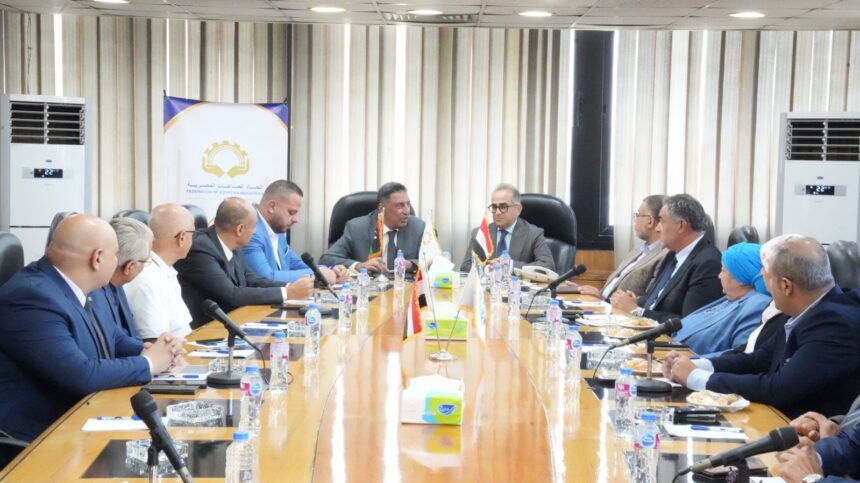
The Federation of Egyptian Industries (FEI) has signed a cooperation protocol with the General Union of Chambers of Commerce, Industry and Agriculture in Benghazi to organize an annual Egyptian-Libyan Industrial Integration Exhibition in Benghazi, with the first edition tentatively scheduled for April 2027.
The initiative aims to strengthen industrial, trade, and investment ties between Egypt and Libya, promote joint ventures, and open new markets for Egyptian products, particularly across Africa.
Head of the FEI’s Exhibitions and Small Enterprises Committee Hisham El Gazzar said that the protocol seeks to move economic relations beyond traditional trade towards industrial integration, joint investments, technology transfer, and the development of integrated value chains.
He added that the exhibition will connect Egyptian manufacturers with Libyan companies and investors across priority sectors, including building materials, food, chemicals, engineering industries, plastics, wood and furniture, ready-made garments and textiles, leather, and footwear.
El Gazzar noted that the exhibition will be designed as a sustainable platform for business partnerships, with its success measured by contracts, investments, and joint ventures rather than participation alone.
Chairperson of Al Daleel International for Conferences and Exhibitions Ahmed Al-Jahani said that the event will include B2B meetings, economic forums, specialised workshops, and presentations of investment opportunities and projects available for partnership.
He highlighted the exhibition’s African dimension, noting that Libya’s geographic location could provide Egyptian companies with access to markets including Chad, Niger, Sudan, and Mali. Importers and businessmen from these markets are expected to be invited to participate in business meetings accompanying the exhibition.
Head of the Management Committee of the General Union of Chambers in Benghazi Saleh El Obeidi said that combining Egypt’s industrial capabilities with Libya’s strategic and logistical position could create a platform for Egyptian companies to access wider African markets.
He pointed out that product quality will be critical to strengthening Egyptian exports, particularly as Chinese and Turkish products intensify competition in the Libyan market. Egyptian exporters, he said, must comply with technical standards and ensure that products undergo the necessary testing before shipment.
El Obeidi also highlighted investment incentives under Libya’s Investment Law No. 9, including tax and customs exemptions ranging from five to eight years depending on the project. Foreign investors may also, subject to applicable regulations, own up to 100% of projects through the investment registry, transfer profits, and re-export machinery and equipment.
He disclosed that Libya is seeking to strengthen its role as a transit trade hub serving markets such as Chad, Niger, Sudan, and Mali, while developing storage and logistics facilities to support trade flows.
Executive Director of the FEI Khaled Abdel Azim said that Egyptian industry has made significant progress in quality, partly through local manufacturers’ growing role in producing for international brands.
Meanwhile, a board member of the Leather Industries Chamber Mostafa Allam called for more specialised exhibition editions focused on complementary sectors to maximise commercial returns and support export growth.
The organisers are also considering dividing the exhibition into industrial and commercial tracks, covering industrial integration and investment opportunities on one side and traders and importers on the other.
Participants further discussed establishing a permanent exhibition for Egyptian products in Libya, supported by warehouses and logistics centres, aiming to ensure a continuous market presence.
The initiative also identified opportunities for Egyptian food companies, real estate developers, and construction firms to participate in Libya’s development and reconstruction projects.


