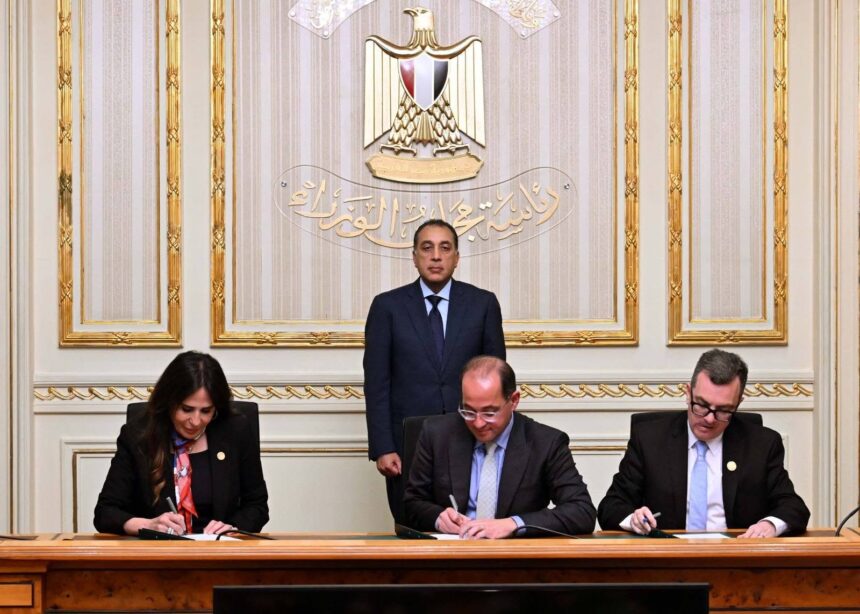
Egypt has taken a significant step towards resolving longstanding financial liabilities among state entities, with Prime Minister Mostafa Madbouly overseeing the signing of two framework agreements worth a combined EGP 196bn to settle historical debts dating back to the 1980s.
The agreements form part of the government’s broader structural reform agenda and efforts to strengthen the financial positions of state-owned entities, improve the utilisation of public assets, and reduce pressure on the state budget.
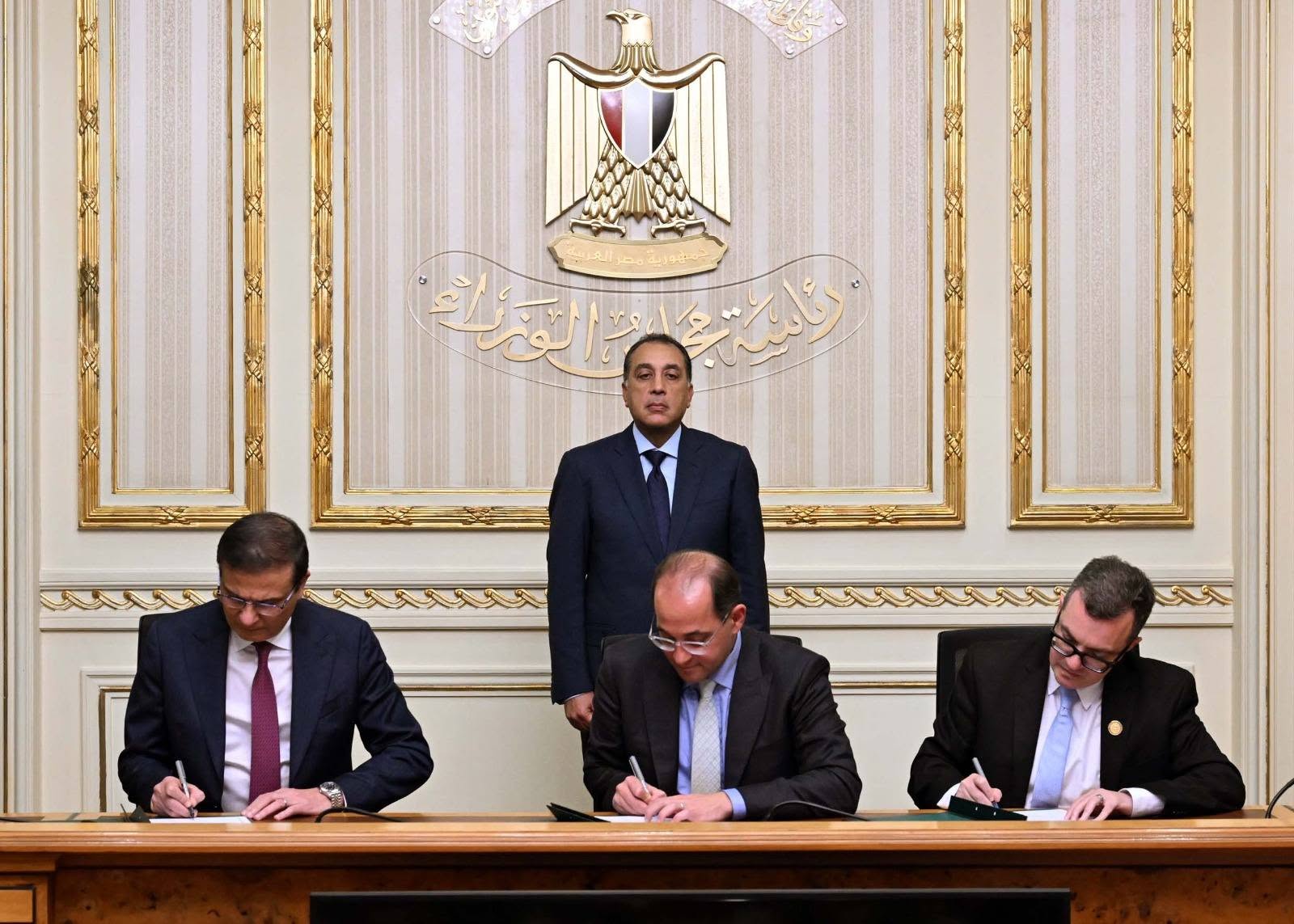
The first agreement addresses financial liabilities between the National Investment Bank (NIB) and subsidiaries of the Holding Company for Water and Wastewater. It was signed by Minister of Finance Ahmed Kouchouk, Minister of Housing, Utilities and Urban Communities Randa El-Menshawy, and Minister of Planning, Economic Development and International Cooperation Rania Al-Mashat. The agreement provides for the settlement of debts owed to the NIB amounting to EGP 62.2bn as of the end of December 2025.
The second agreement was signed by Kouchouk, Minister of Agriculture and Land Reclamation Alaa Farouk, and Al-Mashat. It covers the settlement of EGP 133.5bn in liabilities owed by the General Authority for Reconstruction and Agricultural Development to the NIB as of December 2025, in addition to EGP 306m owed by the Egyptian Agricultural Authority as of March 2025.
Speaking after the signing ceremony, Madbouly reaffirmed the government’s commitment to resolving outstanding financial liabilities among state institutions, describing them as historical challenges that have constrained the performance of several public entities. He said addressing these issues would create greater opportunities for institutional development and improve the quality of services provided to citizens.
Kouchouk described the agreements as an important step forward in Egypt’s structural reform programme, emphasising that the settlements would support the optimal utilisation of state assets, strengthen financing structures, and enhance the efficiency and performance of national entities.
He added that the government continues to coordinate closely with agricultural institutions to support agricultural expansion and broader economic development objectives.
For his part, Farouk said the settlements would contribute to advancing agricultural development, enhancing food security, increasing agricultural and agro-industrial production, and boosting agricultural exports in line with Egypt’s sustainable development strategy.
Al-Mashat described the agreements as a landmark achievement in intergovernmental coordination under the direct supervision of the Prime Minister. She said the settlements would support macroeconomic stability, maximise the value of state assets and resources, and send a strong signal to investors regarding the government’s determination to resolve longstanding financial issues.
She added that the agreements cover strategic sectors critical to Egypt’s national security, including agriculture, food security, and drinking water services. Removing decades-old financial burdens, she noted, would enable these sectors to operate more efficiently and pursue future growth opportunities.
Meanwhile, El-Menshawy said the settlement involving water and wastewater companies represents an important step towards improving financial discipline and strengthening the financial positions of state-owned utilities.
She added that the agreement reflects effective coordination among government institutions and will support the Holding Company for Water and Wastewater and its subsidiaries in enhancing operational performance and maintaining service quality.
The government said the agreements are part of ongoing efforts to resolve historical financial liabilities involving the National Investment Bank and various public entities, in line with directives from President Abdel Fattah Al-Sisi to enhance fiscal sustainability, improve governance, and strengthen the efficiency of state institutions.