

United States and Cuban officials have held an exceptional diplomatic meeting in Havana, where an American delegation demanded significant changes to the island’s economy and system of government, warning that Washington will not allow Cuba to become a “national security threat in the region.”
The talks come as a new diplomatic manoeuvre, proceeding despite threats of intervention by US President Donald Trump and declarations from the Cuban government that it is “ready to fight” should such an event occur.
The Associated Press reported on Saturday that the US delegation urged major reforms during the visit, which marks the first American government trip to Cuba outside the Guantanamo Bay naval base since 2016.
A US State Department official stated that a senior department official met with Raul Guillermo Rodriguez Castro, the grandson of former Cuban leader Raul Castro. The grandson is believed to retain significant influence within the government despite not holding an official post. The name of the US official involved in the meeting was not disclosed.
Another US official clarified that Secretary of State Marco Rubio was not part of the delegation visiting Havana, though Rubio had previously met with Castro’s grandson last February in the Caribbean nation of St. Kitts and Nevis.
Cuba’s compounding crises, particularly in its energy sector, have been exacerbated by the US blockade. The Trump administration has described the Cuban government as “ineffective and committing abuses.” Consequently, US demands for sanctions relief include ending what it terms “political repression,” the release of political prisoners, and the implementation of reforms to the struggling economy.
During the talks, the two sides also discussed a US proposal to provide free and stable internet access to the island via the “Starlink” satellite network.
The revelation of these talks follows recent comments from Trump indicating that his administration might shift its focus to Cuba following the conclusion of the war in Iran. “We might head to Cuba after finishing this,” Trump stated, referring to the island as a “failed state.”
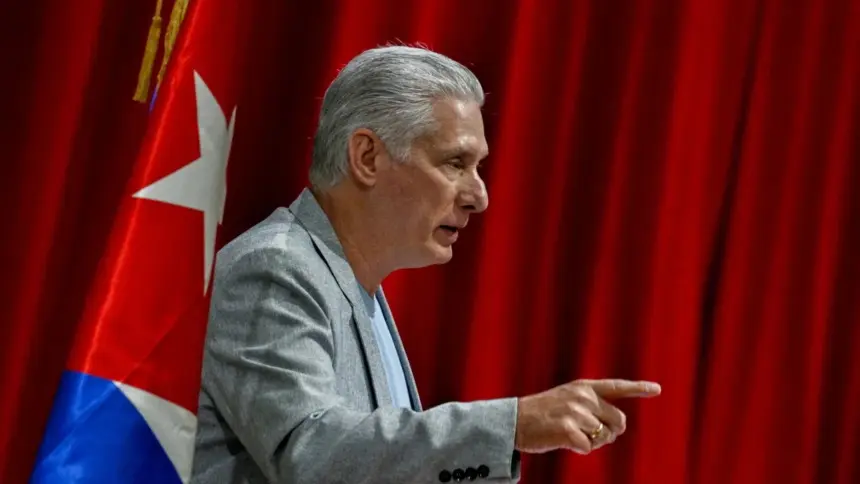
In response, Cuban President Miguel Diaz-Canel asserted that the United States has no justification to launch a military attack or to overthrow his government, while simultaneously affirming his country’s readiness to defend itself if necessary.
“The phase is extremely difficult and requires us to be prepared to face serious threats, including military aggression; we do not wish for that, but it is our duty to prepare to prevent it,” Diaz-Canel said during a rally marking the 65th anniversary of the declaration of the socialist character of the Cuban revolution.
The Havana meetings follow a tense week of rhetoric. A week ago, Diaz-Canel flatly refused to step down amid mounting pressure from Trump, who has pledged imminent action against the socialist government, including the appointment of new leaders.
In his first interview with a US media outlet, Diaz-Canel told NBC News’ “Meet The Press” programme on Thursday that his resignation was out of the question.
“In Cuba, those who hold leadership positions are not elected by the US government, and they do not have a mandate from it,” Diaz-Canel said. “We have a free, sovereign state, a free country. We have the right to self-determination and independence. Stepping down is not in our vocabulary.”
The Cuban leader objected to the line of questioning regarding his potential resignation, asking the interviewer: “Are you directing this question to Trump?” and questioning whether the inquiry was “issued by the US State Department.”
He insisted that the country’s leaders are “elected by the people, despite a narrative trying to ignore that.” He added, “Each one of us, before becoming part of a leadership role, must be elected at the grassroots level in their constituency by thousands of Cubans.”
Diaz-Canel placed the blame for the current state of bilateral relations firmly on US policies. “I think the most important thing is for them to understand this critical situation, approach it honestly, and realise the magnitude of the losses the Cuban people have suffered, and how they have deprived the American people of a normal relationship with our people,” he said.
Responding to Diaz-Canel’s television appearance, a White House official confirmed on Thursday that the Trump administration is engaging in talks with Cuba. The official noted that Cuban leaders want, and indeed must, secure a deal—an outcome Trump believes “will be very easy.”
“Cuba is a failed state, and its rulers have suffered a major setback by losing support from Venezuela,” the White House official added.
The NBC interview is part of a broader media campaign launched by the Cuban government over the past two months. Amid an impending economic collapse and escalating US pressure, Havana has granted several US and international media outlets access to various government officials to present its perspective on the deepening crisis.


