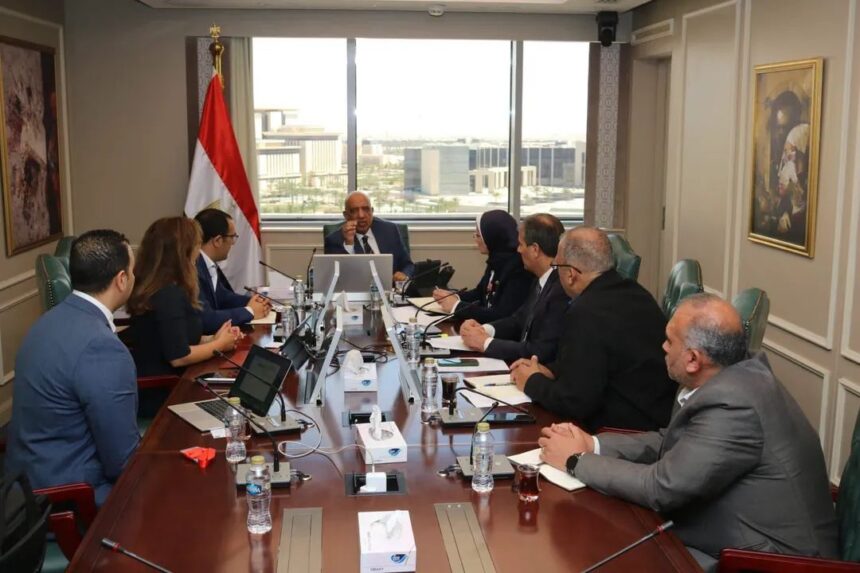
Minister of Electricity and Renewable Energy Mahmoud Esmat met with a delegation from Nexus Analytica, led by CEO Wissam El-Baz, at the Ministry’s headquarters in the New Administrative Capital. The meeting was attended by Mona Rizk, Chairperson of the Egyptian Electricity Transmission Company, and Ahmed Mahina, Head of Strategic Planning and Performance Monitoring at the Ministry.
Discussions centred on deploying advanced digital technologies, particularly the NexusGRID platform, to support the digital transformation of Egypt’s energy sector. The platform is designed to optimise unified grid operations, enhance planning processes, and improve the management of power purchase agreements (PPAs), with the aim of boosting efficiency, transparency, and competitiveness, while attracting further investment in renewable energy.
The initiative aligns with Egypt’s broader digital transformation agenda and national energy strategy, as well as the Ministry’s programme to expand the use of advanced technologies, scale up renewable energy capacity, and improve grid performance to ensure a more reliable and sustainable electricity supply.
During the meeting, the minister reviewed the company’s experience and received a detailed presentation on its digital solutions, with particular focus on NexusGRID. The platform was highlighted as a comprehensive tool for analysing and monitoring electricity network data, tracking the performance of renewable energy plants, and assessing production efficiency.
Esmat noted that the platform provides an advanced framework for monitoring technical performance, improving both technical and financial forecasting, and managing the energy mix. These capabilities are expected to enhance operational efficiency and optimise fuel consumption.
He added that NexusGRID can also support the technical, financial, and legal management of PPAs, enabling more precise oversight of contracting, implementation, and operational phases. This, in turn, would strengthen governance, improve transparency, and facilitate monitoring of financial and legal compliance across renewable energy projects.
The platform is also expected to support faster resolution of investor challenges, streamline contracting and project procedures, and enhance grid stability by ensuring the effective integration of renewable energy capacities into the national electricity system.
Esmat reaffirmed that the electricity sector is advancing its digital transformation efforts through the adoption of cutting-edge technologies for data analysis, performance monitoring, and efficiency optimisation, in line with the national energy strategy. These efforts form part of a broader push to improve institutional performance and reinforce governance.
He further highlighted that the transition towards a smart grid is being implemented across generation, transmission, and distribution segments, alongside efforts to enhance service delivery to citizens. Strengthening and modernising the unified grid to accommodate additional generation—particularly from renewable sources—remains a key priority.
The minister also underscored the importance of continued cooperation with private sector partners to support the energy transition, noting the growing role of renewable energy within Egypt’s energy mix, alongside measures to ensure the security, stability, and continuity of electricity supply.