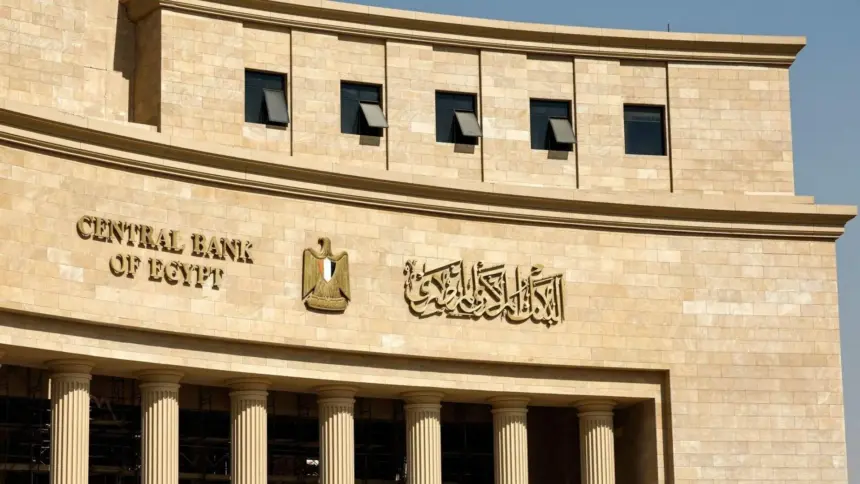
Egypt’s current account deficit narrowed by 13.6% to $9.5bn during the first half of the fiscal year (Fy) 2025/26 financial year, driven primarily by a 29.6% surge in remittances from Egyptians working abroad to $22.1bn, alongside robust foreign direct investment (FDI) inflows, Central Bank of Egypt (CBE) data revealed.
Transactions with the external sector showed a marked improvement during the July to December 2025 period, which occurred prior to the outbreak of the war in the region. Despite the current account gains, the overall balance of payments (BoP) yielded a deficit of $2.1bn, widening from a deficit of $502.6m in the same period of the preceding financial year.
The narrowing of the current account deficit, down from $10.9bn a year earlier, was supported by a 28.4% increase in net unrequited current transfers to $22bn, driven by the remittance surge from $17.1bn. The services balance also rose by 20.6% to record a surplus of $8.9bn. Tourism revenues increased by 17.3% to $10.2bn, against $8.7bn, while Suez Canal transit receipts went up by 19.0% to $2.2bn, against $1.8bn. The canal’s performance was boosted by a 16.1% increase in net tonnage to 284.0m tons and a 5.8% rise in transiting vessels to 6.7 thousand vessels.
Pacing the improvement in the current account balance were widening trade deficits. The oil trade deficit increased by $2.3bn to $8.9bn, against $6.7bn. Oil imports rose by $1.9bn to $11.6bn, against $9.7bn, due to increased quantities of natural gas and crude oil imports, which grew by $2.1bn and $305.8m respectively. Imports of oil products fell by $522.4 m on lower imported quantities. Oil exports fell by $352.3m to $2.6bn, against $3.0bn, driven by lower exported quantities of crude oil and oil products, which declined by $343.1m and $169.7m respectively. Natural gas exports grew by $160.5m due to increased exported quantities.
The non-oil trade deficit widened by $2bn to $22.8bn, against $20.8bn. Non-oil merchandise import payments increased by $4.5bn to $41.1bn, against $36.6bn. The increase was concentrated in imports of passenger vehicles, spare parts and accessories for cars and tractors, corn, telephones, and soy beans. Non-oil merchandise export proceeds grew by $2.5bn to $18.3bn, against $15.7bn, with increases concentrated in exports of gold, household electrical appliances, fresh, chilled and cooked vegetables, fresh and dried fruits, and ready-made clothes.
The investment income deficit widened by 8.0% to $8.6bn, against $7.9bn, reflecting a 7.7% increase in investment income payments to $9.9bn and a 5.7% rise in investment income receipts to $1.4bn.
In the capital and financial account, Egypt recorded a net inflow of $6.5bn during the reporting period, compared with a net inflow of $8.9bn during the same period of the previous financial year. FDI registered a net inflow of $9.3bn, up from $6.0bn. FDI to non-oil sectors posted a net inflow of $9.4bn. Greenfield investments or capital increases of existing companies recorded a net inflow of $6.1bn, primarily driven by October to December 2025 inflows following the implementation of the Alam El-Roum deal valued at $3.5bn.
Additionally, net investment inflows for real-estate purchases by non-residents rose to $1bn, against $732.1 m. Reinvested earnings achieved a net inflow of $2.4bn, against $2.2bn, and proceeds from selling local entities to non-residents registered a net inflow of $388.9m, against $321.9m. FDI in the oil and mineral resources sector achieved a net outflow of $159.5m, compared to a net inflow of $196.9m previously. This resulted from outflows, representing cost recovery for exploration, development, and operations previously incurred by foreign partners, increasing to $3.1bn, against $2.7bn, while greenfield inflows to the sector stabilised at $2.9bn.
Portfolio investment recorded a net inflow of $5bn, compared to a net outflow of $3.2bn. The change in banks’ foreign assets posted a net outflow of $9.7bn, representing an increase in assets abroad. Medium and long-term loans and facilities recorded a net repayment of $380.7m, against $2.0bn, reflecting reduced reliance on external borrowing as total principal repayments recorded $3.9bn, against $7.7bn, and total disbursements registered $3.5bn, against $5.7bn. The change in the Central Bank of Egypt’s liabilities posted a net outflow of $435.1m, representing a decrease in liabilities, against a net inflow of $704.5m.