The United States and Iran edged closer to a preliminary understanding that could ease Gulf tensions, even as disputes over Tehran’s nuclear program and control of the Strait of Hormuz continued to cast uncertainty. Both sides mixed signals of diplomacy with warnings of force.
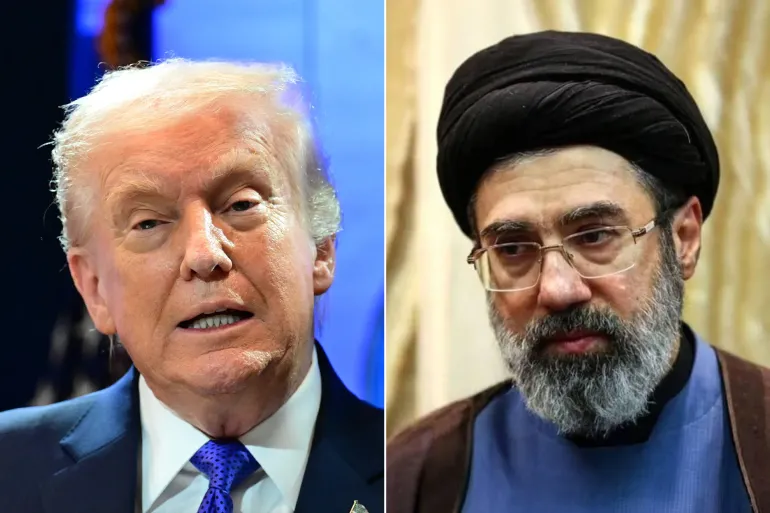
US President Donald Trump said Sunday he had instructed US diplomats not to rush into an agreement, insisting that “time is on our side.” His caution came less than a day after he claimed “a large part” of a memorandum of understanding tied to a peace deal with Tehran had already been negotiated. On Truth Social, Trump stressed that sanctions would remain “fully in force” until a final agreement is signed, warning there was “no room for mistakes.”
Signs of progress nonetheless emerged in indirect talks. US Secretary of State Marco Rubio suggested “good news” could be imminent regarding the Hormuz crisis, citing “some progress” over the past 48 hours on the outlines of an understanding. Speaking in New Delhi, Rubio underscored that freedom of navigation was a US priority, declaring that “no country can be allowed to exploit maritime corridors,” while reiterating Washington’s opposition to Iran acquiring nuclear weapons.
Iran, for its part, vowed not to compromise the country’s “dignity” or nuclear rights, though it signaled readiness to reassure the world it was not pursuing nuclear arms. Iranian President Masoud Pezeshkian accused Israel of fueling regional conflict and emphasized that no decision would bypass Iran’s Supreme National Security Council or Supreme Leader Mojtaba Khamenei.
Reflecting ongoing divisions, Iran’s semi-official Tasnim news agency rejected Western reports that Tehran had agreed to transfer enriched uranium abroad or suspend enrichment, insisting the nuclear file was postponed until after the war and US commitments were implemented.
Israel maintained a hard line. Israeli Prime Minister Benjamin Netanyahu said he had told Trump that any deal must include dismantling Iran’s enrichment facilities and removing enriched material, adding that Trump reaffirmed his commitment to Israel’s security and preventing Iran from acquiring nuclear weapons.
In Tehran, Ali Abdollahi, commander of Iran’s Khatam al-Anbiya Central Headquarters, declared Iran was “living under wartime conditions” and fully prepared to repel any attack. Former Islamic Revolutionary Guard Corps (IRGC) commander Mohsen Rezaei warned that conflict could spread from Hormuz to the Gulf, Arabian Sea, Bab al-Mandab, and Indian Ocean, triggering “a large-scale war.”
Meanwhile, Iran’s IRGC navy reported 33 vessels had crossed Hormuz in the past 24 hours “under direct coordination and authorization,” signaling that maritime traffic through the strategic waterway remained operational.
Several countries welcomed what they described as encouraging signs of progress, urging Washington and Tehran to reach a broader framework that preserves the ceasefire and ensures safe passage through Hormuz, amid fears that renewed escalation could disrupt global energy markets and trade routes.