

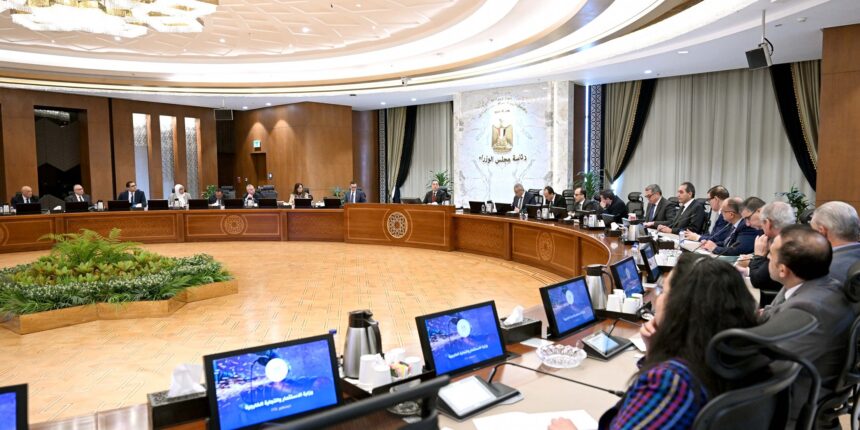
Prime Minister Mostafa Madbouly urged business leaders to “double” their investments in Egypt on Monday, citing the country’s lowest trade deficit in a decade and record non-oil exports as evidence of a “vast and promising” economic climate.
Speaking at a meeting with export council heads and Investment Minister Hassan El-Khatib, Madbouly called on local and foreign investors to seize current opportunities.
“Double your investments… the climate is attractive… and the opportunities are vast and promising, so seize them,” Madbouly told the assembly.
Record Exports Narrow Deficit
El-Khatib reported that for the first ten months of 2025, Egypt achieved its lowest trade deficit in ten years. Non-petroleum exports rose to a record $40.7bn, driving a total trade volume of $107.6bn. The minister attributed the improved balance of trade primarily to a $6.5bn annual increase in exports rather than import compression, signalling a genuine expansion in productive capacity.
Ministry data indicates the trade deficit had already narrowed by 16% year-on-year in the first ten months of 2025, dropping to roughly $26.3bn. The surge in exports has been notably driven by the UAE, which emerged as the top destination for Egyptian goods with $6.3bn in imports—a staggering 142% year-on-year increase.
Garments and ‘Property Exports’ to Lead 2026 Growth
Export councils presented a bullish outlook for 2026, driven by foreign direct investment (FDI) and supply chain localisation. The ready-made garments sector is forecast to grow by 28% to 30% next year, supported by recent capital injections from Egyptian, Chinese, and Turkish investors.
Industry leaders are targeting $4bn in exports by 2026. The sector has seen a shift in regional dynamics, with exports to Turkey soaring by 71% and shipments to Saudi Arabia doubling in recent months, as manufacturers capitalise on near-shoring trends.
Similarly, real estate “exports”—sales of properties to foreign buyers—are projected to rise by 30%. Council heads cited demand from Egyptian expatriates and Gulf nationals, particularly for developments in the Red Sea and the North Coast, specifically mentioning Ras El Hekma and Alam El-Roum.
The sector continues to be energised by the historic $35bn Ras El Hekma deal with UAE sovereign fund ADQ. Furthermore, the mention of Alam El-Roum likely refers to the developing partnership with Qatari Diar, which recently committed to a multi-billion-dollar project in the area, solidifying the North Coast’s status as a magnet for Gulf capital.
Furniture and Agriculture
In the furniture sector, officials highlighted a new factory in New Alamein city set to supply IKEA branches globally. The plant contributes to the localisation of production inputs, a strategy officials said is reducing the import bill.
Meanwhile, the food industries sector is targeting export growth of 15% to 18% next year. The agriculture council aims for a minimum 10% annual increase, noting that local components already constitute 95% of production. These targets align with the state’s broader “Narrative for Economic Development,” which aims to increase annual export values by 20% through 2030.
Madbouly concluded the meeting by praising the private sector’s resilience. “You took risks and succeeded… so seize the opportunity,” he said. “All economic indicators are positive.”


