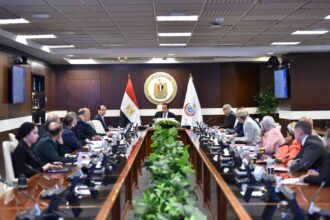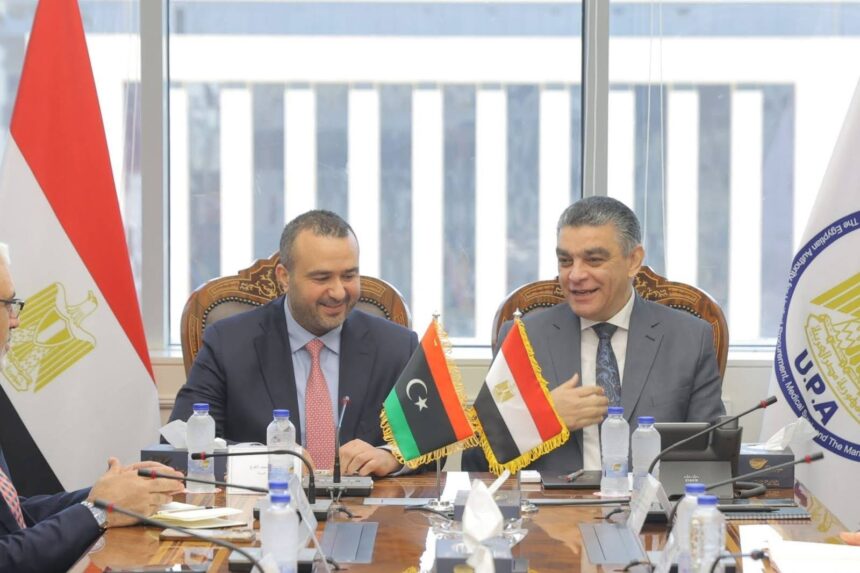
Egypt and Libya have discussed expanding cooperation in the healthcare sector, with a particular focus on pharmaceutical supply, medical industry localisation, training programmes, and healthcare infrastructure, during a meeting between senior officials from both countries.
Chairperson of Egypt’s Unified Procurement Authority (UPA), Hisham Stait, received Libyan Minister of Health Mohamed Al-Fouj and his accompanying delegation as part of ongoing efforts to strengthen bilateral cooperation and exchange expertise in the healthcare sector.
The Libyan delegation included Mohamed Al-Atouq, Advisor to the Minister for Pharmaceutical Affairs; Adel Al-Tajouri, Director of Planning; Sondos Azzam, Director of International Cooperation; Adnan Issa, Director of the Minister’s Office; and Hannibal Khamaj.
During the meeting, both sides underscored the strong historical and fraternal ties between Egypt and Libya and reaffirmed their commitment to deepening cooperation across various sectors, particularly healthcare, in support of development efforts and regional integration.
Stait reviewed the rationale behind the establishment of Egypt’s Unified Procurement Authority and its role within the country’s healthcare reform framework. He explained that the authority is one of five key institutions established to modernise Egypt’s healthcare system and is responsible for the centralised procurement of pharmaceuticals, medical supplies, and medical devices, ensuring quality standards while achieving cost efficiency.
He highlighted the authority’s contribution to the expansion of Egypt’s pharmaceutical sector and efforts to localise medical industries. According to Stait, the number of pharmaceutical manufacturing facilities in Egypt has increased from approximately 150 to nearly 180 factories, alongside significant progress in localising the production of medical supplies and equipment.
Stait also outlined the incentives offered by the authority to companies supporting localisation initiatives, including off-take agreements and guaranteed market shares, aimed at encouraging investment and strengthening domestic manufacturing capabilities.
The UPA chairperson further reviewed Egypt’s strategic medical warehouses, which have been established in accordance with international standards to ensure a secure and sustainable stockpile of medicines, medical supplies, and equipment. He noted that these facilities play a critical role in safeguarding Egypt’s medical and pharmaceutical security through advanced infrastructure and smart operating systems.
The Libyan delegation expressed strong interest in Egypt’s strategic warehouse model, describing it as a leading example of modern medical supply chain management and expressing a desire to benefit from Egypt’s expertise in this field.
For his part, Al-Fouj praised Egypt’s leading role in advancing healthcare systems across the region and expressed Libya’s interest in drawing on Egypt’s experience, particularly in medical industry localisation, training programmes, and the procurement of Egyptian pharmaceuticals and medical products.
He noted that Egyptian medical products meet high-quality standards and hold internationally recognised certifications, positioning them well to support the development of Libya’s healthcare sector and improve medical services for Libyan citizens.
At the conclusion of the meeting, both sides agreed to continue coordination and discussions in the coming period to advance cooperation in healthcare services, pharmaceutical supply, and the localisation of medical industries, with the aim of achieving mutually beneficial outcomes for both countries.