Egypt has completed the modernization of 33 railway workshops nationwide and finalized the construction of eight new maintenance facilities out of a planned total of 11, as part of the government’s comprehensive strategy to modernize the national railway network and improve transportation services.
The announcement came during a visit by Deputy Prime Minister for Industrial Development and Minister of Transport and Industry Kamel Al-Wazir to the newly established High Dam Railway Workshop in Aswan, accompanied by Aswan Governor Amr Lashin and Egyptian National Railways (ENR) Chairperson Mohamed Amer.
The visit was part of a broader inspection tour of Aswan and Luxor governorates to monitor the implementation of transportation and development projects and ensure the efficient operation of transport services.
During the tour, Al-Wazir reviewed technical preparations for trains operating on the High Dam–Cairo line, assessing fleet readiness, workforce performance, and the technical safety measures implemented at the workshop to ensure safe operations and reliable passenger services.
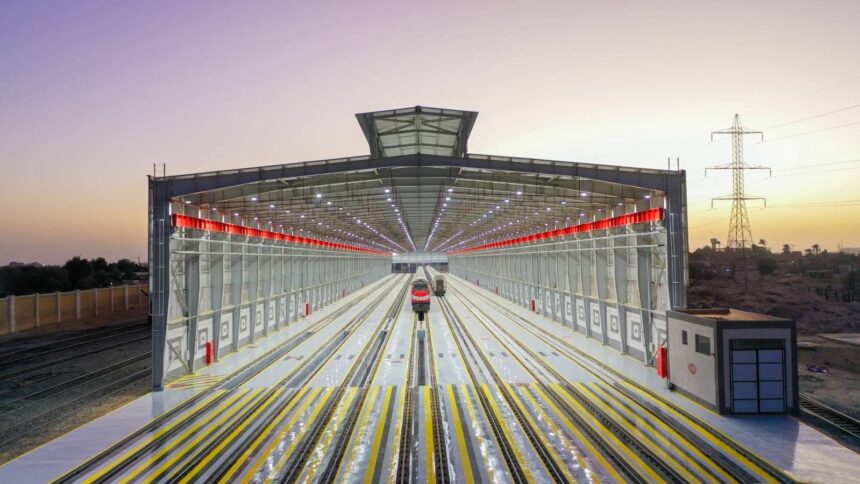
Officials presented a detailed overview of the facility, which was constructed by the Holding Company for Roads, Bridges and Land Transport, one of the Ministry of Transport’s affiliated companies. The workshop is considered a significant addition to the maintenance and technical support system of Egyptian National Railways.
The facility includes nine railway tracks, seven of which are located inside the main maintenance shed, while two are situated in the workshop yard. The infrastructure enables a broad range of maintenance and technical preparation activities to be carried out in accordance with modern operational standards.
The workshop serves approximately 34 trains daily at Aswan Station, including VIP services, Russian-built air-conditioned trains, dynamically ventilated Russian trains, and suburban services. It is equipped to perform technical inspections, preventive maintenance, pre-departure preparations, and post-arrival servicing, including brake-pad replacement, welding works, and various repair operations.
Al-Wazir also reviewed train storage procedures, water-supply operations, inspections of air-conditioning and lighting systems, air-circuit testing, and train cleaning and sanitization activities aimed at enhancing passenger comfort and service quality. He directed officials to equip the workshop with the latest maintenance, repair, and lifting equipment.
Speaking during the tour, the minister stressed that maintenance and technical safety systems constitute the first line of defense in ensuring efficient railway operations and maintaining regular train services. He emphasized the importance of adhering to the highest quality and safety standards across all technical activities to safeguard passengers and preserve the efficiency of railway assets.
Al-Wazir noted that Egypt is implementing an unprecedented railway modernization programme based on seven key pillars: upgrading rolling stock; modernizing infrastructure; developing signalling, communications, control and command systems; enhancing maintenance and technical safety facilities; improving human resources; restructuring the organization; and strengthening the financial framework of the railway authority.
He added that the Ministry of Transport has completed the modernization of 33 workshops across the country and finalized eight of the 11 new workshops planned under the strategy, while construction continues on the remaining three facilities.
According to the minister, expanding maintenance infrastructure is essential to supporting the significant growth in Egypt’s fleet of modern locomotives and passenger coaches, while ensuring higher levels of operational reliability and efficiency across the national railway network.
The developments form part of the state’s broader vision to establish a modern and sustainable transportation system based on advanced technologies and international best practices, providing safer and more efficient services for millions of passengers and reinforcing the role of railways as a key driver of economic development.