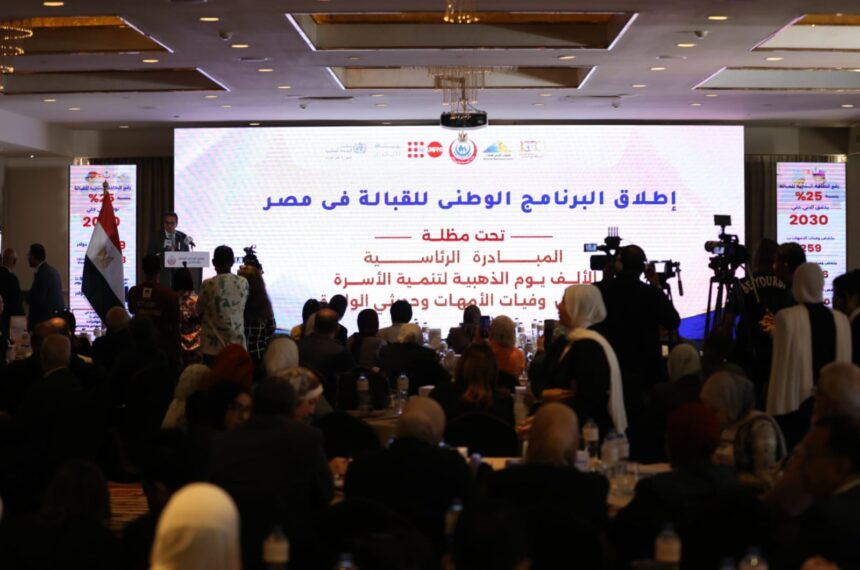
Egypt’s Ministry of Health and Population has launched a national midwifery programme in partnership with the World Health Organization (WHO), the United Nations Population Fund (UNFPA), and UNICEF, as part of a presidential initiative to strengthen maternal and child healthcare services across the country.
Speaking at the launch event on Sunday, Minister of Health and Population Khaled Abdel Ghaffar said Egypt places maternal and child health at the heart of its healthcare and development agenda through an integrated system of care that begins before pregnancy and continues through pregnancy, childbirth, and the early years of a child’s life.
Abdel Ghaffar noted that Egypt has succeeded in reducing maternal mortality to 41 deaths per 100,000 live births and is targeting a further decline to 35 deaths per 100,000 live births by 2030.
He said expanding access to professional midwifery services would play a key role in reducing maternal and newborn mortality while improving health outcomes during pregnancy and childbirth.
The minister stressed that midwives are intended to complement—not replace—obstetricians and gynaecologists. Their responsibilities will span the full continuum of maternal care, including pre-pregnancy counselling, antenatal care, support during childbirth, and postnatal follow-up through home visits and health guidance.
Deputy Minister of Health and Population Abla Al-Alfy said the ministry is currently implementing 15 initiatives under the “100 Million Health” programme, nine of which are directly related to maternal and child health.
She highlighted the importance of evidence-based interventions during and immediately after birth, noting that proper neonatal resuscitation, immediate skin-to-skin contact between mother and infant, and early initiation of breastfeeding can reduce newborn mortality by as much as 22%.
According to the ministry, the programme aims to revive and modernise Egypt’s midwifery profession through an integrated healthcare model that strengthens coordination between midwives and physicians.
The model will operate under clearly defined clinical protocols, enabling midwives to monitor low-risk pregnancies while ensuring the immediate referral of high-risk cases to specialised medical teams.
Representatives of the World Health Organization, UNICEF, and the United Nations Population Fund welcomed the launch of the programme, describing it as an important step towards strengthening maternal and child healthcare services in Egypt and supporting broader regional efforts to improve health outcomes for women and children.
The initiative forms part of Egypt’s wider efforts to enhance healthcare quality, expand access to essential services, and accelerate progress towards national and international health and sustainable development goals.