

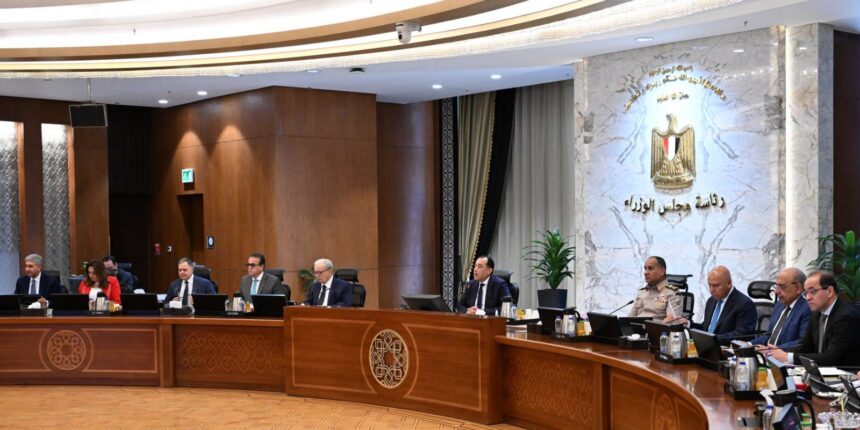
The Egyptian cabinet, led by Prime Minister Mostafa Madbouly, approved decrees defining the specific portfolios of newly appointed deputy ministers, centralising the state’s oversight of foreign debt, international grants, and massive urban development projects.
The decrees specify the responsibilities for deputies in the Ministry of Foreign Affairs and International Cooperation, as well as the Ministry of Housing, Utilities and Urban Communities.
Samar Mahmoud Abdel Wahed Al-Ahdal, Deputy Minister of Foreign Affairs, Emigration and Egyptian Expatriates for International Cooperation, is tasked with managing the strategic framework for economic cooperation with international and regional financial organisations. Her mandate includes proposing criteria for external loans and foreign grants, conducting related negotiations, and managing debt scheduling and swap agreements with foreign governments. Al-Ahdal will also monitor the execution of projects funded by the United Nations Development Programme and other donors, while overseeing local entities regarding fund utilisation and repayment to ensure alignment with state economic development policies.
For African affairs, Ambassador Mohamed Abu Bakr Saleh Fattah has been mandated to coordinate Egypt’s strategic engagement with the continent. His role includes aligning private sector and think tank initiatives with national foreign policy, and heading the board of the Egyptian Agency of Partnership for Development as acting chairperson in the minister’s absence. He will also supervise the Cairo International Centre for Conflict Resolution, Peacekeeping and Peacebuilding, and the Aswan Forum for Sustainable Peace and Development.
Within the housing ministry, Walid Abbas Abdel Qawi Othman, Deputy Minister for Urban Communities, will oversee the investment plans of the New Urban Communities Authority to ensure alignment with Egypt Vision 2030. He is responsible for monitoring financial flows, proposing policies for resource development, and ensuring the execution of the authority’s investment plan in accordance with the ministry’s programmatic commitments to the government.
Ahmed Omran, Deputy Minister for Utilities, will coordinate between the ministry and state water agencies, including the Water and Wastewater Regulatory Agency, the National Authority for Potable Water and Sewage, the Executive Authority for Potable Water and Wastewater, and the Holding Company for Water and Wastewater. He will supervise the national strategy for the sector, focusing on rural sanitation projects, seawater desalination plans, and water rationalisation. Omran is tasked with securing funding for the ministry’s investment plan without imposing additional financial burdens on the state, supervising the Project Management Unit (PMU), and encouraging private sector, international, and civil society participation in the water sector.
In a separate decision, the cabinet approved a draft presidential decree to remove the public utility status from a 7.82-acre plot of state-owned land in Damietta Governorate, allocating it to the National Service Projects Organisation to develop the local furniture industry at Damietta Furniture City.
Ministers also agreed to amend the executive regulations of the Civil Service Law, issued by Prime Ministerial Decree No. 1216 of 2017. The amendments introduce and replace articles regarding the appointment, qualification, and training for leadership and supervisory positions.
Furthermore, the cabinet authorised the Ministry of Transport to contract for the operation and maintenance of an automated early warning and firefighting system at the Alexandria and El Dekheila ports, per Article 78 of the Public Contracts Law No. 182 of 2018.
Additionally, ministers approved a request from the Ministry of Local Development and the Ministry of Environment to renew the Giza Governorate’s Public Authority for Cleansing and Beautification contracts with street cleaning and waste collection companies for an additional year, effective Jan. 1, 2026.

