

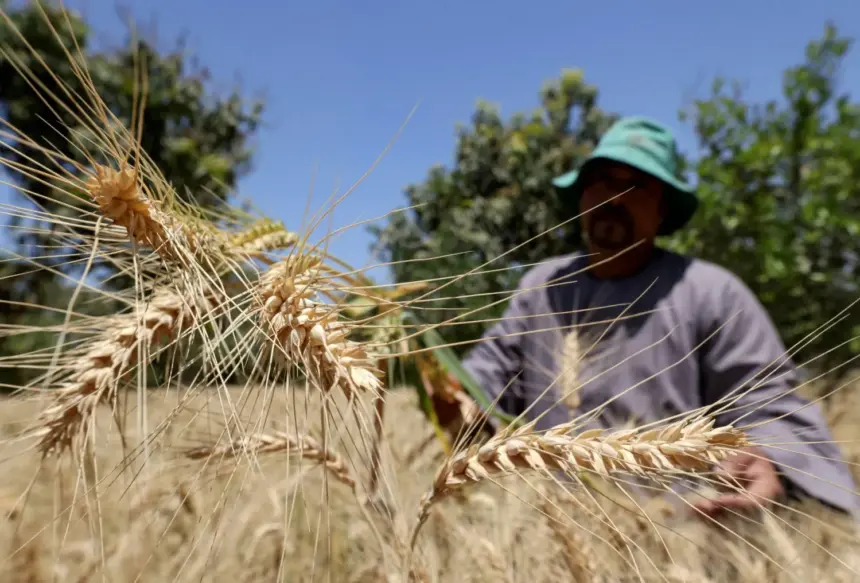
Egypt is targeting the procurement of 5 million tonnes of domestic wheat during the current harvest season as part of a broader strategy to strengthen food security, Supply and Internal Trade Minister Sherif Farouk said on Sunday.
The minister stated that strategic reserves of basic commodities, including wheat, rice, sugar, oil, pasta, and meat, are at “very reassuring levels,” with stocks sufficient to meet local consumption for up to six months. Farouk added that reserves for certain commodities are approaching a full year of coverage, attributing the stability to “proactive plans” designed to mitigate the impact of global supply chain disruptions.
Prime Minister Mostafa Madbouly said the regular monitoring of strategic stocks is intended to ensure a safe reserve for a “reassuring period” to stabilise markets and balance prices. Madbouly noted that such measures are critical given current regional events, which he said have had negative effects on supply chains and financing.
Agriculture Minister Alaa El-Din Farouk outlined a plan to maximise the 2026 local wheat supply season to narrow the import gap and secure the state’s strategic needs. The plan focuses on incentivising farmers and suppliers to deliver the largest possible quantity of domestic production.
“The plan aims to stimulate suppliers and farmers to supply the largest possible amount of local production during the current season through the local supply price, which serves as a primary encouraging tool for farmers,” the Agriculture Minister said.
Further measures to increase efficiency include increasing the number of collection points in high-density agricultural areas and activating cooperative collection through local agricultural associations. These associations will coordinate with agricultural directorates and crop marketing societies to receive wheat directly from farmers and transport it to collection points, a move intended to reduce transport costs and waiting times.
On the distribution of agricultural inputs, Alaa El-Din Farouk said the ministry is monitoring the regular disbursement of fertilisers across all governorates. He noted that the disbursement period for the winter season has been extended by an additional week to ensure that all outlets adhere to the approved mechanism and that support reaches eligible farmers to support productivity.
The government is also pursuing greater governance of the subsidised fertiliser system through the use of modern technology in production and distribution. This initiative aims to tighten control, ensure fair distribution, and prevent manipulation through direct field follow-ups, according to the meeting discussions.