

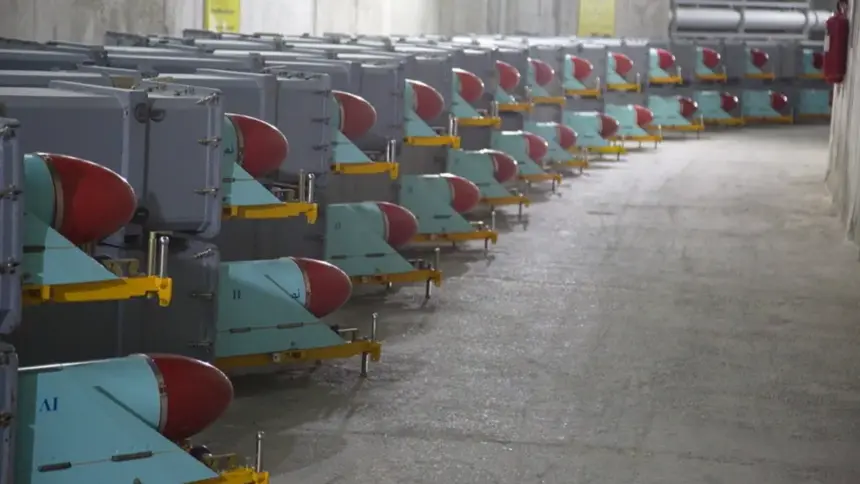
US intelligence reports indicate that Iran is rehabilitating missile bunkers and silos within hours of being targeted by American and Israeli strikes, according to the New York Times, casting doubt on military assessments regarding the destruction of Tehran’s missile capabilities.
While the Pentagon announced this week that “significant progress” had been made against Iran, US intelligence agencies have questioned how close the United States is to achieving one of its primary war aims: the elimination of Iran’s missile capacity. During a briefing this week, the Pentagon stated it had struck 11,000 targets in Iran over five weeks of conflict.
US officials familiar with the intelligence told the New York Times that although agencies have not precisely estimated the number of remaining launchers, Iran maintains a significant number of mobile platforms and ballistic missiles capable of attacking Israel and other regional states.
US Secretary of State and National Security Advisor Marco Rubio has identified the degradation of Iran’s missile capability as a primary objective of the war. Secretary of War Pete Hegseth has also frequently cited the damage inflicted by US and Israeli strikes and a noted decline in Iranian missile attacks.
“Yes, they will fire some missiles, but we will shoot them down,” Hegseth said last Monday. “It is noteworthy that the last 24 hours saw the lowest number of missiles and drones launched by Iran. They will be hidden underground, but we will find them.”
White House officials noted that the rate of Iranian missile and drone launches has fallen sharply since the start of the war. White House spokesperson Anna Kelly said in a statement that Iranian ballistic missile and drone attacks have decreased by 90 per cent. Kelly added that the Iranian navy has been destroyed, two-thirds of production facilities are damaged or destroyed, and the US and Israel maintain “overwhelming air superiority.”
However, US intelligence agencies believe Iran is concealing a large number of launchers within bunkers and caves to protect them from bombardment. Officials suggest Tehran intends to preserve as much of its missile capability as possible to maintain leverage if the conflict continues or to serve as a threat after the war ends.
Despite a more “cautious” use of its arsenal, Iran has continued to strike Israel. Current and former US officials told the New York Times that Iran has been launching approximately 20 missiles a day, often one or two at a time. A Western official said on Friday that daily launches include 15 to 30 ballistic missiles and between 50 and 100 one-way attack drones.
Former officials stated that internal disagreements within the Iranian government have hampered command and control, making it difficult for Tehran to coordinate large-scale simultaneous launches.
Accurate assessments of Iran’s current capabilities remain difficult due to the widespread use of decoys. US authorities are uncertain how many destroyed targets were actual launchers versus “dummy” sites. Although the US held estimates of Iran’s arsenal before the war, officials acknowledged those figures were not precise, particularly regarding launchers hidden in caves or bunkers.
While underground silos and caves may appear damaged initially, Iran has been able to quickly extract launchers and return them to service. An earlier report by CNN, which officials said aligns with intelligence ranges, suggested Iran retains half of its missile launchers. Additionally, the Israeli newspaper Haaretz reported that Iran has used bulldozers to dig out and recover missile platforms that had been buried or fortified within underground bunkers.