

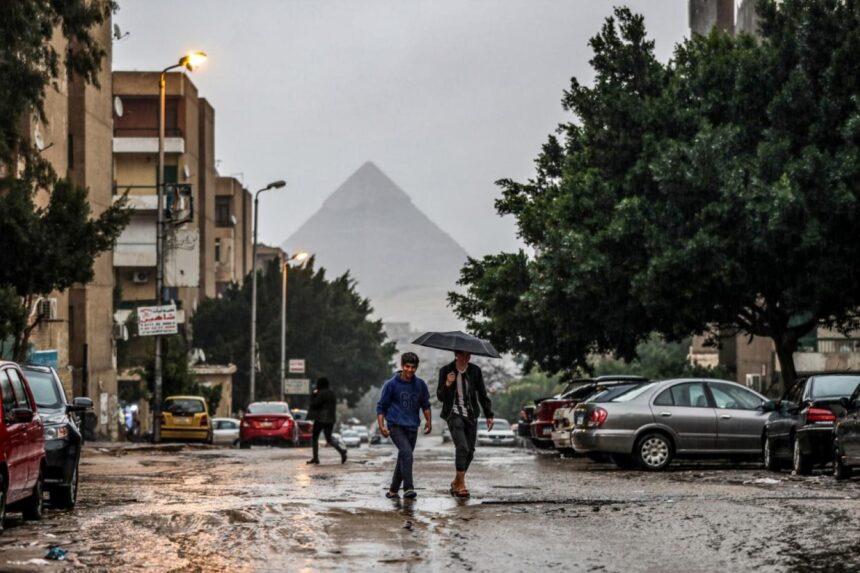
Egyptian authorities have raised preparedness to maximum levels across key sectors following warnings of severe weather expected to hit the country on 25-26 March, bringing heavy thunderstorms, strong winds and lower temperatures.
The Egyptian Meteorological Authority warned of widespread instability nationwide, with heavy and at times thunderous rainfall that could trigger flash floods in parts of Sinai, the Red Sea mountain range, and along the Gulfs of Suez and Aqaba.
Rain is also expected to extend to the Nile Delta and northern coastal governorates, including Alexandria, Beheira, Kafr El-Sheikh, Dakahleya, Damietta, Port Said, Gharbeya, Monufeya and Sharqeya.
Moderate, occasionally thundery rainfall is forecast in Greater Cairo, the Canal cities and northern Upper Egypt, while light to moderate rain is expected in central and southern Upper Egypt and the Western Desert.
Winds of 40-50 km/h may raise dust and sand, reducing horizontal visibility to below 1,000 metres in some areas. Temperatures are forecast to drop by 3-4 degrees, with risks of lightning, hail and water accumulation, the authority said.
In response, the Ministry of Education and Technical Education announced the suspension of classes nationwide on Wednesday and Thursday for students, teachers and administrative staff, citing safety concerns and the need to ensure equal conditions across regions.
The Ministry of Health and Population has also raised readiness to the highest level across all hospitals and healthcare facilities.
Ministry spokesperson Hossam Abdel Ghaffar said Health Minister Khaled Abdel Ghaffar had ordered full preparedness in emergency and intensive care units, including ensuring adequate supplies of medicines, medical equipment and blood reserves, as well as reviewing backup power systems, water storage and evacuation plans.
Around 2,400 ambulances have been deployed nationwide, alongside 48 four-wheel-drive vehicles for desert and mountainous areas and 11 river ambulances to serve Nile islands. Coverage has also been expanded on highways and in coastal regions.
Authorities are reinforcing coordination through the national emergency network, working with civil defence teams and monitoring around 300 flood-prone waterways and low-lying areas.
Preventive measures include monitoring drinking water and sanitation systems, controlling disease vectors, and ensuring the availability of antivenom for scorpion and snake bites.
The ministry urged citizens to follow official guidance, avoid flood-prone areas and contact emergency services if needed, noting that operations rooms are functioning around the clock and that hotline 137 is available for medical assistance.


